

Dominican Republic
CARIBBEAN
The Dominican Republic immediately feels set up for ease. The climate is reliably warm, the coastline expansive, and the overall pace relaxed. Beaches, towns, and accommodation are easy to reach, which makes settling in quick and uncomplicated. Despite being part of the Caribbean, the country feels distinct in atmosphere and tempo — shaped as much by its long history as by climate.
That depth becomes more apparent in places like Santo Domingo, home to the oldest university in the Americas. What stood out was how naturally the Dominican Republic balances this historical weight with an unhurried present. It isn’t demanding as a destination — it offers space to slow down, move lightly, and enjoy being somewhere that feels both established and easy to inhabit.
Why Visit Dominican Republic?
Compact in size — around 11 million people across roughly 48,000 km² — but diverse in feel, the Dominican Republic combines beaches, inland mountains, and lively cities in a way that makes slowing down easy without feeling limited.


Follow me to Dominican Republic
The Dominican Republic was a place we chose to slow down. Time spent along the coast and in everyday surroundings felt easy and restorative, shaped more by rhythm and climate than by plans. Follow along for grounded impressions, practical notes, and context to help you approach the Dominican Republic beyond the obvious.
Beaches in Dominican Republic
The Dominican Republic’s coastline varies widely depending on where you go. Punta Cana is known for long, pale beaches and calm water, largely experienced through all-inclusive resorts that make everything easy but self-contained. It works well if you’re looking to switch off, though it offers only a narrow slice of what the coast can feel like.
Away from Punta Cana, beaches feel more open and connected to daily life. Along the north coast, places like Cabarete and Las Terrenas are shaped by wind, waves, and small beach towns, where surfers, locals, and long-term residents share the same stretches of sand. On the Samaná Peninsula, beaches are greener and quieter, often backed by villages rather than resort infrastructure, with whale season adding a natural rhythm.
Exploring beyond resort zones adds depth. The Dominican Republic’s beaches reward movement — choosing places where food, conversation, and everyday life sit just a few steps from the sea.


Nature adventures in Dominican Republic
Nature in the Dominican Republic adds depth beyond the beaches. Inland, mountain ranges and fertile valleys create cooler pockets and greener landscapes, with hikes and viewpoints around Pico Duarte offering a sense of scale that’s easy to forget when you’re on the coast. Rivers, waterfalls, and national parks are often close enough for half-day trips rather than full expeditions.
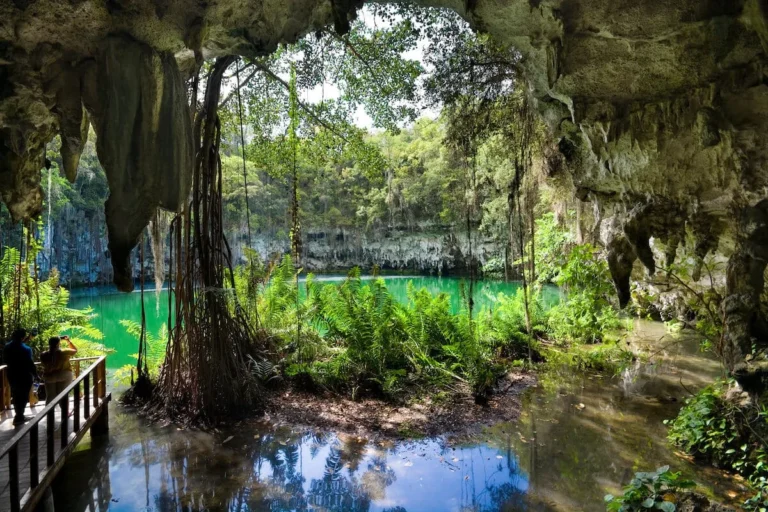
Even near the capital, nature feels accessible. Just outside Santo Domingo, places like Los Tres Ojos offer an easy introduction to caves, freshwater lagoons, and shaded walking paths. Along the Samaná Peninsula, nature shows up in quieter ways — mangroves, forested hills, and seasonal humpback whales offshore between January and March. What stood out for us was how easily these experiences fit into slower travel days, adding contrast without demanding focus.


Cities to visit in Dominican Republic
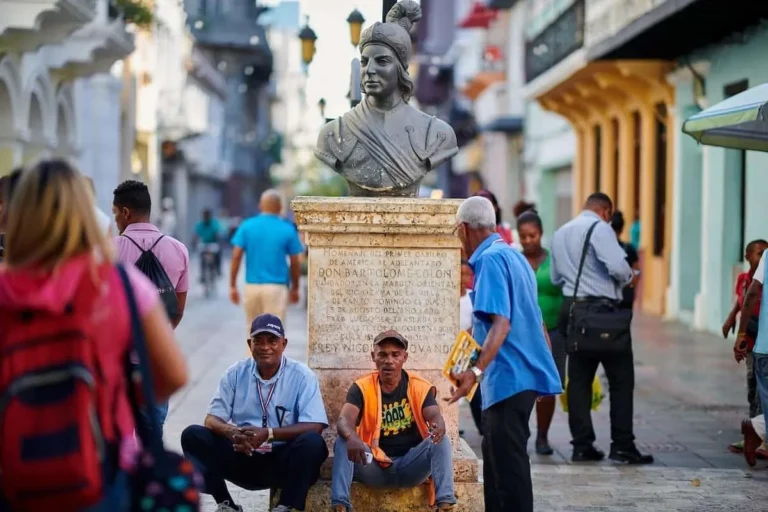
Cities in the Dominican Republic add depth and context to time spent on the coast. Santo Domingo stands out for its historical weight: the colonial zone is one of the oldest urban centers in the Americas, carefully preserved and actively lived in. Streets, plazas, and historic buildings feel well maintained without feeling staged, making it easy to move between history, everyday life, and contemporary culture.
Beyond the capital, smaller cities and regional centers offer a quieter charm. Santiago de los Caballeros feels confident and orderly, with public spaces, cafés, and cultural institutions that reflect local pride rather than a tourism-first approach. What stood out to us was how cared for these cities felt — clean, organized, and balanced — offering an approachable way to experience Dominican history and urban life.


People & everyday life in Dominican Republic
Everyday life in the Dominican Republic is social and outward-facing. Spanish is spoken everywhere, and daily rhythms are shaped by conversation, music, food, and shared public spaces. Family life is visible, streets and cafés are active, and ordinary moments often involve interaction rather than anonymity. What stood out to us was how present and expressive daily life feels — lively without being rushed.
Alongside this warmth, there are difficult realities. The treatment of Haitian migrants and Dominicans of Haitian descent remains one of the country’s most serious human-rights concerns. Discriminatory policies, deportations, and barriers to legal status are widely documented and form part of the broader social context, even if they’re not always visible to visitors.
For deeper context, these sources offer clear, well-documented reporting:
– Amnesty International
– Human Rights Watch
– UN Office of the High Commissioner for Human Rights (OHCHR)
Understanding both the openness of everyday life and these structural injustices is key to seeing the Dominican Republic beyond the surface.
Festivals & Happenings
Festivals in the Dominican Republic are closely tied to history, religion, and local identity. Carnival, celebrated most visibly in February, brings music, costumes, and street life into cities and towns, with regional variations that reflect local pride rather than a single national style. Semana Santa (Holy Week) shifts the pace in a different way, marked by processions, family gatherings, and quieter public life.
Throughout the year, patron saint festivals and local fiestas punctuate everyday routines, filling plazas with music, food, and shared celebration before things settle back into their usual rhythm. These moments feel rooted and communal — less about spectacle, more about continuity — offering a clear window into how public life and tradition intersect in the Dominican Republic.
Looking for a Tailor-Made Adventure?
Whether you’re dreaming of exploring hidden gems or indulging in unique experiences, we will design an unforgettable journey that fits your style and preferences. Contact us today to start planning your personalized trip!
Practical Travel Tips for Dominican Republic
