Léon
NICARAGUA
A charming city between volcanos and beaches
Léon is Nicaragua”s second largest city, though it’s much less commercial and touristy than Granada. Despite being a city of more than 200,000 people, Léon still retains its genuine charm, mainly through its intense passion for poetry. Poetry and literature are at Léon’s core – locals honor their poet saints with monuments and vigils often held in public squares. Léon is also home to Nicaragua’s first university, which gives the city an energetic buzz that can’t be found anywhere else. It is considered the ground zero for the Sandinista movement and has memorials around town to commemorate its importance in Nicaraguan history. Léon is a fierce reminder of why we love Nicaragua so much- from volcano surfing at nearby hills to participating in political protests, Léon shows us how raw and undiluted Nicaraguans live life to the fullest!
Our love affair with Léon started on Valentine’s day. We arrived pretty late (as usual) and could not resist getting a first glimpse of the city after dark. We were mesmerized by the majestically exposed churches and the lively streets.

Best places to stay in Léon
León is not a city where I would hide away in a polished hotel. Its appeal is in the heat, the murals, the old churches, the revolutionary memory, the students, the courtyard cafés and the volcano trips that start before the streets have fully woken up. I would stay somewhere that keeps you close to that energy — social, central, locally connected or built around something more meaningful than just a pretty colonial façade.
Sonati is the place I would choose if I wanted my stay in León to have a clearer purpose. It is simple and social, not polished, but that is not really the point. The reason to stay here is its connection to environmental education: hostel stays and tours help support free programs for local school children.
For travelers who care about impact, Sonati feels like the most meaningful option in León. It gives you a base in the city, access to local guides and volcano tours, and the sense that your stay is helping fund something that continues after you leave.
Hotel El Convento is the more atmospheric, grown-up choice in León. Set in a former convent, it gives you that sense of history and stillness that works beautifully in a city as hot and intense as León. I would choose it if you want comfort, character and a stay that feels connected to the city’s colonial architecture rather than a standard hotel room.
It is the place I would recommend for travelers who want León to feel special, but not overly polished — somewhere you can come back to after a day of murals, museums and volcano dust and feel the city settle around you.
Hotel Flor de Sarta is the smaller, softer boutique option. It feels personal rather than grand, with the kind of calm you may appreciate after long days in León’s heat. I would recommend it for couples or travelers who want comfort, charm and a quieter base without moving too far from the city’s rhythm.
This is a good choice if you want León during the day, but somewhere peaceful to return to in the evening.
Stroll the colorful streets and trace the tracks of Nicaragua’s poetry
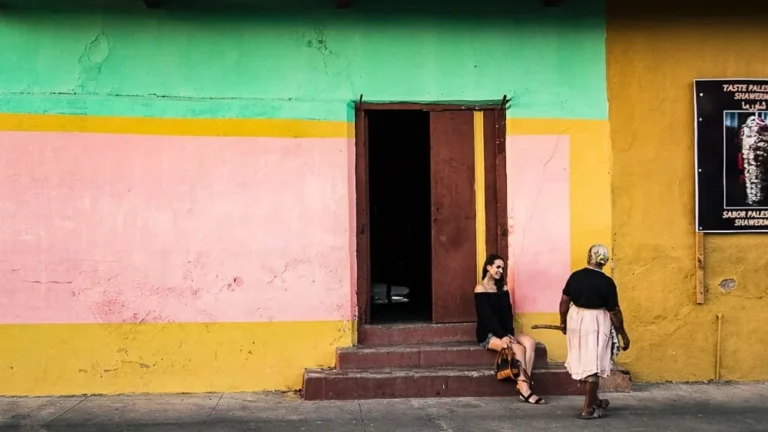
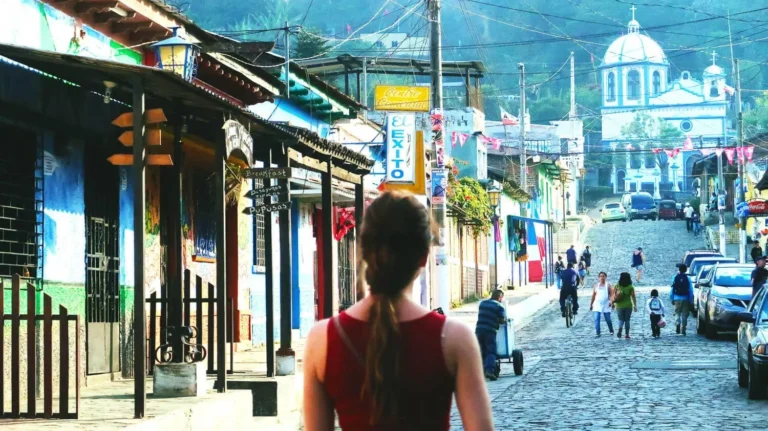
Vibrant Léon seems to wear its heart on its sleeve. Léon’s history, passion for arts, and pulsing liveliness become visible at every corner. Murals and statues are visual reminders of the 20th century revolution. Colorful houses are often seemed by a quote. The feeling of a capital city is still traceable in Léon. It seems rougher, more authentic, and fiercer than other cities. Take the time to join the locals in the shade or for a beer at night. They have a passion for their hometown and love sharing it with you!
Learn about the Revolution at Museo Historic de la Revolution
We learned quickly that the revolution and its scares are still prominent in Léon. The Museo Historico de la Revolution gives you a blueprint of the civil conflict that ended about 40 years ago. The unimposing building on the opposite side of the cathedral also played a part in the revolution. Within its walls shattered by bullets, you’ll get to listen to the stories of the revolution by the ones who shaped it. Naturally, good knowledge of Spanish is helpful. To get Léon better, we recommend visiting the museum at the beginning of your stay
Indigenous Barrio Sutiava
Discover Léon’s indigenous side and pay a visit to Barrio Sutiava. The neighborhood is home to the Sutiava tribe, the first people who settled in Léon. Large, colorful murals tell the story of the barrio’s history, culture, past, and future.Surprisingly, the walls were painted by children about 12 years old. Barrio Sutiava is also home to León’s oldest church, San Juan Bautista Sutiava. After that, we took a bici-taxi and strolled around the barrio. Expect to pay $15 for a tour by Bici (bike) taxi.
El Convento de San Francisco
Léon’s most iconic building, the Convento de San Francisco, is a must-see. The convent was founded in 1524 and served as a center of religion and learning for centuries. It’s one of the oldest buildings in Nicaragua and the Americas. Today, the convent houses a museum with a collection of religious art and artifacts.The museum is small but very interesting. It has a lot of history behind it. The convent is located in the center of the city and is easy to find. Admission is $0.50 for foreigners and $0.25 for nationals.
Parque Morazán
After visiting the Convento de San Francisco, take a walk to Parque Morazán. The park is named after Francisco Morazán, a national hero of Nicaragua. In the center of the park, you’ll find a statue of Morazán on a horse. The park is also home to the Léon Cathedral, one of the largest cathedrals in Central America. The cathedral is an interesting mix of Gothic and Baroque architecture. It’s worth a visit, even if you’re not religious.
Walk on top of the cathedral
Central America’s largest cathedral was constructed in the 1700s. Léon’s white cathedral looks impressive from above but wait till you get on top of the cathedral’s roof! The architecture and views will take your breath away. You can buy tickets at the church’s back office for 2 $.The roof of the building is bright white, so you’ll have to take your shoes off before you leave the clock tower and head out. You are reminded of San Torini, Greece, as soon as you set your eyes on the shining white roof. Walking on top of the cathedral is definitely a must-do in Léon.
Spend the evenings at Parque Central
When we arrived in Léon on Valentin’s day, Parque Central was filled with love birds, street artists,and food stands. The setting in front of the beautifully lit Cathedral de Léon was just picturesque.We loved the lovely vibe. You’ll find the best Assados (barbeques) behind the cathedral. The two food stands compete for their guests’ favor. They offer the most delicious barbeque dishes! Even vegetarians will find plenty of alternatives.
Try sand-boarding at Cerro Negro
Sandboarding is undoubtedly one of the most popular tourist activities in León. We were pretty tempted to surf Cerro Negro ourselves but finally decided against it for two reasons. For once, we loved every second we spent on the streets of the city, and secondly, fellow travelers reported told us about some pretty severe accidents. The pictures of fellow travelers looked terrific, and they loved the experience. We didn’t book a tour through Quetzaltrekkers in Léon. However, we know the nonprofit tour company from Guatemala. All profits made by volunteers go directly into projects for disadvantaged youth. We walked past them and saw that they offer volcano sand-boarding amongst other hiking tours around Léon
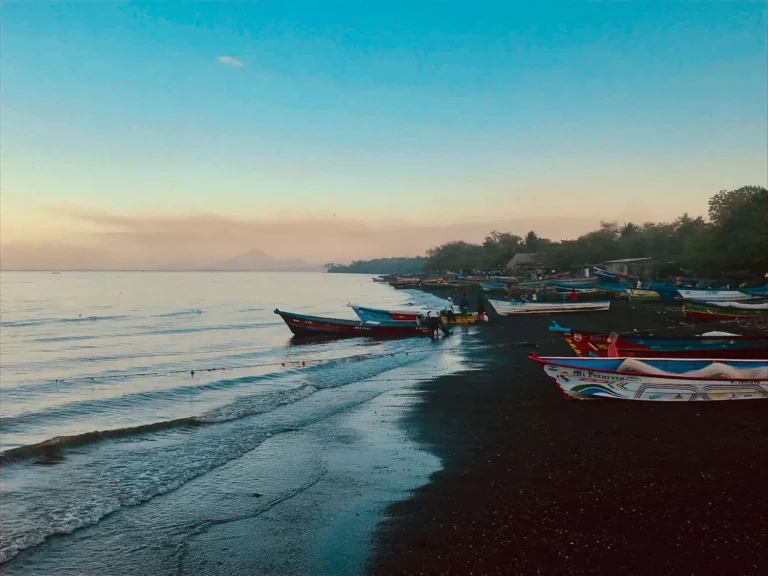
Enjoy Poneloya & and Las Penitas Beaches
We did not visit these two charming fishing villages just 20 km outside the city because we wanted to enjoy beach life in El Salvador. However, we met many fellow travelers and locals alike who love the beach stretches on its excellent surf, choice of bars, and restaurants. If you are looking for a party, then head to Poneloya. Las Penitas is your place for those of you who prefer a more relaxed vibe. You can also find some sound waves here for surfing.We met a lot of locals in Leon who highly recommended we check out the beaches, and we regret not doing so! Hike Up Volcán Momotombo This active volcano last erupted in 1905 and is just a 30-minute drive from Leon. Although you cannot hike to the crater, the views from the top are worth it. The ascent takes around two hours and is considered moderate to challenging.We did not have time to do this but next time for sure!
Nicaragua’s sea turtles
We met Philipp at a trade fair and were touched by his commitment. Together with SOS Nicaragua, he and the team have been working for years to protect sea turtles.
To protect endangered creatures, SOS Nicaragua offers various tours. In addition to releasing young turtles, you can take a night tour with the SOS Nicaragua team and watch them lay their eggs.
SOS Nicaragua is a project of the heart, which we heartily recommend to you!
Practical Travel Tips for Nicaragua


Traveling Nicaragua?
Places to visit in Nicaragua
Often overlooked, Nicaragua is home to friendly people, dramatic landscapes and rich culture!
-
Golfo de Fonseca | The most unique border crossing
The most scenic border crossing Getting from Nicaragua to El Salvador can be quite a ride if you travel by bus via Honduras. Luckily we stumbled upon the most scenic and relaxed way to cross borders: A boat ride via Golfo de Fonseca. Golfo de Fonseca is a gulf on the Pacific coast bordering Nicaragua,…
-
Granada | Nicaragua’s colonial beauty
Nicaragua’s colonial colorful beauty G-R-A-N-A-D-A, we almost want to color every letter when we think about this stunning colonial city. But unfortunately, we arrived in the dark and only saw the town after sunset. While looking for our Airbnb, we passed grand churches and Calle la Calzada, a street lined with cafes, restaurants, and shops…
-
Isla Ometepe | Nicaragua’s mysterious volcanic island
The mysterious volcanic island Visiting Isla Ometepe in Nicaragua was a surreal experience! The scenery and wildlife were simply spectacular – from soaring volcanoes to lush forests, it’s the perfect place for an unforgettable adventure. The lake surrounding the island, Lago Nicaragua, was unbelievably pristine, and it’s actually the biggest freshwater lake in all of…
-
Masaya | Nicaragua’s folklore capital
Nicaragua’s folklore capital & glimmering lava After admiring the stunning beauty of Granada, we decided to make our way to Masaya: Nicaragua’s cultural and folklore capital. Things we did? Well, for one, street strolling was a must! The vibrant streets of Masaya were alive with the sound of music, dance, and crafts. Everywhere we looked…