Granada
NICARAGUA
Nicaragua’s colonial colorful beauty
G-R-A-N-A-D-A, we almost want to color every letter when we think about this stunning colonial city. But unfortunately, we arrived in the dark and only saw the town after sunset. While looking for our Airbnb, we passed grand churches and Calle la Calzada, a street lined with cafes, restaurants, and shops buzzing with locals and tourists. Granada was founded in 1524 by the Spanish. Due to its strategic location, the city quickly gained popularity and attracted explorers from all over the world. As a result, Granada is one of the most cosmopolitan and elegant colonial cities we have visited in Nicaragua.
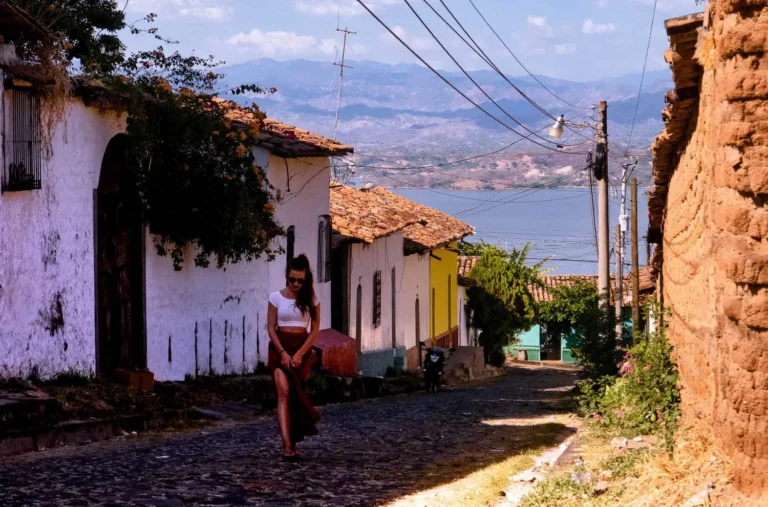
The vibrant, elegant, and lively city was screaming to be explored. We couldn’t resist Granda’s charm and ventured for a little walk after arriving. Granada, one of the oldest cities in the Americas, is frolicking with colorful buildings and delightful alleys. The lively city is surrounded by lakes and volcanos and offers plenty of things to do.

Best places to stay in Grenada
Granada is full of beautiful colonial hotels, but I would not choose a stay here only for the courtyard and pool. The city can easily become a postcard if you let it — colorful façades, horse carriages, church towers, lake views — but the most interesting stays are the ones that keep you connected to something more real: education projects, local teams, lake ecosystems, volcano landscapes and the communities around the city.
Hotel con Corazón is the place I would choose first in Granada. On the surface, it gives you what you want from the city: a central location, a courtyard, a pool, hammocks and an easy base for walking through the old streets. But the reason it stands out is the model behind it: the hotel invests its profits into education projects for local communities.
That changes the feeling of the stay. It is still comfortable and beautiful, but it does not stop at being another pretty colonial hotel. I would recommend it for travelers who want Granada’s atmosphere while knowing their money supports something tangible after they leave.
Isleta El Espino is the stay I would choose if I wanted Granada to breathe a little. Set on a small island in Lake Nicaragua, it takes you out of the city’s heat and into a quieter world of water, birds, kayaks and slow mornings.
It still feels close enough to Granada to be part of the experience, but the mood is completely different. I would recommend it if you want the lake to become part of your stay, not just a view from a boat tour.
Mombacho Lodge is for travelers who want to understand the landscape around Granada, not only the city itself. Set near the slopes of Mombacho Volcano, it brings in forest, birds, cooler air and a more nature-led rhythm.
I would choose it if Granada is part of a wider Nicaragua journey and you want your stay to feel closer to the country’s volcanoes and green spaces. It is less polished city escape, more quiet immersion.
Calle Calzada
Calle Calzada extends from the central Parque Colón to the nightlife area. At night all types of restaurants and bars set up their tables outside, and the street comes to life. There are restaurants and bars to fit any taste and budget. Admittedly this is a very touristy spot, but the atmosphere makes a visit well worth it. We decided to get some Tonoas (Nicaraguan beer) and Pupusas to go. We sat at the end of Calle Calzada, in front of Iglesia Merced, where the younger Nicaraguan crowd seemed to hang out.
Explore downtown Granada
A short walk away from the touristy streets, you can enjoy a more relaxed vibe as you wander through the pastel-colored alleys. Our jaws dropped at every other corner, and we could help but be mesmerized by the view. Like any other Central American city, you can also find a busy central market, the town’s commercial hub. Surprisingly, the majority of goods sold here are produced right there
Stroll the picturesque streets
It can get boiling, but Granada is best explored on foot. As soon as we left our hotel, we were always “awwing.” Granada was founded in 1524 and is the second-oldest city in Central America and the oldest in Nicaragua. Most of its original buildings and structures have been kept alive. So, take the chance to soak in all the colors. Don’t stick to the touristy area; venture out! There are delicious food stands and corners to be discovered. We ate some of our trip’s most delicious ceviches there. Ask the locals about Conny’s ceviche!
Marvel magnificent churches
As you are bopping along cobblestone streets, you will discover impressive churches. The canary-yellow Catedral de Granada is probably the most striking one. It overlooks Parque Colón. The landmark building, constructed in 1583, has been destroyed and rebuilt several times. Iglesia La Merced is one of the oldest churches in Central America. It is undoubtedly one of the most beautiful churches and offers a spectacular view from the bell tower. Iglesia Guadalupe is situated right at the end of Calle Calzada. It looks most impressive with its lighting by night. On the weekends, young Nicas meet to hang out at the church’s stairs. We met Dayton and Hector, a passionate bull rider there. If you want to get to know them better, click here.
Parque Colon
As mentioned before, it can get super hot in Granada. So it’s lovely to grab fresh fruit juice and relax in the shade at Parque Colón. The central plaza is seamed by the Catedral de Granada and numerous restaurants. Nicaraguans are said to be one of the happiest people in the world. So lean back and enjoy watching them as they go along with their day.
Volcano de Masaya’s glowing spectacle
Yay Nicaragua! We could see lava in an active volcano crater for the first time! It’s mesmerizing and a once-in-a-lifetime view! It’s an indescribable feeling to stand at the top of a blazing volcano. We feel lucky to have caught a glimpse of this natural wonder. We arrived at sunset and saw the magnificent sulfur clouds as they were slowly disappearing into the dark, leaving only the bright red of the burning lava. However, due to the toxic fumes, you can spend only 20 minutes taking in the volcano. It’s a short moment that lasts a lifetime. An absolute must-do!
Practical Travel Tips for Grenada

Going to Central America?
Let us inspire you!
PLACES TO VISIT IN NICARAGUA
Often overlooked, Nicaragua is home to friendly people, dramatic landscapes and rich culture!
-
Year-around festivities and events in Belize
Dancing to the rhythmic beats of Garifuna drums, savoring the aroma of freshly cooked fry jacks, and witnessing the vibrant colors of traditional Mayan garments swirling through the streets—welcome to Belize, a country where every month brings a new reason to celebrate! Belize hosts over 20 major festivals annually, each offering a unique glimpse into…
-
Beaches in El Salvador | Central America’s hidden germs
After a memorable journey through Nicaragua and a beautiful border crossing via Golfo de Fonseca, we arrived in El Salvador, where warm hospitality awaited us. El Salvador quickly become one of our favorite countries to visit for its welcoming people, stunning volcanos and beautiful beaches. We’ve talked a lot about why El Salvador should absolutely…
-
The Caribbean side of Costa Rica | A comprehensive guide to paradise
Exploring Costa Rica’s Capital City Up until today, Costa Rica’s Caribbean side is my favorite area to explore in Costa Rica. Why? As the Caribbean side is far less touristically developed than its counterpart in the Pacific, you can enjoy miles of the most beautiful Caribbean sea seamed by lush rainforest, stunning National Parks, and…
-
Golfo de Fonseca | The most unique border crossing
The most scenic border crossing Getting from Nicaragua to El Salvador can be quite a ride if you travel by bus via Honduras. Luckily we stumbled upon the most scenic and relaxed way to cross borders: A boat ride via Golfo de Fonseca. Golfo de Fonseca is a gulf on the Pacific coast bordering Nicaragua,…
-
San Salvador | a resilient capital, rich in history, scars and hope
A resilient capital rich in history, scars, and hope San Salvador is exciting, its energy infectious. The city, with its many museums, churches, and murals, offers visitors the opportunity to learn and understand El Salvador’s history. Colorful murals often grace San Salvador’s walls. Pay attention when passing them. They often tell the stories of recent…
-
El Cuco & Playa Las Flores | Surfing & Turtles
Secluded beaches and world-class surfing On either side of El Cuco, you’ll find two of El Salvador’s most stunning beaches – Playa Esteron and Playa Las Flores. Playa Esteron is a secluded white sandy beach, lush with greenery, and the perfect spot for anyone who wants to escape to peace and tranquility – it’s even…