Masaya
NICARAGUA
Nicaragua’s folklore capital & glimmering lava
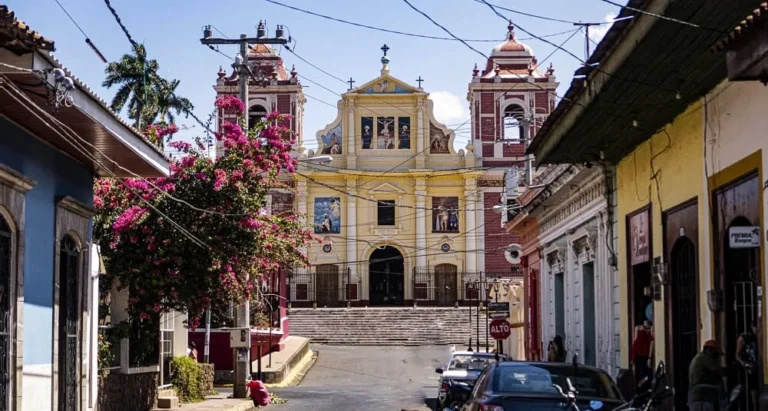
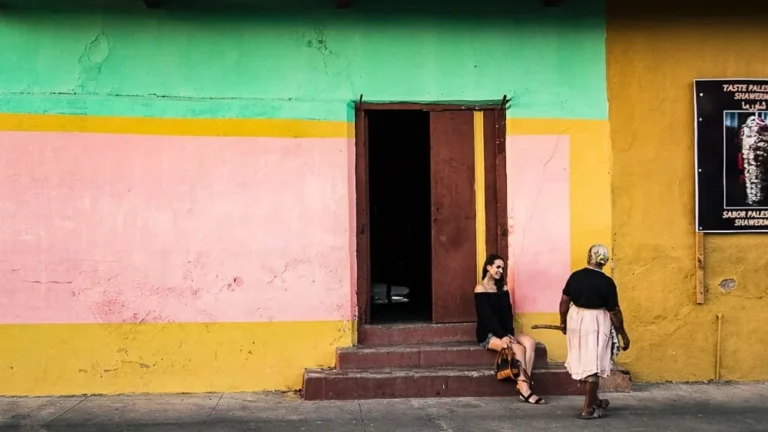
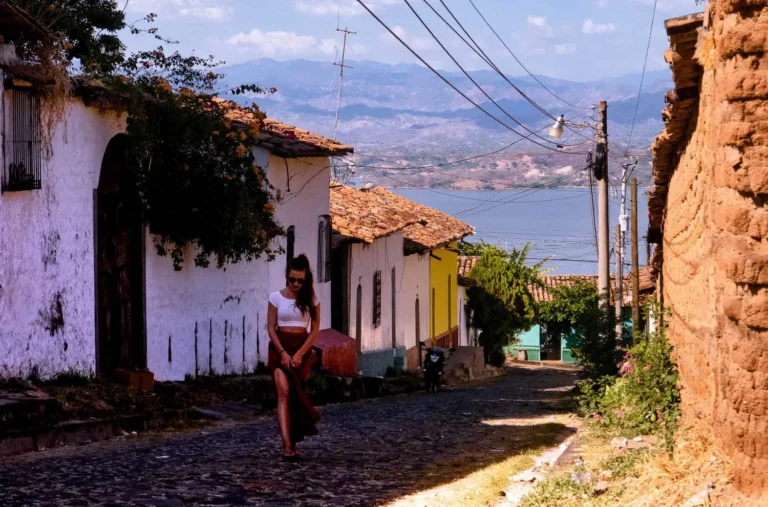
After admiring the stunning beauty of Granada, we decided to make our way to Masaya: Nicaragua’s cultural and folklore capital. Things we did? Well, for one, street strolling was a must! The vibrant streets of Masaya were alive with the sound of music, dance, and crafts. Everywhere we looked were colorful buildings and incredible local charm. We even joined in with some locals to try out some of their traditional dance moves – what an experience! Not only this but there’s plenty to see outside the town limits, too; witnessing the glorious red and orange lava flowing out of Volcano Masaya was breathtaking – something we would never forget. And finally, a peaceful few hours of hiking around Laguna Apoyo showed us just how rich nature is in Nicaragua – gorgeous views and crystal-clear waters all capped off perfectly by a sublime sunset.
Grenada’s passionate neighbor
Masaya will surprise you with its creative diversity and authentic charm. It is unique because it manages to be relaxed and vibrant simultaneously. It’s the perfect spot to stay longer to get to know the Nicas better. For some reason, Masaya is not as popular among tourists as neighboring Granada. However, we can only urge you to spend some time in this charming town. Masaya is a creative and artistic city with a history-affine population. You’ll be greeted with open arms and hearts. So dive in and listen to the stories of Masaya’s friendly locals.
Wander from Parque Central the Malecon
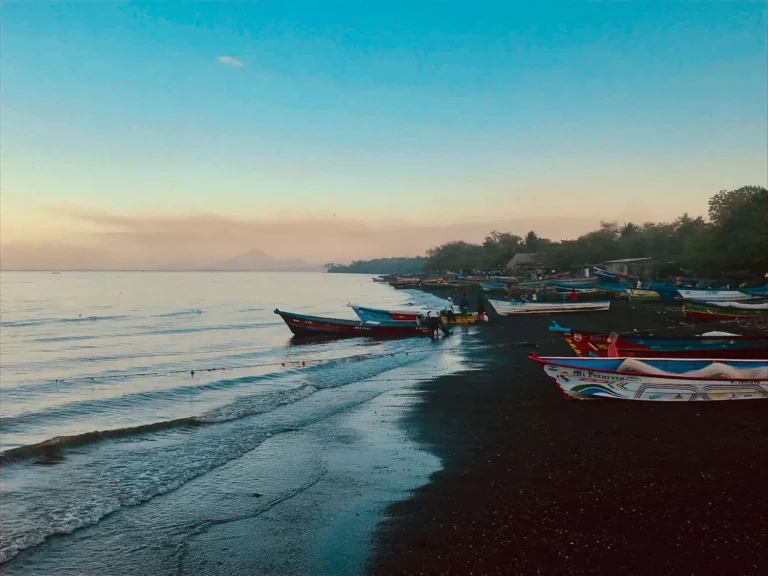
As in many Central American cities, Masaya’s Parque Central forms the heart of the small town. Lined with high trees, delicious food stands, rustic outside restaurants, and market stands, the park is ideal for pausing or meeting the friendly locals. We started by walking west to the colorful Malecon. On your way there, you’ll feel the city’s energetic vibe. If you are hungry, try the Assados (barbeque) on the side of the streets. They are the “muy Rico”! On weekends the recreation area at the Malecon fills with locals. The vibe is pretty unique. Many more secluded and quiet spots offer a stunning view of the Laguna de Masaya. At the same time, many visitors come for group sports activities and spread enthusiasm.
Monimbo – Masaya’s indigenous neighborhood
You’ll find this indigenous neighborhood south of Parque Central. Monimbo makes up for an excursion on your way to Laguna de Apoyo. Its ingenious tribes are alive and even noticeably in its cuisine. The food market at the beginning of the neighborhood seems to be the center of everything in Monimbo. Sitting together, people enjoy sharing their meals while exchanging stories of the day. It’s the perfect spot to indulge in the local cuisine and make new friends. Many of the colorful Hamacas you’ll find across the city are produced in Monimbo, the hammock production center. Oh, Hamacas! We love them!
Mirador de Caterina
Located close to the crater of Laguna de Apoyo, this viewpoint offers stunning views over Lage Nicaragua, Laguna de Apoyo, and distant Granada.
Wander Mercardo de Artesanias
This is the most touristy spot in Massaya, so expect prices to be a little higher. However, it’s one of the country’s most prominent artisans’ markets and is often called “Mercardo Viejo.” Amidst colorful hammocks, you’ll be able to shop for souvenirs made of wood, leather, cane, or ceramic. Many of the little stands offer the same (across all of Nicaragua), but you will be able to find something for everyone. We were more impressed with the dramatic structure surrounding the”Mercardo Viejo.” It seems like the market is located in the courtyard of an ancient fort.
Hike to Laguna de Apoyo
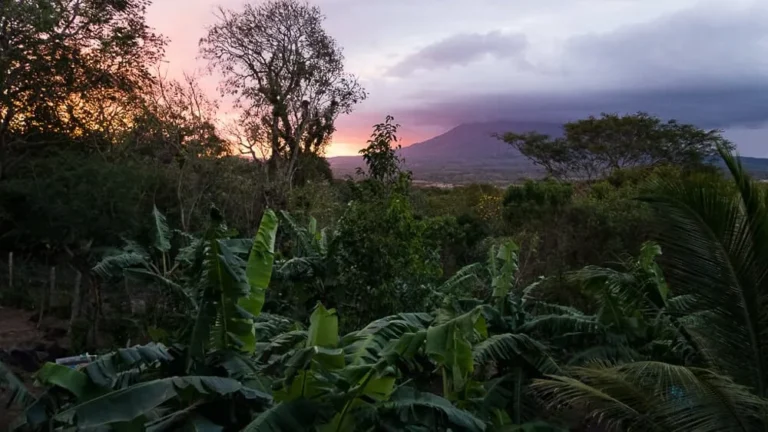
After discovering Masaya’s colorful city center, we decided it was time to see the first volcanic crater lake in our life. The pristine waters of the Laguna are one of our journey’s highlights. To get to Laguna de Apoyo, just take the bus (9C$) to Caterina and walk from there. We tried some traditional Quesillo ( wrapped cheese with sweet milk) before strolling around the neighborhood. Leaving the village, it’s a comfortable and relaxing walk through lush nature. If you start your hike to the Laguna in charming Caterina, you’ll end up at a secluded spot where you can enjoy the lake by yourself. On the way to the Laguna, we passed ancient petroglyphs and spotted some monkeys. Take in the view before you cool down in the carter of the extinct volcano. The natural reserve is the perfect spot to just let go. The last bus to Masaya leaves at 4, be sure to catch it! Otherwise, you’ll have to choose the much more expensive alternative by cab. (200C$)
Volcano de Masaya’s glowing spectacle
Yay Nicaragua! We were able to see lava in an active volcano crater for the first time! It’s mesmerizing and a once-in-a-lifetime view! It’s an indescribable feeling to stand at the top of a blazing volcano. We feel lucky to have been able to catch a glimpse of this natural wonder. We arrived right at sunset and so were able to see the magnificent sulfur clouds as they were slowly disappearing into the dark, leaving only the bright red of the burning lava.
However, due to the toxic fumes, you can spend only 20 minutes taking in the volcano. It’s a short moment that lasts a lifetime. An absolute must-do!
Casa de Porta – a special place in Masaya
We arrived in the afternoon and met our host, Miguel. Once again, we learned quickly that looks are mischieving. We expected Miguel to be a professor in his advanced years who rented a room in his charming house for some company. However, the opposite was the case. The music professor, who also teaches kids to swim in his backyard, welcomes friends daily. The visitors were as illustrious as the host himself. They varied from young, revolutionary musicians to elegant men with sophisticated appearances. We often joined them on the wooden rockers and appreciated the positive and authentic vibe. They weren’t just singing and playing instruments. They exchanged stories about the country, its culture and revolution, daily life, and politics. We have spent countless unforgettable moments with the unconventional group. Miguel’s aura of inner peace and contentment was so enriching for us. We will be forever thankful for sharing his home and his life with us. Hostal Casa de Porta is truly the perfect spot to immerse in Masaya’s unique vibe.
Practical Travel Tips for Masaya


Going to Central America?
Let us inspire you!
PLACES TO VISIT IN NICARAGUA
Often overlooked, Nicaragua is home to friendly people, dramatic landscapes and rich culture!
-
Golfo de Fonseca | The most unique border crossing
The most scenic border crossing Getting from Nicaragua to El Salvador can be quite a ride if you travel by bus via Honduras. Luckily we stumbled upon the most scenic and relaxed way to cross borders: A boat ride via Golfo de Fonseca. Golfo de Fonseca is a gulf on the Pacific coast bordering Nicaragua,…
-
Léon | City, beach and volcanos
A charming city between volcanos and beaches Léon is Nicaragua”s second largest city, though it’s much less commercial and touristy than Granada. Despite being a city of more than 200,000 people, Léon still retains its genuine charm, mainly through its intense passion for poetry. Poetry and literature are at Léon’s core – locals honor their…
-
Granada | Nicaragua’s colonial beauty
Nicaragua’s colonial colorful beauty G-R-A-N-A-D-A, we almost want to color every letter when we think about this stunning colonial city. But unfortunately, we arrived in the dark and only saw the town after sunset. While looking for our Airbnb, we passed grand churches and Calle la Calzada, a street lined with cafes, restaurants, and shops…
-
Isla Ometepe | Nicaragua’s mysterious volcanic island
The mysterious volcanic island Visiting Isla Ometepe in Nicaragua was a surreal experience! The scenery and wildlife were simply spectacular – from soaring volcanoes to lush forests, it’s the perfect place for an unforgettable adventure. The lake surrounding the island, Lago Nicaragua, was unbelievably pristine, and it’s actually the biggest freshwater lake in all of…