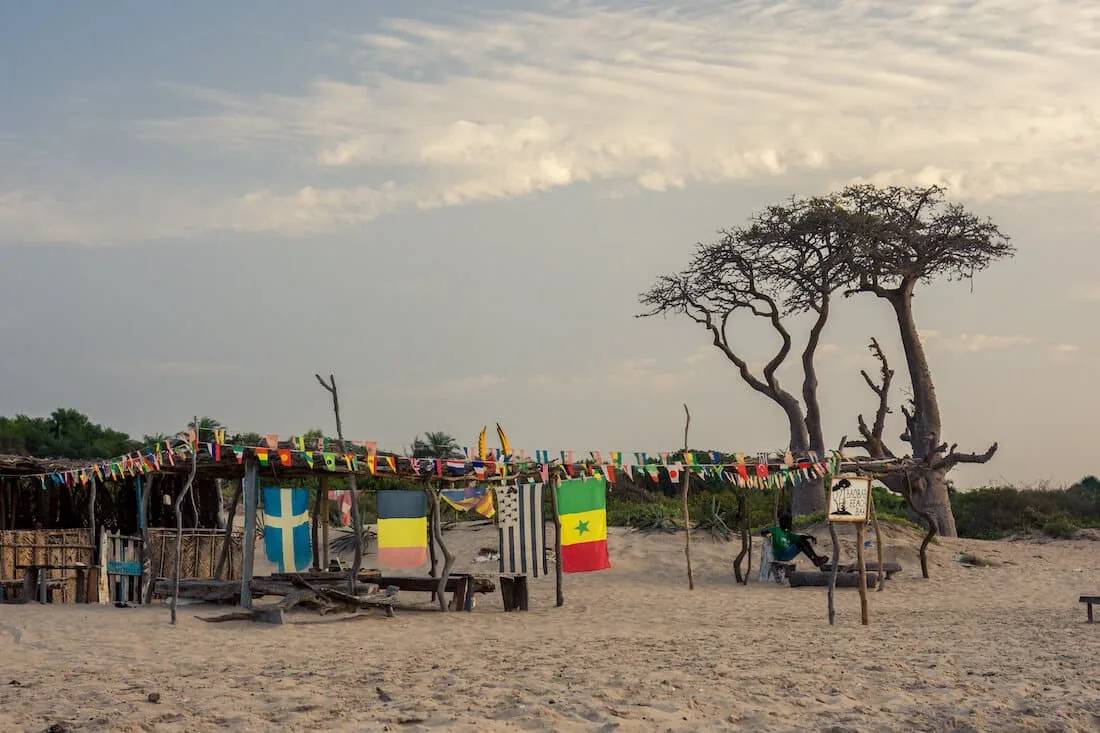
Casamance
SENEGAL
Senegal’s Most Soulful Escape
After a quiet adventurous border crossing from Gambia by car, boat, 4×4, and another car we were welcomed to the fascinating universe of Casamance. We immediately liked the captivating region nestled between Ziguinchor and Cap Skirring as it felt very relaxed and authentic.
Take a journey with us and enjoy the scenic beauty of the tiny community campements that dot the banks of the Casamance River. Here, the mangroves and lagoons blend perfectly to create a unique environment.
From sandy beaches to forest-covered islands, there is so much to see and do. Immerse yourself in the beat of traditional villages and soak up the culture of the fiercely independent Diola people, who have made this region their proud homeland.
We loved exploring Abene and Kafountine, two rather traditional villages where the fascinating and fiercely independent Diola people keep their culture alive in the beat of their music and daily life. While we wpuld always enjoy some hours by the beautiful sea, it was a great expereince to hang out in he village and get to know the welcoming locals.

Best places to stay in Casamance
In Casamance, where you stay should feel part of the journey, not just a place to end the day. This is Senegal’s greener south — a region of mangroves, rice fields, forest paths, Atlantic beaches and Diola villages — and the most meaningful stays are the ones that keep you close to that landscape. I would look for small ecolodges, locally rooted guesthouses and community-style campements rather than large resorts detached from the place around them.
Akine Dyioni feels like one of the most fitting places to stay in Casamance: quiet, nature-led and closely connected to the village of Diembéring. Set near the dunes and the Atlantic, it offers the kind of stay that makes you slow down — sea air, sandy paths, mangroves nearby and a stronger sense of Diola culture than you would find in a standard beach hotel. This is a good choice for travelers who want Casamance to feel personal, remote and rooted in place.
Le Papayer is a softer beachside option, with direct access to the coast and enough comfort to make it feel like a real retreat. It works well if you want to experience the Atlantic side of Casamance without losing the region’s slower, more natural rhythm. The appeal here is simplicity: garden paths, ocean air, quiet days and an easy base near Cap Skirring.
Abené ShuDyma Lodge brings the accommodation section further north along the Casamance coast, into the laid-back village of Abené. This is the choice for travelers who want the region to feel less resort-led and more local: beach walks, village life, simple comfort and a slower rhythm close to the sea. The lodge lists rooms with private bathrooms, breakfast, a restaurant serving African and French cuisine, and free private parking
Abene
With its Rastafarian beachy vibes, it was easy for us to fall in love with this place – but it’s important to note that the rastas you’ll meet here are actually Baye Fall, a sect belonging to the Mouride Sufi Brotherhood. And if you’re worried that the tacky Bob Marley tributes that are common in other tourist destinations might be the primary representation of culture here, rest assured that you’ll find plenty of rich Diola culture and genuine hospitality instead. While Abené might be a sleepy village, there are plenty of experiences to be had and things to learn – it’s the perfect place to stop for anyone looking to travel Casamance region and experience life in a truly unique village.
Things to do in Abene
Learn more about the Baye Fall Philosophy
The Baye Fall is a Senegalese Muslim sect that is most easily identifiable by its locked hair, bright patchwork garbs, spiritual amulets, and well-known tenet of hard work. The Baye Fall aren’t all work in no play, though. They are also known for a vibrant art and music scene that combines reggae instrumentation with traditional drumming and singing. It is said that the name “Baye Fall” comes from the Wolof phrase “bayi faddé”, meaning “those who have renounced worldly things”. This name was given to them by other Muslims who were amazed by their commitment to a life of poverty and hard work. The Baye Fall believe that work is a form of worship, and they often work 14-hour days weaving cloth, farming, or collecting firewood. Even children as young as five are expected to contribute to the community. In addition to their hard work, the Baye Fall are also known for their colorful clothes and hairstyles. Women wear brightly-colored dresses with embroidered patterns, while men often sport turbans and amulets. These Amulets are said to protect the wearer from evil spirits. The Baye Fall are a friendly and welcoming community, and they are always happy to share their culture with visitors. If you’re ever in Casamance, be sure to stop by Abene and say hello to the Baye Fall! You might even learn a thing or two about their fascinating way of life.
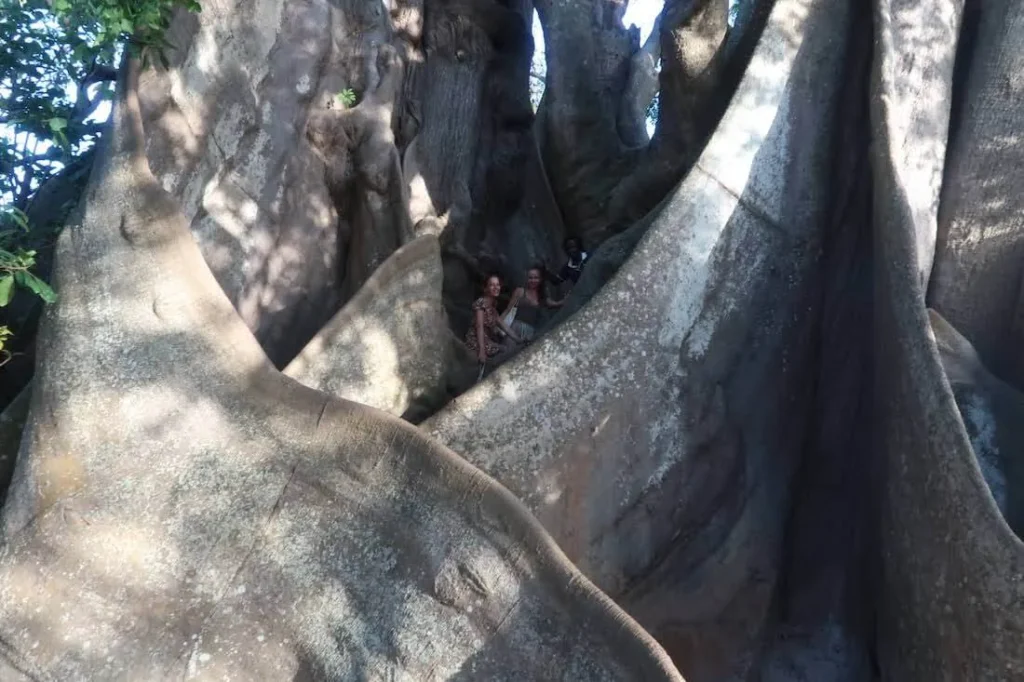
Visit the Batam Wora
The Batam Wora is a huge tree that has been growing in the town for centuries. The tree is said to be lucky, and many people believe that if you pass through it, you will be blessed with good fortune. The Batam Wora is also an important symbol of peace in the region. Every year, on the last Sunday in January, a festival is held in honor of the tree. During the festival, people from all over Casamance come to pay their respects to the Batam Wora and to celebrate the peace that it represents. The tree is a beautiful sight, and it is definitely worth a visit if you are ever in Abene.

Relax by the beach
We loved hanging out by the beach in Abene. It is very relaxed, never too many people and there are some smaller shacks selling snacks and drinks. There is no dangerous current making it a comfortable beach for swimming.
Abene
The bustling town of Kafountine sits only 9 km to the South of Abene. Kafoutnine is a lot livelier with many more restaurants, bars, and shopping choices. Kafountine is a major fishing town in Senegal and while tourism continues to grow, we were told that the 200 canoes installed by the water provide jobs for about 3000-4000 people. While we found the beach in Kafountine to be pretty cute, it is not a beach-vacation town per sé.
Things to do in Kafountine
Kafoutine fish market
The local fish market is truly a sight to behold. As one of the busiest fishing towns in Senegal, you’ll always see some action. We loved getting up early to see the fisherman come back from their nightly trips. There is a lot of running, fish cleaning but also smoking going on. We loved dried fish and found it super interesting to see how it was smoked and prepared.

Take a boat trip
After observing the bustle of the fish market and befriending some of the fishermen, they offered to take us out and show us some of the surrounding islands. While we were a little unprepared for a boat trip (we got great sunburns) we had lots of fun watching the birds and even visiting a cannabis island!
Ziguinchor
Ziguinchor is the capital of the Casmance region and is located right by the Casmance River. We found the city itself to be very unpretentious and certainly not used to catering much to tourists. However, Ziguinchor manages to be relaxed and lively at the same time offering a glimpse into the lives of its diverse population consisting of Diola (Jola), Bainuk, and Fula. Ziguinchor is also reasonably small making it very easy to explore the city on foot. While Ziguinchor is by no means comparable to the Dakar, there is some cool nightlife going on and you can also always find some local exhibitions.
Things to do in Ziguinchor

Casamance River
The Casamnce River gives Ziguinchor a distinct feeling. While several hotels are built by the river, we loved visiting local spots a little bit east of the bridge for our sundowner. During the day, there are plenty of tours around the river to take you fishing or bird watching.
Nightlife in Ziguinchor
Even though Ziguinchor is not a party-mecca, we had lots of fun going out because we could just so easily join the locals and always felt super safe.

Visit Marche Saint-Maurice
This lively market is located South of the river and while we found it to be lively and super interesting, it is still easy to walk and manage even for the more faint-hearted.
Practical Travel Tips for Casamance


Traveling Senegal?
Places to visit Senegal & The Gambia
-
Day trips from Dakar
A red lake, beaches and culture Situated on the Atlantic coast, Senegal has beautiful beaches, lagoons, and island archipelagos. Inland, there are forests, savannas, and mountains. When visiting Dakar, there are plenty of things to do and see. However, if you want to discover Senegal’s diversity, Dakar makes the perfect base to visit the Pink…
-
Things to do in Dakar | West African city life
Between Ocean, Art and Memory Dakar is a bustling, exciting metropolis that will make you want to explore Senegal. The capital of this African country has over one million inhabitants, and it’s only growing as more people move into Dakar from all around the region in search of opportunities. Dakar’s bustling vibes are displayed at…