Meknes
Morocco
A Medina Without the Performance
Meknès is not as often visited as its glamorous neighbor Fez. We really can’t understand why. To us, Meknès was a fascinating city to see because it allowed for more authentic impressions of Morocco. It’s not as busy or big as its famous neighbor Meknes, but that only adds to its charm. Meknès offers its visitors plenty of things to do, and we hope to inspire you to visit this gem!
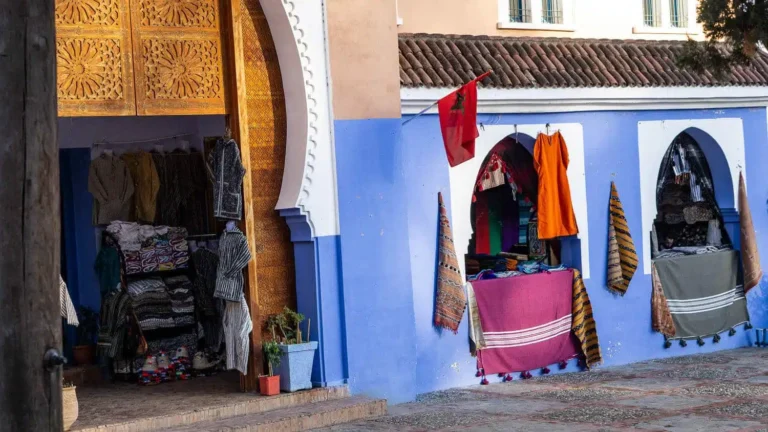
After visiting the blue medina of Chefchaouen, we were off for a more authentic experience. Contrary to our ride to Chechaouen, we quickly realized we were the only two tourists on board. It didn’t take long until it became the center of attention and flirt attempts, which we found pretty entertaining. It was already dark when we arrived in Meknès. Upon entering the Riad, we realized those language barriers would challenge us in the following days. While we understand some French, there seemed to be no way our brains could formulate a response in French! For the first time in a long time, we could not communicate!

Best places to stay in Méknes
Meknes has a quieter accommodation scene than Morocco’s more famous city breaks, and that suits the city well. The best places to stay here are small, atmospheric and close to the old medina — riads where traditional architecture, shaded patios and personal hospitality give you a softer way into the city.
Riad Inspira feels like a natural match for Meknes. Set in the old medina, it leans into the city’s quieter character with traditional materials, Moroccan antiques, architectural details and a sense of place that feels collected rather than styled. A good choice for travelers who prefer character and calm over hotel polish.
Riad Menthe et Citron has the appeal of a small guesthouse rather than a showcase property. Its strength is intimacy: a patio, a terrace, simple rooms and Moroccan meals prepared with market produce. For Meknes, that feels right — this is a city that rewards slowing down.
Riad Yacout is the more classic option: comfortable, historic and well located near the old imperial quarter. It works well if you want a traditional riad setting with easier access to Meknes’ main sights, while still staying within the architectural language of the city — tiled courtyards, carved plaster and heavy doors.
Explore the medina of Méknes
Inspired by Louis XIV and the grandeur of Versailles, Moulay Ismail set out to turn Meknes into a royal city of power and scale. You still feel that ambition in the medina today — not in a polished, museum-like way, but in its monumental gates, thick defensive walls, quiet courtyards and sudden architectural details that appear between everyday shops and local streets. Meknes may feel more understated than Fes or Marrakech, but its imperial past is never far away.
Bab el-Mansour
Bab el-Mansour is possibly Morocco’s most famous gate. It easily steals the spotlight of Fez’s picturesque blue gate.
The 16-meter-tall structure was named after El-Mansour, a Christian renegade who converted to Islam. As soon as you enter Hedim Square, one of the largest squares in the city’s heart, you will be mesmerized by its grandeur. As you approach the gate”s wooden doors, standing 52 feet high and decorated with Arabic calligraphy that reads, “I am the most beautiful gate in Morocco. I”m like the moon in the sky. Property and wealth are written on my front”, you will instantly feel inspired. While admiring its architectural beauty featuring Almohad patterns, zellij mosaics of excellent quality, and marble columns taken from the Roman ruins of Volubilis (Walili), don’t forget to take a moment to appreciate its historical significance too!
Place el-Hedim
Right in front of it, you’ll find the heart of medina Place el-Hedim. It is said to rival Marrakech’s Djeema al Fna, which we can’t entirely agree to. But, surrounded by restaurants, it’s a place to sit down and let Meknès and its vibe sink in. It was there that we witnessed a certain roughness about Meknès. The serpent charms and restaurant servers put on the brightest smile as soon as one of the few tourists passed, but their faces quickly felt as soon as they realized they were going to be unsuccessful. The Place fills with life in the late afternoon and early evening. Food vendors sell local delicacies such as snails, while others sell clothing.
Place Lalla Aouda
On the other side of Bab el-Mansour, south of Place el-Hedim, you’ll find Place Lalla Aouda. The former parading Place of Moulay Ismail’s famous black guards. Moulay Ismail’s elite unit consisted of 16 000 enslaved people brought in from Sub-Saharan Africa. To ensure their loyalty and dedication, he provided them with women.
Habs Kara
On Place Lalla Aouda, you’ll find Habs Kara. A former underground prison with the capacity of 40000 prisoners. The Sultan imprisoned thousands of Christians in this dark underground labyrinth which reached three levels deep.
Medersa Bou Inania
If you’re interested in learning more about the history of Méknes, we recommend visiting the Medersa Bou Inania. This former Islamic school is one of the best-preserved in Morocco, and it’s a great place to get a feel for what life was like in this city centuries ago.
Follow the traces of Moulay Ismail
To understand Meknes, you have to understand Moulay Ismail. The 17th-century sultan made the city his imperial capital and set out to shape it into a Moroccan answer to the great royal cities of Europe — often compared, in ambition at least, to Versailles. His rule left Meknes with monumental gates, thick defensive walls, vast granaries, royal stables and palace remains that still give the city its unusually grand, almost austere character.
Moulay Ismail’s legacy also carries an almost mythical personal scale: he is often said to have fathered more children than any other man in recorded history. Whether read as fact, legend or royal propaganda, it adds to the larger-than-life impression of a ruler whose power, ambition and excess still shape the way Meknes is remembered today.
Mausoleum of Moulay Ismail
The next stop on our list of things to do in Méknes is the Mausoleum of Moulay Ismail. Thisbeautiful building was erected in honor of Morocco’s second Sultan, and it houses his tomb and the tombs of his two sons. The mausoleum is open to the public, and it’s worth a visit.
Take a horse carriage
Moulay Ismail adored horses, and it seems like he passed his passion on to the city. We found plenty of horse carriages waiting in front of Place el-Hedim. Extravagantly decorated, the carriage reminded us a bit of Cindarella’s. And there it was again. The beauty and roughness of Meknes were perfectly blending. While the wagons appear to be almost sugar-coated, the horses are not. On second glance, you see many poorly-treated and dangerously handled horses. The bridal was often tied to the legs. The bound horses broke our hearts and finding a well-treated horse took quite some time. The ride is pretty unimpressive as you can’t pass any narrow alleys by horse. We were almost a little disappointed once we stopped and were told we had arrived at the barns
Royal corn chambers in Méknes
The royal corn chambers in Méknes are indeed a sight to behold. High arches form the former granary, and the whole structure is equipped with a sophisticated ventilation system. The corn chambers held provisions for Ismail’s precious horses, and you must pass through the dark, cool barrel-like halls to visit the horse barns. It’s a fantastic place and one of the things to see when you’re in Méknes.
Agdal Basin in Meknes
The Agdal Basin is one of Meknes’s most famous historical landmarks. The basin was built in the 12th century and served as a reservoir for the city’s water supply. Back in the day, the basin was filled by aqueducts. It was also used as a swimming pool for the royal family. In the 18th century, the basin was converted into a public bathhouse.
Today, visitors can enjoy the beautiful architecture and relax by the refreshing waters of the basin. Ismail’s water reservoir, Agdal Basin, lies right behind the corn chambers.
Shop at colorful Souks
Whereas you might be a little overwhelmed by navigating alleys while escaping persuasive salespeople in Fez, Meknès offered a much more relaxed shopping experience. You’ll find several lively souks and plazas amongst quiet passages as you wander from the Berber through the Jew and Arabic quarters. The vegetable market is bustling and offers a glimpse into daily life!
Popular Tours ihn Méknes
Practical Travel Tips for Méknes


Thinking about traveling Morocco?
Places to visit in Morocco
Live the dream of 1001 nights!