Fez
Morocco
The world’s most extensive maze
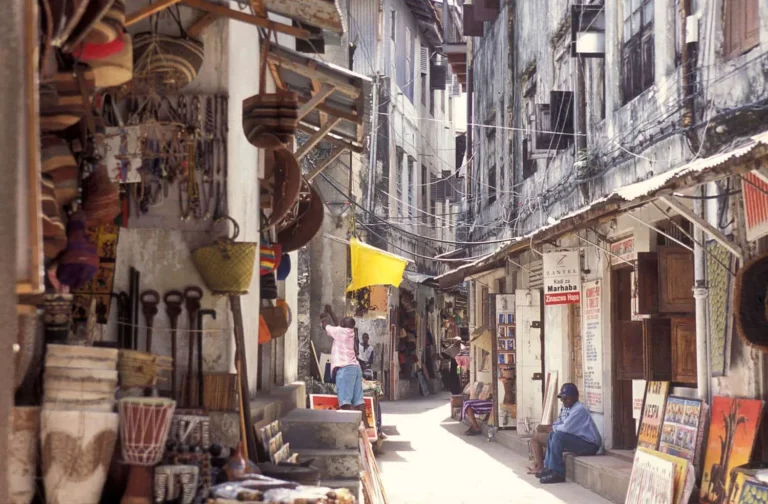
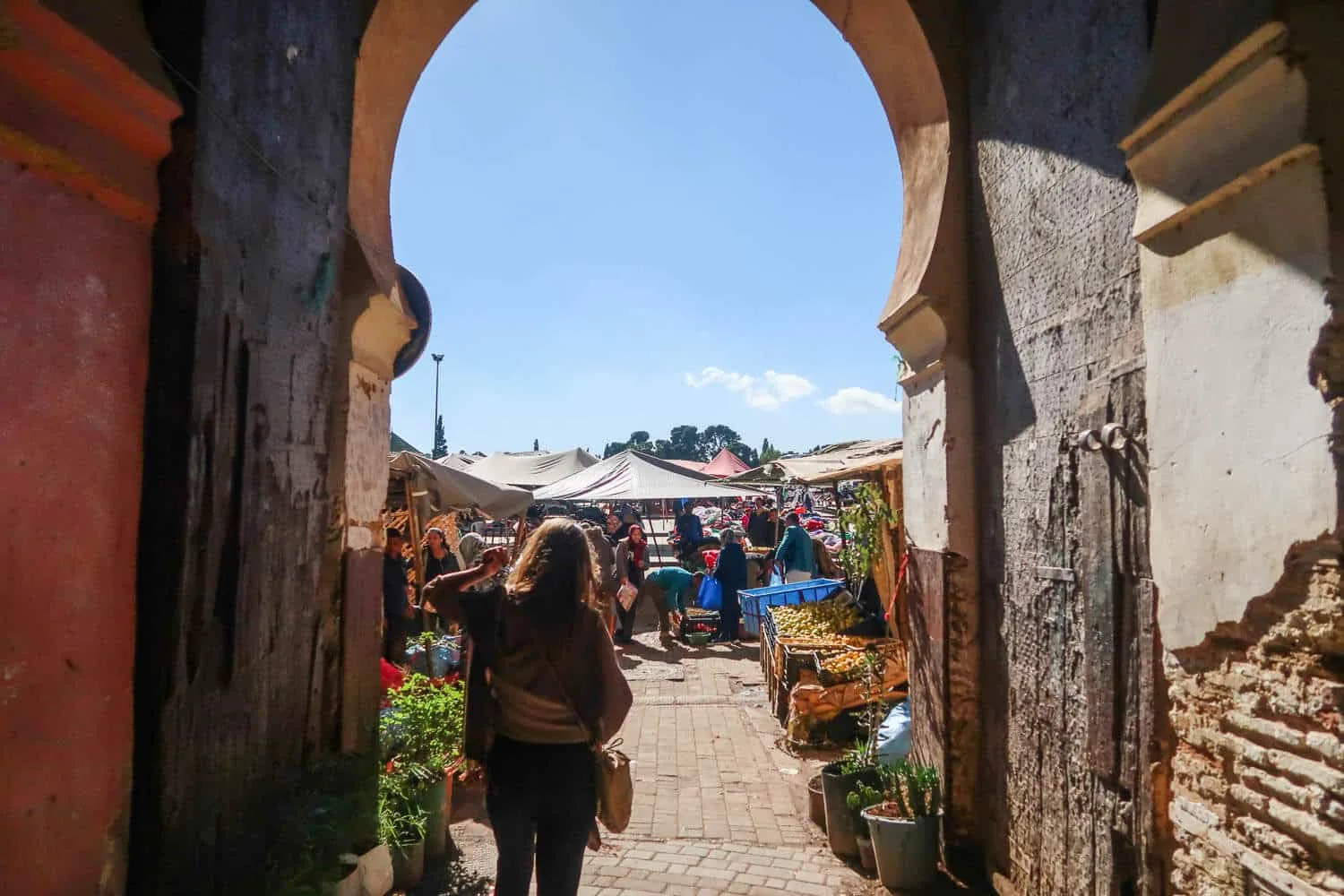
Until today, the medina of Fez is the largest car-free zone in the world. Fez’s old city, the medina, consists of more than 9400 alleys. Some of them are more extensive; some so narrow you almost don’t recognize them as a path. Moroccans are proud of their traditions and heritage. As you roam through the streets, you’ll be able to watch artisans apply century-old traditions. Fez, one of the four royal cities of Morroco, was home to respected Imans, artists, and scholars and is a proud, confident city. It felt cosmopolitan and yet quaint at the same time. You’ll see tourists roaming the streets, salespeople who seem to be able to talk any language of this world, next to mules pulling carts as in the middle ages. Even the city’s waste is carried away on mules.
9400 alleys taking you back in time
You’ll be able to find century-old grand buildings, stunning hidden plazas, and delicate wells behind rustic, decrepit alleys and buildings. Fez has a certain roughness, not just visible in its architecture. Even though many “Fessi” traded their medina home for a more modern home in the novelle city, it is still home to 70 000 people.

Best places to stay in Fez
Fez is a city where your accommodation can completely change how you experience the medina. After a day in the narrow lanes, tanneries, workshops and crowded souks, a good riad becomes more than a place to sleep — it becomes your pause from the city. For Fez, I would choose places with a strong sense of heritage: restored old houses, local craftsmanship, small teams, quiet courtyards and a connection to the medina rather than a hotel that feels detached from it.
Dar Seffarine is one of the strongest choices if you want to feel the architectural depth of Fez. Set in a very old house in the ancient medina, it has been restored as a guesthouse and is described by the property as a traditional building in Fez’s World Heritage-listed medina. The restoration took two years and involved 25 craftsmen, which makes it especially interesting for travelers who care about heritage, craft and the survival of traditional architecture.
Riad Laaroussa is the more elegant, established option — a restored 17th-century palace in the heart of the Fez medina, with rooms around a courtyard shaded by orange trees. It also has a stronger responsible-travel angle than many luxury riads: the property says it has held the Green Key label since 2013 for its commitment to responsible tourism.
Karawan Riad is the refined design choice, but still rooted in restoration and craft rather than generic luxury. During its decade-long restoration, the owners say they used materials made by local craftsmen, including hand-crafted zellige, wrought iron, plasterwork, lanterns, embroidery and painted wood. It is a good fit if your readers want something highly polished, but still connected to the artisan language of Fez.
Explore the medina of Fez
The medina of Fez is one of Morocco’s great historic worlds: founded in the 8th century and shaped over centuries into a center of religion, learning, trade and craft. Within its walls, the city still feels remarkably alive. Donkeys move through lanes too narrow for cars, craftsmen work behind wooden doors, bread is carried to communal ovens, and the old souks continue to follow rhythms that are not purely arranged for visitors. It can be intense, but that intensity is part of what makes Fez so powerful — the medina is not a backdrop, but a living city.
Stroll Through the Medina
The best way to experience Fez is simply to walk — not with the idea of seeing everything, but of letting the medina pull you in slowly. One moment you are passing spice stalls and copper workshops, the next you turn into a quiet lane with tiled fountains, old wooden doors and the smell of fresh bread drifting from a communal oven. I would recommend going with a trusted licensed guide at least once, especially on your first day, because Fez has so much history hidden behind plain walls. Just be aware that unofficial guides can be very persistent around the main gates, so arrange someone through your riad, agree on the price beforehand, and don’t feel pressured to follow anyone in the street.
The fountains of Fez
There are more than 60 public fountains all over the medina. Many of located close to a Mosche to allow people to clean before entering for prayer. You’ll hear the calls for prayer from the Minarettes five times daily. Unfortunately, as a non-muslim, you are not allowed to enter.
Take a free walking tour
Many of Fez’s most beautiful sights are not so easily found. Take your time when wandering the alleys. Make sure to admire the many ornaments you’ll come across. You’ll often find an impressive building, almost hidden in courtyards. If you want to get to know Fez, we really urge you to join a free walking tour, so you don’t accidentally walk by the attractions
Bab Boujeloud, the impressive entrance to Fez
Known as “The Blue Gate of Fez,” Bab Boujeloud welcomes visitors to the medina of Fez. As visitors enter the median, the delicate tiles shimmer in blue, the color of Fez. The other side of the gate shines green, which represents Islam. The gate is stunning, and it’s even more beautiful during sunset. No wonder it has become one of Morocco’s most famous landmarks! Several cafes and restaurants offer a rooftop terrace from which you have a marvelous view of the Bab Boujeloud, the blue gate.
Get scrubbed at a hammam
A hammam is a typical Moroccan bathing house. You’ll be able to find many of them across the medina and in the new city. A visit to a hammam is an absolute must-do when traveling to Morocco! We promise that your skin wasn’t softer since birth! Of course, many hammams catering to tourists have sprung up in chic hotels, but we made the experience that the treatments in local hammams are much more thorough! We have been told that visiting the hammam also plays an essential role in social life. For example, where it is common for men to meet at cafes, the hammam often offers the only place for women to meet and hang out. Men and women have separate times to enter. The opening hours adapt to the “traditional way of life.” This means that men can visit a hammam in the mornings or at night. Either before or after work. While women get daytime hours, they enjoy the hammams from noon until evening. Every Morrocan we met visits a hammam once per week. Within the public hammam, one can pay for a scrub, or you’ll do it to each other.
Shop till you drop
Moroccans are proud of their traditions. Even though we are not big shoppers, we found it hard to resist what the souks had to offer. The colorful ceramics, atmospheric brass lights, argan oil, and exquisite leather products were calling us to buy them. Much of the shopping is done on Souks. (A souk is more or less a square with several vendors selling similar products.) In Fez, you’ll find a Henna, ceramic, leather, and carpet Souks. All the colors, scents, and impressions can get a bit much, especially when pushed by eloquent salesmen. Therefore, it’s best to get an idea of what you want to buy before entering a shop. Take your time, don’t let anybody talk you into buying and haggling! Don’t be afraid to name a flow price. The proposed rates are often exorbitant and aim to make you feel bad when suggesting a much lower one.
Admire Fondouk el-Nejjarine and indigenous woodwork
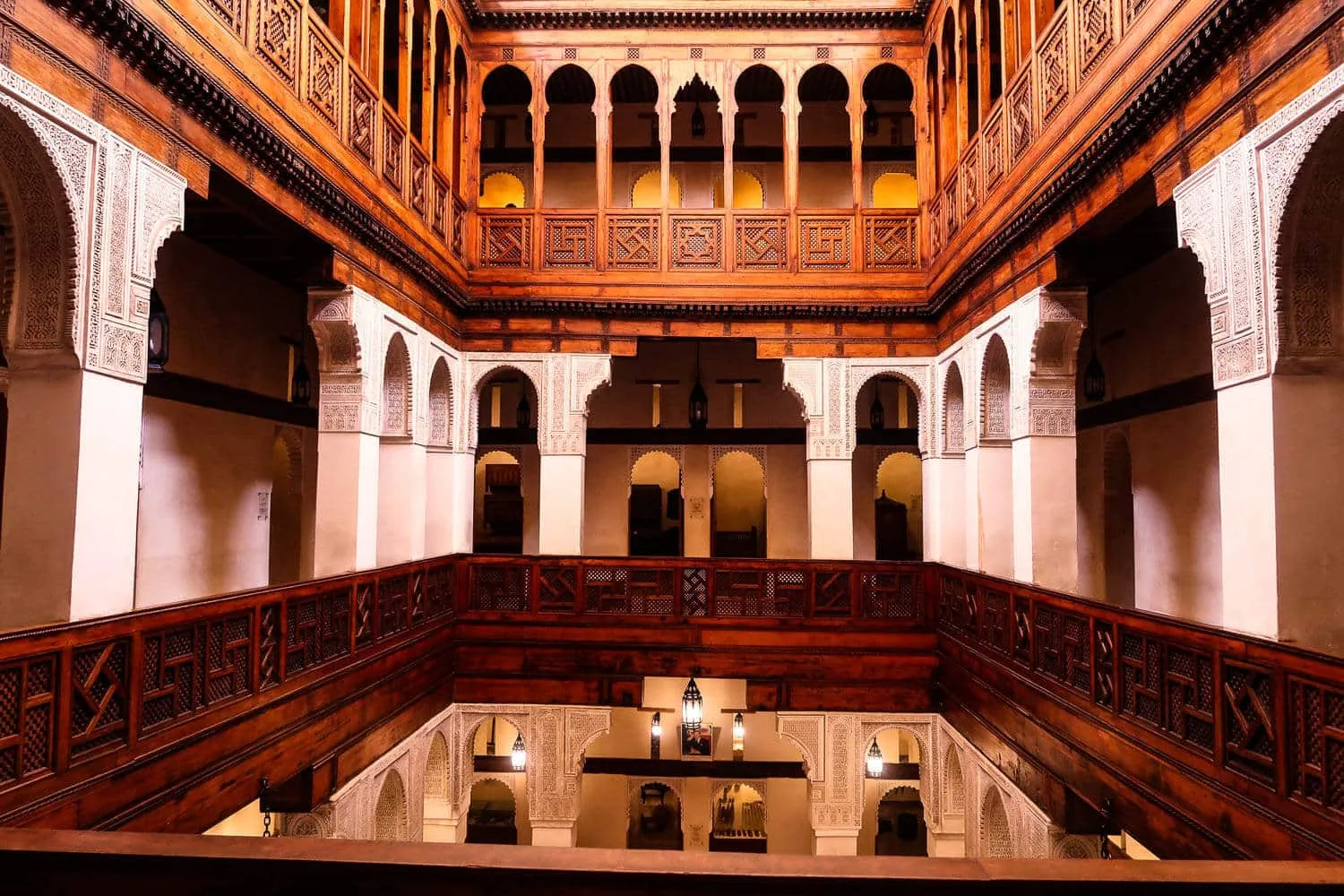
It’s a beautiful building housing a museum. The inside of the museum is stunning! Fondouk el Nejjarine, the wood museum, displays tools and artifacts indigenous to Morocco. The museum also features an incredible view over the medina of Fez from its rooftop! (20 DHS, open from 10 am- 5 pm)
Hold your breath at traditional tanneries
Without a doubt, Fez is famous for its traditional tannery. Mainly the big tannery is often associated directly with Fez. Here leather products are still manufactured in the old way. Mules carry piles of goat, lamb, camel, and cow leather to and from the tannery. After the leather is cleaned, it is soaked in a mix of chalk, pigeon poo, and salt. The smell is brutal.
Luckily, we visited the tannery after it was raining, which reduced the smell. The leather is colored with poppy seeds, indigo, or Safran in the following steps. Morocco’s leather products belong to the finest in the world. The stores close to the tannery sell unique and exquisite products. Expect to pay a higher price, though!
Spice up your taste buds and indulge in Moroccan cuisine
Moroccan cuisine is delicious and so versatile! Often a mix of hearty and sweet flavors, it is sure to ignite your taste buds.
While many places cater to tourists, we urge you to take your time and visit the local restaurants and food stands. You’ll find plenty of them parallel to the main street heading towards the veggie market. It’s nice to take the time and engage in a conversation. We learned so much about the local customs by eating with the locals and hanging out over a typical mint tea.
Popular Tours in Fez
Practical Travel Tips for Fez
Traveling Morocco?
Places to visit in Morocco
Live the dream of 1001 nights!
-
Marrakesh | Live dream of 1001 nights
A Love Letter to the Beautiful Madness of Marrakech Marrakesh mesmerized me from the first second. Immediately we were surrounded by “guides” eager to lead us to our Riad. We would have never found our Riad, even though the taxi left us only about 300 m from the entrance. The unimposing door was hiding a…
-
Meknès | Authentic vibes between beauty and roughness
A Medina Without the Performance Meknès is not as often visited as its glamorous neighbor Fez. We really can’t understand why. To us, Meknès was a fascinating city to see because it allowed for more authentic impressions of Morocco. It’s not as busy or big as its famous neighbor Meknes, but that only adds to…
-
Chefchaouen | Morocco’s blue city
Beyond the Blue Many travelers have been enthused by the charm of Morocco’s blue city: Chefchaouen. So, of course, we were eager to discover the blue town for ourselves. After getting a CTM bus ticket, we were off to the Rif mountains. As soon as we arrived at the bus station, we were a little surprised: at…