Kalinago Barana Auté
Dominica
Voices of Dominica’s First People
Dominica is often described through its landscapes first.
Rainforest. Rivers. Waterfalls. Hot springs. Volcanic peaks. Roads that twist through the mountains before opening suddenly to the Atlantic. It is an island that feels physical from the moment you arrive — green, humid, steep, alive.
And yet, if you only come to Dominica for nature, you miss something essential.
A visit to Kalinago Barana Auté adds another layer to the island. Located in the Kalinago Territory on Dominica’s east coast, it is one of the places where you can learn more about the Indigenous Kalinago people, their history, craft, food traditions, building techniques, plant knowledge and relationship with the land.
It is not the kind of stop that overwhelms you with spectacle. There is no grand monument, no polished museum route, no overly staged visitor experience. Instead, Kalinago Barana Auté is quieter. You walk outside. You listen. You learn how plants, water, wood, food, shelter and community are connected.
In a country so often marketed as the Nature Island of the Caribbean, that matters. Because Dominica’s nature is not just scenery. It is also cultural memory, practical knowledge and lived experience.
Its charm is in the details.
A Different Side of Dominica
Most travelers come to Dominica expecting waterfalls, hikes and rainforest. And of course, those experiences are part of what makes the island so special. But Dominica is not only a destination to look at. It is a place to understand.
That becomes clear in the Kalinago Territory.
The east coast already feels different from Roseau and the western side of the island. It is quieter, more open to the Atlantic, and less shaped by cruise traffic or Carnival crowds. The roads are winding, the landscape is lush, and the journey itself slows you down. Distances in Dominica are not measured only in kilometers. They are measured in curves, hills, weather, villages and sudden views of the sea.
By the time you arrive at Kalinago Barana Auté, you have already entered a different rhythm of the island.
This is not a place I would recommend squeezing between two quick photo stops. It deserves more attention than that. Not necessarily a full day, but enough time to take the guided walk, ask questions, look properly and understand that you are visiting a part of Dominica with its own history, identity and meaning.

Best Places to Stay for Visiting Kalinago Barana Autê
You can absolutely visit Kalinago Barana Autê as a day trip from Roseau, and for many travelers that will be the easiest option. But if this part of Dominica is more than a quick stop for you, I would also look at stays inside the Kalinago Territory or along the east and northeast coast. Staying closer gives the visit more context — the Atlantic side, the forest roads, the villages, the slower rhythm — and makes the experience feel less rushed.
A homestay in the Kalinago Territory is the most meaningful choice if cultural understanding is the reason for your visit. It will not be the most polished stay, but that is not the point. The value is in time, proximity and exchange — learning from daily life, local stories, food, family rhythms and traditions shared on local terms.
I would choose this if you want your visit to feel less like an excursion and more like a respectful encounter with the community.
Rosalie Forest Eco Lodge is the nature-led choice. Set in the Rosalie rainforest valley, it gives you rivers, forest, mountain air and a slower east-coast feeling. It is a good fit if you want to stay somewhere low-key and close to Dominica’s wilder interior.
I would choose it if you want your visit to the Kalinago Territory to be part of a wider east-coast experience — nature, community and quiet rather than city logistics.
Carib Territory Guest House is another strong option because it keeps you directly in the Kalinago Territory. It is simple and locally rooted, best suited to travelers who care more about context than hotel style.
I would recommend it if you want to stay close to Kalinago Barana Autê and give yourself more time to understand the area beyond a short visit.
What Is Kalinago Barana Auté?
Kalinago Barana Auté is a cultural heritage site in the Kalinago Territory. It was created to share aspects of Kalinago culture with travelers, including traditional architecture, crafts, food, farming practices, natural materials and community knowledge.
It is sometimes described as a cultural village by the sea. That gives you a first idea, but it does not fully capture the experience.
This is not a conventional museum. It is closer to a guided outdoor cultural walk. You move through the site with a guide and stop at different points along the way. Some stops explain traditional building techniques and the use of natural materials. Others focus on plants, water, food, farming, craft and the relationship between the Kalinago people and their environment.
That guided element is essential. Without context, you might only see wooden structures, plants, paths and views. With a guide, the details begin to connect. A roof becomes a lesson in local materials. A plant becomes part of medicinal or everyday knowledge. Water becomes more than a scenic feature. The land itself becomes part of the story.
Who Are the Kalinago?
The Kalinago are the Indigenous people of Dominica. Today, Dominica is home to the largest Kalinago community in the Caribbean, and the Kalinago Territory on the island’s east coast remains an important part of the country’s identity.
This is not a minor detail in Dominica’s story. It is central to understanding the island.
Caribbean travel is still too often reduced to beaches, resorts and postcard views. Dominica already challenges that idea through its nature, but the Kalinago Territory adds something deeper: cultural and historical context. It reminds you that the island was never an empty paradise waiting to be discovered. It was, and remains, home.
When writing or speaking about the community, the word Kalinago matters. Older colonial terms may still appear in historical sources, but Kalinago is the respectful name to use today.
The Guided Walk: Plants, Water, Buildings and the Land
The most valuable part of visiting Kalinago Barana Auté is not one single object or viewpoint. It is the way the guided walk brings everyday knowledge into focus.
You learn how buildings were shaped by climate, materials and need. You see how natural resources were used with purpose. You hear about plants, food, shelter and water not as separate subjects, but as parts of a connected way of living.
That is where the experience becomes interesting.
A plant is not just decoration. A building is not just architecture. Water is not just part of the scenery. Each element carries information about how people lived with the landscape and how knowledge was passed from one generation to the next.
This is also why the visit should not be rushed. If you walk through quickly, you will miss the point. The site works through explanation, attention and small details. It is less about collecting sights and more about understanding what you are looking at.
The walk itself is not difficult, but much of the experience takes place outside. Wear comfortable shoes, bring water and dress for heat, humidity and changing weather. Dominica can shift quickly between sun, cloud and rain — and here, that is part of the setting rather than an inconvenience.
Craft, Food and Community Knowledge
One of the strongest parts of Kalinago Barana Auté is the way it connects craft, food and land.
If handmade crafts are available during your visit, take your time with them. It is easy to treat craft as a souvenir, but handmade work also carries skill, patience and cultural knowledge. Buying directly from local makers is one of the simplest ways to support the community, especially when it is done respectfully and without aggressive bargaining.
Food adds another layer. Depending on your visit, you may be able to learn more about Kalinago cuisine, local ingredients or farm-to-table traditions. This fits Dominica particularly well. The island’s landscape is not only beautiful; it produces, feeds and heals. Plants, farming, food and herbal knowledge all help you understand Dominica beyond hotel menus and restaurant recommendations.
This is where the visit becomes especially relevant for responsible travel. Community-based tourism works best when you do more than arrive, look around and leave. Taking the guided tour, eating locally, buying directly and spending time in the territory all help keep value closer to the people sharing the experience with you.
Kalinago Homestays: Staying Longer in the Territory
One aspect many travelers do not immediately know about is that Kalinago Barana Auté is also connected to Kalinago homestays.
This is worth paying attention to.
A homestay in the Kalinago Territory is not for travelers looking for a resort-style Caribbean experience. It is for you if you want something slower, more personal and more connected to local life. It gives you a very different perspective from staying in Roseau or at a coastal hotel. Instead of visiting the east coast for a few hours, you spend more time in the community and begin to understand the rhythm of the place more naturally.
Of course, a homestay also asks more of you as a traveler.
You are not just booking accommodation. You are entering someone’s home and community. That means being respectful, flexible and open-minded. It means not expecting hotel-style service or a perfectly curated version of local life. It means asking questions politely, respecting privacy and understanding that the experience is based on exchange, not consumption.
For the right traveler, though, this could be one of the most meaningful ways to experience Dominica. It turns the Kalinago Territory from a stop on an itinerary into a place where you spend real time.
How to Visit Respectfully
The Cathedral of Our Lady of Fair Haven of Roseau is another landmark worth seeing, especially if you are interested in the religious and colonial history of the city.
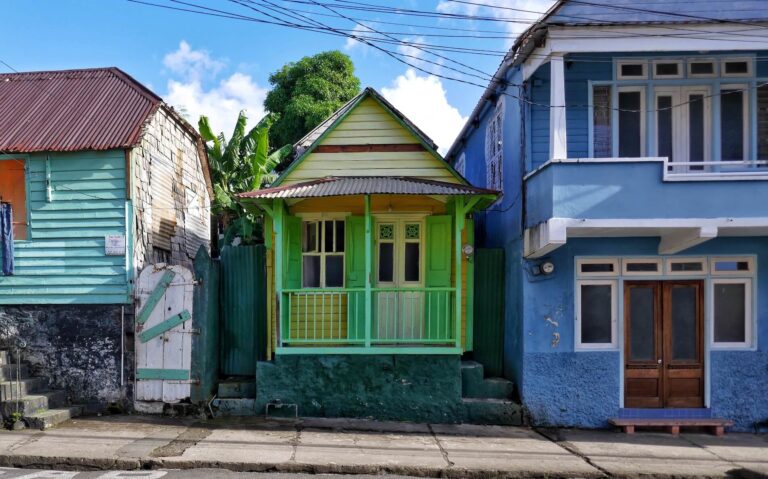
What makes Roseau interesting architecturally is not one perfect style, but the mix. You see Caribbean colour, colonial traces, old timber, practical concrete, decorative balconies, repaired facades and buildings that reflect hurricanes, rebuilding and everyday use.
Roseau is not a museum city. It is a working capital that has been lived in, damaged, repaired and reused. That makes it less polished, but more honest.
Again, remember to look up. The wooden fretwork, verandas and upper floors are easy to miss if you only focus on street level. But they are part of what gives the capital its character.
Practical Tips for Visiting Kalinago Barana Auté
Location: Kalinago Territory, east coast of Dominica
Best for: Culturally curious travelers, responsible travelers, families with older children and anyone interested in Caribbean history
Time needed: Around 1–2 hours for the guided walk, more if you include food or a deeper cultural experience
Bring: Comfortable shoes, water, sun protection, cash for crafts or food
Good to know: Much of the experience takes place outside, so dress for sun, humidity and possible rain
Best combined with: Emerald Pool, Rosalie Bay, the east coast drive or a wider cultural and nature day trip
If you are interested in the homestay option, ask in advance about availability, what is included and what kind of experience to expect. It will suit you best if you are independent, respectful and comfortable with a more local style of travel.
What to Combine It With
Kalinago Barana Auté works well as part of an east coast day trip. You can combine it with Emerald Pool, Rosalie Bay Distillery or a scenic drive along the Atlantic side of Dominica.
That combination makes sense because it shows different sides of the island in one day: rainforest, cultural heritage and local production. It also prevents the visit from feeling isolated. You begin to see how Dominica’s nature, food, history and communities are connected.
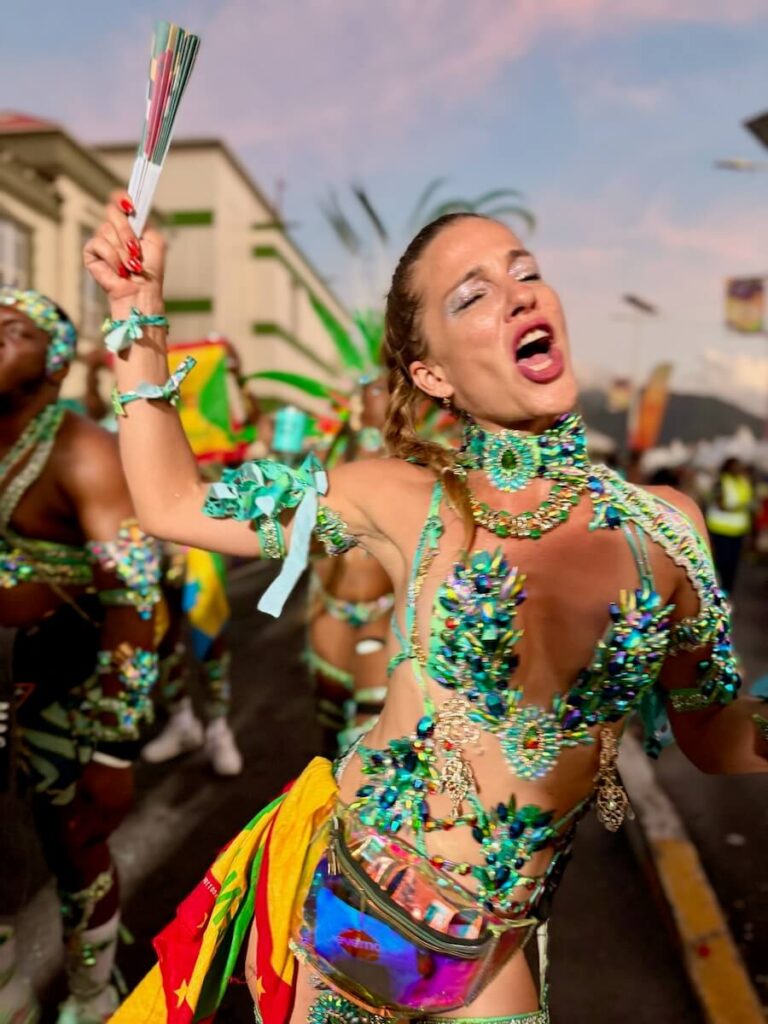
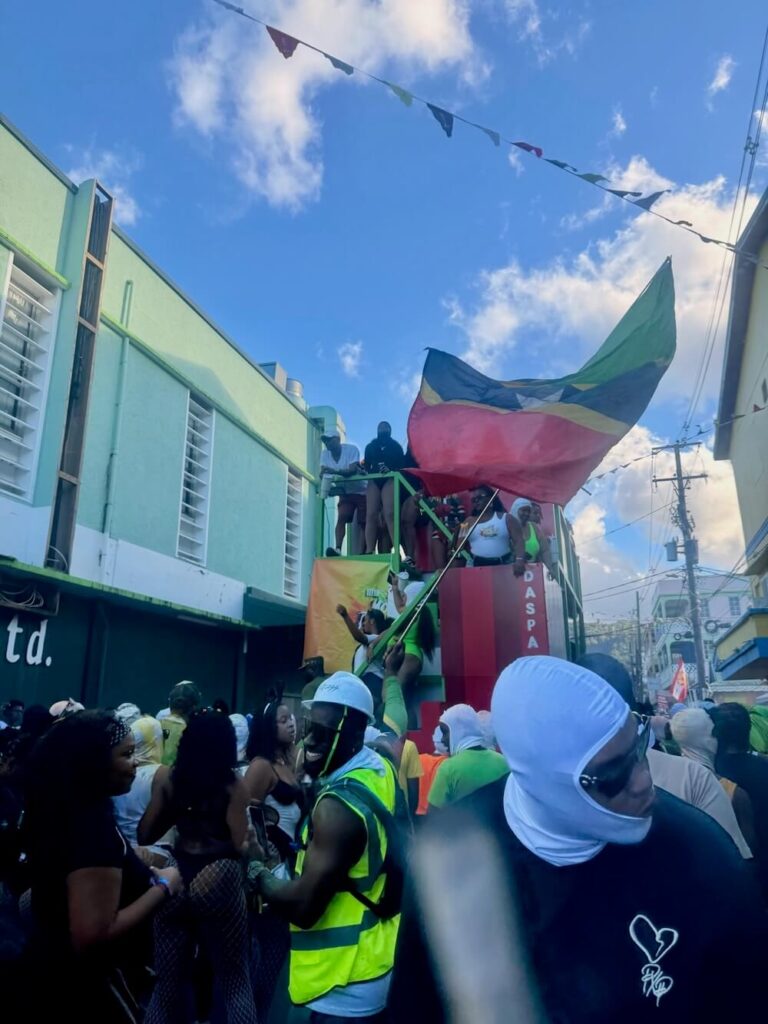
If you are visiting during Mas Domnik, the contrast is especially interesting. Carnival in Roseau is loud, public and full of movement. Kalinago Barana Auté is quieter and more educational. Experiencing both gives you a fuller picture of Dominica: the rhythm of Carnival, the power of the landscape and the Indigenous heritage that remains part of the island today.
From Kalinago Barana Auté to the Burning of the Vaval
If you visit Dominica during Mas Domnik, Kalinago Barana Auté becomes part of a much wider cultural experience. Carnival in Dominica is not only about costumes, music and street parades. It is also about tradition, symbolism, community and memory.
For me, that became especially clear at the Burning of the Vaval.
After the colour and movement of Carnival Monday and Tuesday, the Burning of the Vaval felt like the closing ritual of the season. It brought the whole trip full circle. What started as a journey around Dominica’s Carnival became something much more cultural and rooted — an introduction to the island through celebration, heritage, land and living tradition.
Together, these experiences made Dominica feel more layered than I expected. The island is rainforest, waterfalls and volcanic landscapes, yes. But it is also ceremony, community knowledge, storytelling and cultural continuity. That is what made this trip feel so different from a classic Caribbean itinerary.
Why Kalinago Barana Auté Belongs on Your Dominica Itinerary
Kalinago Barana Auté should not be treated as just another attraction. It is one of the places that helps you understand Dominica beyond the usual Nature Island image.
Yes, Dominica is rainforest, waterfalls, hot springs and volcanic coastlines. But it is also Indigenous heritage, community knowledge, craft, food, storytelling and resilience.
For travelers who want more than beautiful views, this visit is worth making time for. It adds depth to a Dominica trip and shows a side of the island that is just as important as its natural beauty.
Practical Travel Tips for Dominica

Things to do in Dominica
Waterfalls, rainforest, hot springs and volcanic coastlines — Dominica is wild by nature.
-
Roseau, Dominica: What to See in the Island’s Colorful Capital
Roseau Beyond the Waterfront Roseau is small, colourful, busy and a little rough around the edges. It is not the kind of Caribbean capital that feels polished for visitors — except perhaps around the waterfront, where the city briefly becomes more arranged for cruise arrivals. Beyond that first layer, Roseau feels much more local. You…
-
How to play mas in Dominica
Costumes, Culture and Mas There is a moment when Carnival stops being something you watch and becomes something you feel in your body. For me, that moment came on the road with Hysteria Mas in Dominica. The music was already moving ahead of us, the streets of Roseau were filling with people, and suddenly I…
-
Bouyon Music in Dominica: The Soundtrack of Mas Domnik
The Soundtrack of Mas Domnik Bouyon does not politely stay in the background. It pushes forward. It repeats. It builds pressure. It gets into your body before you have fully understood what you are hearing. During Mas Domnik, Dominica’s Carnival, bouyon is everywhere: on the road, at parties, during J’ouvert, from trucks, passing cars, street…
-
Soufrière and Southern Dominica: A Guide to the Island’s Volcanic Coast
Where the Island Turns Volcanic After the intensity of Mas Domnik in Roseau, southern Dominica felt like a different island. The capital had been all music, movement and Carnival rhythm. Bouyon in the streets. Costumes on the road. People watching from balconies. The same corners appearing again and again as we circled Roseau during Carnival….
-
Beaches in Dominica
Dominica’s Beaches, Without the Caribbean Filter Dominica is not the island I would recommend if your idea of the Caribbean is a week of white sand, beach loungers and polished resort beaches. And that is not criticism. Dominica is the Nature Island of the Caribbean for a reason. Its strongest landscapes are rainforest, rivers, waterfalls,…
-
Dominica Beyond Carnival: Best Things to Do Before or After Mas Domnik
Waterfalls, Rainforest and Culture Beyond Mas Domnik You may come to Dominica for Mas Domnik, but you should not leave having only seen Carnival. That was one of the biggest lessons of my trip. Mas Domnik gives you Dominica at full volume: bouyon on the road, J’ouvert in the early hours, T-shirt bands, pretty mas,…