An Itinerary Beyond Carnival
Dominica
Waterfalls, Rainforest and Culture Beyond Mas Domnik
You may come to Dominica for Mas Domnik, but you should not leave having only seen Carnival.
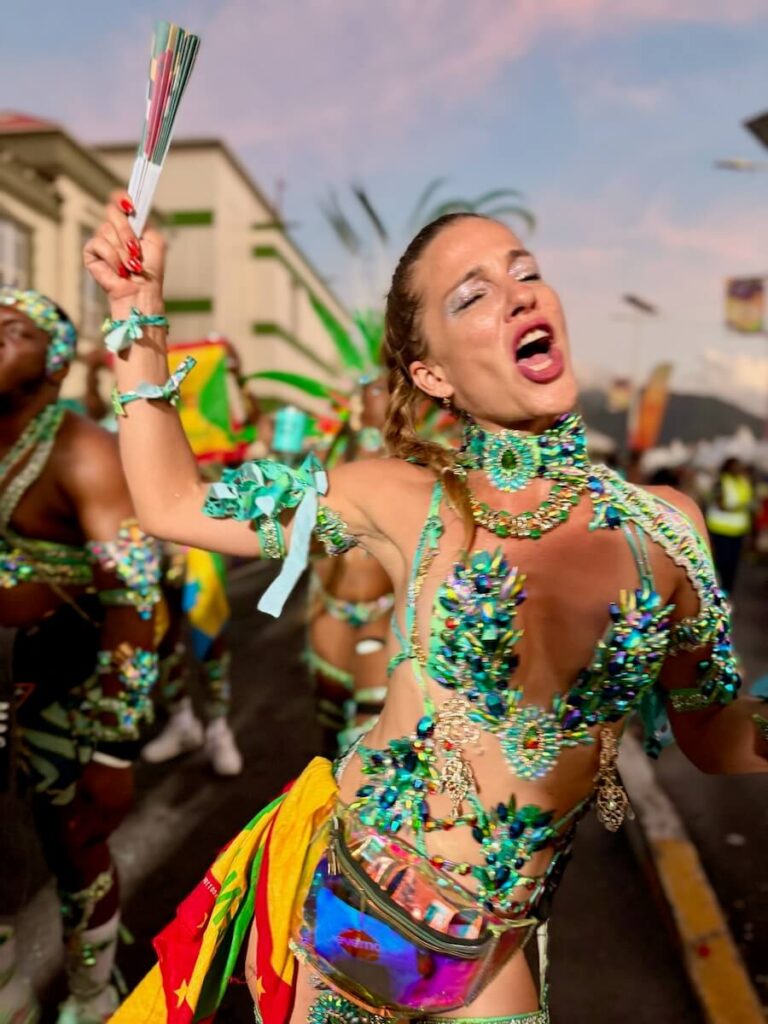
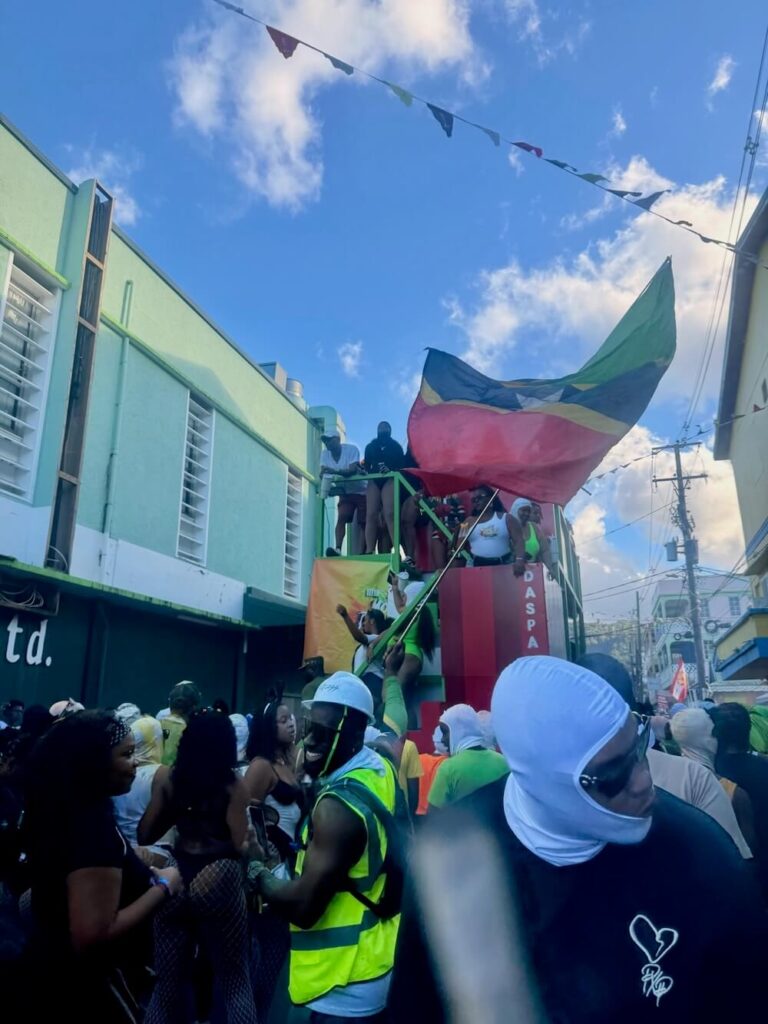
That was one of the biggest lessons of my trip. Mas Domnik gives you Dominica at full volume: bouyon on the road, J’ouvert in the early hours, T-shirt bands, pretty mas, traditional characters, Roseau in motion and the Burning of the Vaval closing the season. It is loud, physical, cultural and rooted.
But as soon as you leave the capital, Dominica changes completely.
The music fades. The roads curve back into rainforest. Steam rises from hot springs. Waterfalls appear at the end of short trails. Rivers cut through green valleys. The coastline becomes volcanic and quiet rather than resort-polished. Dominica is not the Caribbean island you visit for an easy beach holiday. It is the island you visit when you want nature, culture and a little bit of adventure very close together.
So if you are planning a trip for Mas Domnik, do yourself a favour: add extra days.
Carnival may be the reason you book the flight, but the rest of the island is why the trip becomes memorable.
How Many Extra Days Should You Add?
If you are flying to Dominica for Carnival, I would add at least three extra days beyond the main Mas Domnik events.
With only one or two extra days, you can see Roseau and maybe fit in one nature day. That is better than nothing, but it will feel rushed. Dominica’s roads are winding and mountainous, so distances take longer than they look on a map. You do not want to spend your whole trip chasing stops.
A better plan is four to five extra days. That gives you time for waterfalls, hot springs, the Indian River, the Kalinago Territory, the east coast and the south coast without constantly checking the clock.
If you can spend around a week in Dominica, even better. That gives you enough time to experience the main Carnival days and still see why the island is called the Nature Island of the Caribbean.

Best places to stay in Roseau
Roseau is not a place where I would look for a sealed-off resort. If you stay in or near the capital, the value is access: the waterfront, markets, old streets, Carnival routes, ferry connections, dive trips and easy day trips into the Roseau Valley. I would choose somewhere that keeps you connected to Dominica’s local rhythm rather than hiding the city away.
Start in Roseau, but Do Not Stop There
Roseau is where Mas Domnik happens, so you will likely spend a lot of time there.
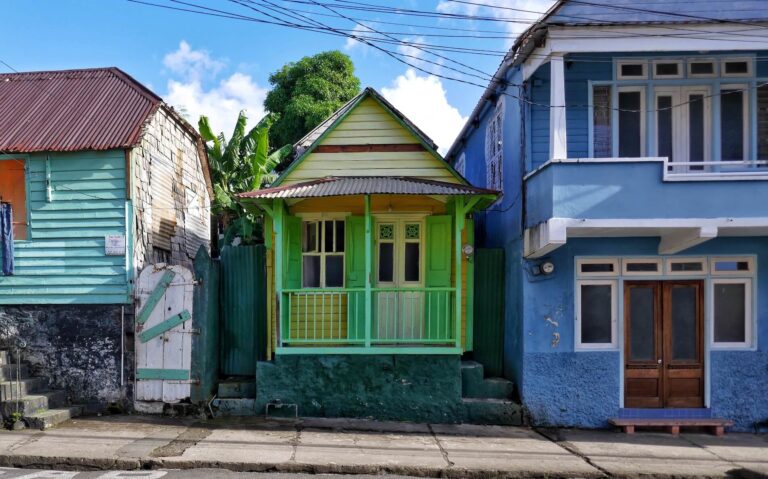
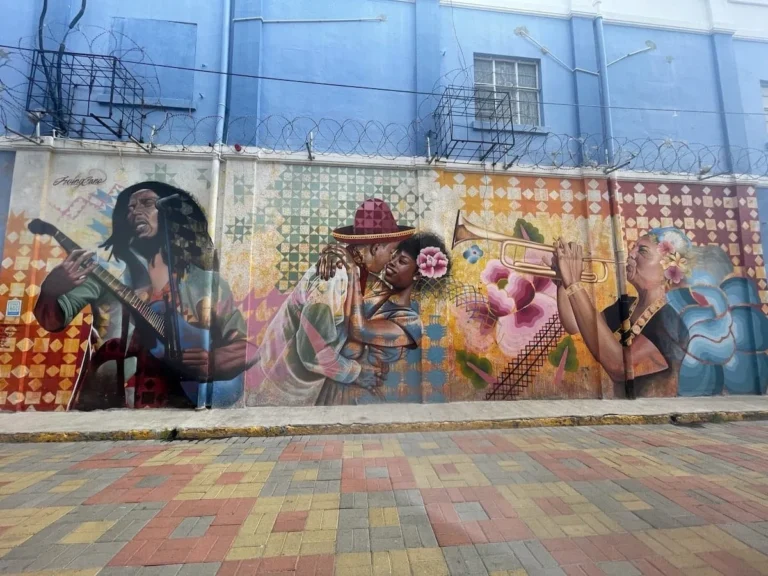
The capital is small, colourful and a little rough around the edges. The waterfront is the most polished part, especially when cruise ships are in port, but walk inland and Roseau quickly becomes more local: wooden balconies, old Creole townhouses, markets, churches, side streets, traffic, vendors and mountain views behind the city.
During Carnival, Roseau becomes the route. You circle the same streets again and again. You start recognizing corners, balconies, faces, vendors and the same people you saw at earlier events. By the end of Carnival week, the city feels strangely familiar.
But Roseau is worth seeing outside Carnival too.
Take a historic walking tour if you can. Visit the Old Market, the Dominica Museum, the Cathedral, the waterfront around Fort Young, and the Botanic Gardens. Look up at the wooden fretwork balconies. Climb or drive up to Morne Bruce for the view over the capital.
Roseau is not a grand capital, but it gives you context. It shows you Dominica’s urban side before the island pulls you back into the green.
Indian River: Slow Down in the North
If Mas Domnik is high-energy, the Indian River is the opposite.
This is one of the best places to slow down after arriving in Dominica or to reset after Carnival. Instead of music trucks and street crowds, you sit in a small boat and move quietly through a shaded river landscape. The pace changes immediately.
The Indian River is best experienced with a local guide. You are not rushing toward a viewpoint or trying to tick off a dramatic attraction. The experience is in the stillness, the reflections, the vegetation, the slow movement through the water.
It is also a good reminder that Dominica’s nature is not only about waterfalls and hiking. Some of its most memorable places are quiet.
Practical tip: Combine Indian River with a northern island day trip, Cabrits National Park, Fort Shirley or lunch near the coast. Bring water, insect repellent and a camera, but do not expect a high-adrenaline activity. This is the kind of experience that works because it is slow
Cabrits National Park and Fort Shirley
The north of Dominica has a different feeling from the rainforest interior.
At Cabrits National Park, you get dry forest, coastal views and history in one place. The main historic site here is Fort Shirley, a partially restored 18th-century garrison and one of Dominica’s most important historical landmarks.
This is a good stop if you want to balance Dominica’s natural beauty with its history. The island is often introduced through waterfalls and rainforests, but places like Fort Shirley remind you that Dominica also carries colonial history, military history and regional Caribbean connections.
You can visit Fort Shirley on foot, but one of the more unusual ways to experience the area is on horseback.
Horseback Riding Through Cabrits National Park
Horseback riding through Cabrits National Park is a good option if you want something active but not too rushed.
Instead of driving from viewpoint to viewpoint, you move more slowly through the landscape. You pass through forest, approach Fort Shirley and get views toward the coast and volcanic peaks. It is a different way to experience the north — less about covering ground quickly and more about feeling the terrain.
This kind of activity works especially well before Carnival, when you still have energy, or after Carnival, when you want to do something outdoors without committing to a hard hike.
Practical tip: Wear long trousers or comfortable activewear, closed shoes and sunscreen. Check in advance whether the ride is suitable for beginners and how long you will be in the saddle. If you are combining it with Indian River, plan the day with enough buffer time.
Titou Gorge: Swim Into the Rock
Titou Gorge is one of those places where Dominica feels immediately different from a classic beach island.
You do not just look at the landscape. You enter it.
The experience is short but memorable: you swim through cool water between dark rock walls toward a waterfall hidden inside the gorge. It feels slightly adventurous, but not like a full-day expedition. That makes it one of the best nature stops if you want something dramatic without a long hike.
It is also a good reminder of what makes Dominica special. The island is full of places where water, rock and rainforest meet in very physical ways. Titou Gorge is not a viewpoint. It is something you feel on your skin.
Practical tip: Wear swimwear under your clothes, bring water shoes and use a waterproof phone pouch if you want photos. The water can feel cold at first, and the gorge may not be ideal if you dislike enclosed spaces or swimming in narrow areas. Go with a guide and follow local safety instructions.
Trafalgar Falls: The Classic Waterfall Stop
If you only have time for one easy waterfall experience near Roseau, Trafalgar Falls is the obvious choice.
The twin waterfalls are among Dominica’s best-known natural sights, and they are relatively accessible. From the visitor centre, it is usually a short walk to the viewing platform, which makes this a good option if you want a strong waterfall experience without a demanding hike.
What I liked about Trafalgar Falls is that it gives you the scale of Dominica’s nature quickly. The rainforest, the rocks, the water, the humidity — it all feels close.
This is also a good stop to combine with the hot springs around Wotten Waven. After days of Carnival, walking and heat, that combination makes a lot of sense.
Practical tip: Wear comfortable shoes, even if the walk is short. Paths can be wet or slippery. Bring water, swimwear if your guide says swimming is possible, and do not underestimate how humid the area can feel.
Ti Kwen Glo Cho: Hot Springs After Carnival
After Carnival, hot springs make more sense than another packed day of sightseeing.
Ti Kwen Glo Cho is in the Wotten Waven area, which is known for natural hot sulphur springs and mud pools. It is the kind of place you appreciate even more when your body has spent days standing, dancing, walking through Roseau and trying to keep up with Carnival.
Do not expect a luxury spa. That is not the point. The appeal is that it feels rustic, local and connected to Dominica’s volcanic landscape. You soak, slow down and let the island shift from loud to quiet.
Practical tip: Bring swimwear, a towel and clothes you do not mind getting a little sulphur or mud on. Avoid wearing your most delicate swimsuit. Check opening times before you go, especially around Carnival week, and pair the visit with Trafalgar Falls or Titou Gorge.
Emerald Pool: Easy Rainforest Beauty
Emerald Pool is one of the best soft-adventure stops in Dominica.
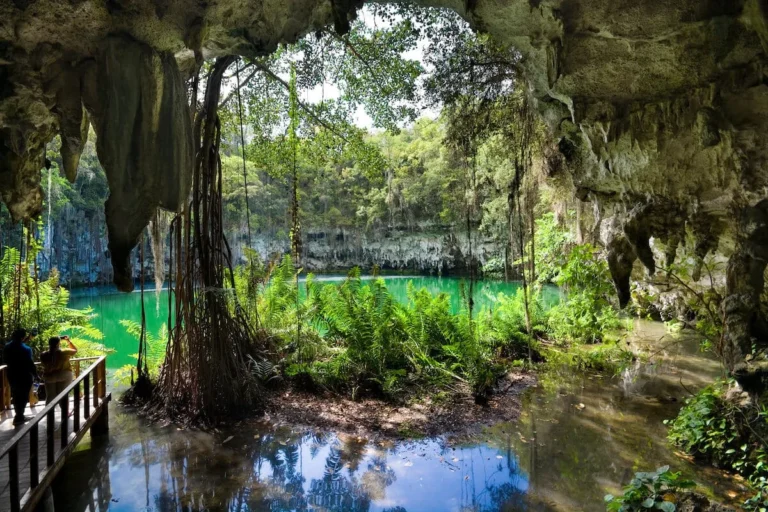
It gives you rainforest, a waterfall and a place to swim without requiring a difficult hike. That makes it especially useful if you want something beautiful but manageable after the intensity of Mas Domnik.
The name is accurate: the pool has that green, shaded quality that makes it feel tucked inside the forest. It is a gentler experience than Titou Gorge, but still very Dominican. Water, trees, humidity, rock and that feeling of nature being close from every side.
Practical tip: Go earlier in the day if you prefer it quieter. Bring swimwear, water shoes and a towel. Emerald Pool works well as part of an east coast day, especially if you combine it with Kalinago Barana Auté and Rosalie Bay.
Kalinago Barana Auté: Add Cultural Depth to the Nature Island
Dominica is often described through nature, but you should make time for the island’s cultural history too.
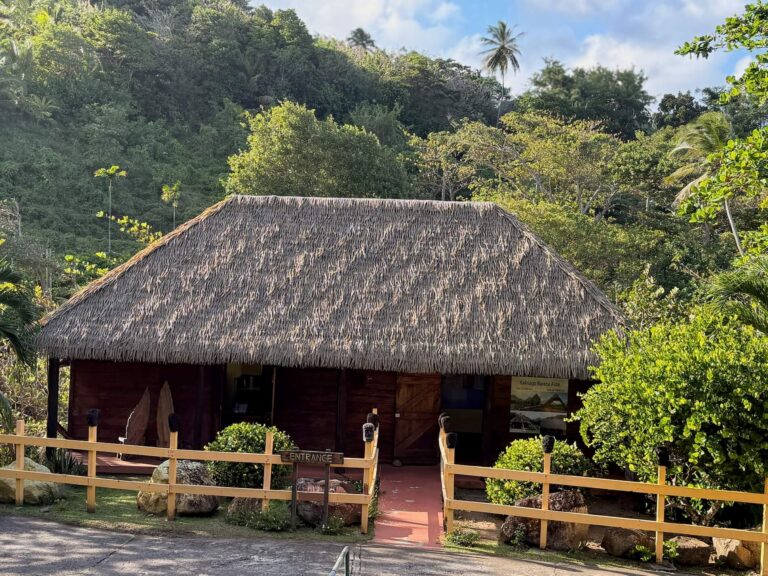
Kalinago Barana Auté is located in the Kalinago Territory on Dominica’s east coast. It is best experienced as a guided outdoor cultural walk rather than a conventional museum. You learn about the Kalinago people, Indigenous heritage, traditional building techniques, plants, water, food, craft and the relationship between people and land.
This is not a stop I would rush.
The value is in the guide’s explanations and the small details: how materials were used, what plants meant, how buildings were designed, how culture and landscape connect. You may also find crafts, food experiences, farm-to-table elements or homestay options connected to the wider community tourism offer.
For travelers interested in sustainable and cultural travel, this is one of the most important experiences to include.
Practical tip: Take the guided tour if available. Bring cash for crafts or food. Ask before photographing people. Avoid treating the site as a quick photo stop. Combine it with Emerald Pool or Rosalie Bay Distillery for a strong east coast day.
Rosalie Bay Distillery: Eco-Rum and Local Production
Rosalie Bay Distillery gives you a very different side of Dominica.
This is not just a rum stop. It connects agriculture, local production, sustainability and conservation. The distillery focuses on single-cane juice rum and is linked to marine conservation, which makes it an interesting stop for travelers who want to understand Dominica beyond scenery.
It also fits naturally into an east coast route. After rainforest and cultural heritage, Rosalie Bay adds another layer: how local products, land use and conservation can come together.
Practical tip: Check tour availability in advance and arrange transport if you plan to taste rum. It works well with Emerald Pool and Kalinago Barana Auté, but do not overpack the day. Dominica’s roads take time.
Soufriere and Scotts Head: The South Coast
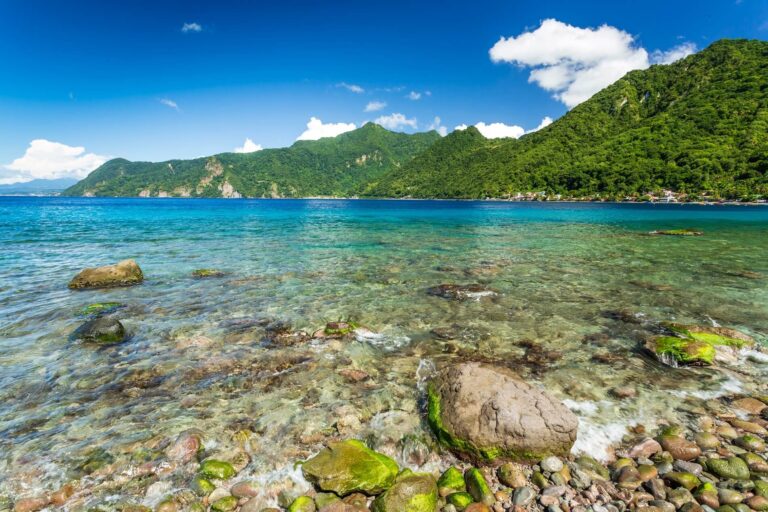
Dominica is not mainly a beach island, but the south coast shows how beautiful the coastline can be.
Around Soufriere and Scotts Head, the island feels volcanic, coastal and dramatic. You can go snorkeling or kayaking, visit Scotts Head Bay, and continue to the Cachacrou Peninsula for views over the water.
This is a good contrast to the rainforest interior. Instead of waterfalls and hot springs, you get sea views, coastal villages, volcanic scenery and a slower southern rhythm.
Scotts Head is also historically interesting. The area was once a strategic military site, and the peninsula is linked to Fort Cachacrou and the island’s colonial history. But even without the history, the setting is worth the trip.
Practical tip: Bring swimwear, reef-safe sunscreen, water shoes and a towel. Check sea conditions before kayaking or snorkeling. This works well as a half-day or full-day south coast excursion, especially with lunch nearby.
Burning of the Vaval: Stay for the Ending
This is still part of Carnival, but I would include it here because many visitors leave too early.
If you come for Mas Domnik, try to stay for the Burning of the Vaval. Traditionally held after Carnival Tuesday, it marks the symbolic end of the Carnival season. For me, this was the moment the trip felt complete.
After the colour and movement of Carnival Monday and Tuesday, the Burning of the Vaval felt like the closing ritual. It turned the experience from a series of events into something more cultural and rooted.
This is why I would not plan your return flight too quickly after the main parade days. The parades show you the road. The Burning of the Vaval gives the season its goodbye.
Practical tip: Check the official Mas Domnik schedule each year, as timing and location can vary. Arrange transport in advance if the event takes place outside Roseau. Go with patience and respect; this is not a polished show, but a living tradition.
Small Beach Moments: Do Not Expect a Classic Beach Island
Dominica is not the Caribbean island you choose for endless white-sand resort beaches.
And honestly, that is part of why it is interesting.
The beach moments here are smaller and more local: a beach bar after a river trip, a quick swim, a quiet bay, a coastal lunch, black-sand or volcanic shores, fishermen, village life, sea views after a mountain road. The beaches may not look like the postcard version of the Caribbean, but they add something softer to a trip that is otherwise full of movement.
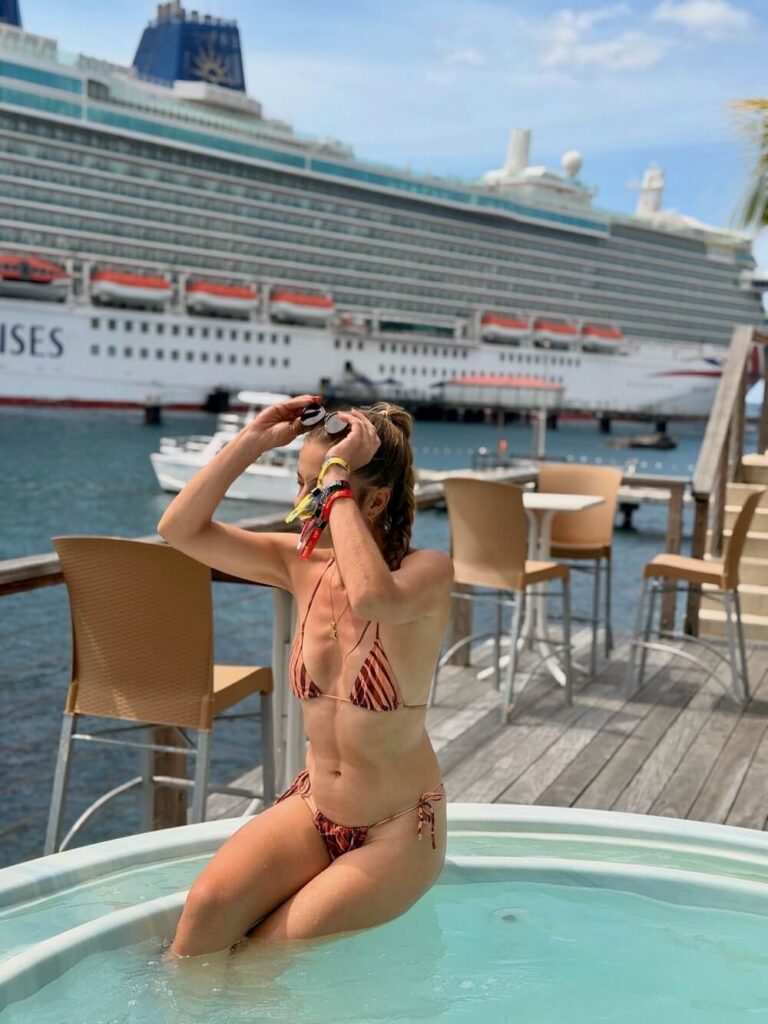
A stop like Belle Hall Beach Bar works well in that way. It is not about building an entire beach holiday around it. It is about pausing by the water between bigger experiences.
Practical tip: Set expectations correctly. If you want a classic beach resort trip, Dominica may not be the right island. If you want rainforest, rivers, hot springs, Carnival and small coastal moments, it becomes much more rewarding.
Practical Tips for Exploring Dominica Around Carnival
Do not underestimate driving times. Roads are winding, mountainous and beautiful, but slow. A short distance on the map can take longer than expected.
Hire a driver or guide if possible. Especially around Carnival, it makes logistics much easier. You can focus on the experience instead of worrying about parking, directions or night driving.
Pack for water. Bring swimwear, a towel, water shoes, a waterproof phone pouch and a dry bag.
Pack for changing weather. Dominica can shift quickly between sun, cloud and rain. Quick-dry clothes and a light rain jacket are useful.
Bring cash. Smaller stops, guides, craft vendors, food places and community experiences may not always be card-friendly.
Do not overpack each day. Dominica is best when you leave time for the road, weather, conversations, views and unexpected stops.
Plan recovery time after Carnival. Your body will need it. Hot springs, a gentle waterfall, a slow lunch or a quiet beach stop make more sense than a punishing hike the morning after playing mas.
Check opening times locally. Carnival week can affect schedules, and smaller sites may not operate like large tourist attractions.
Respect cultural spaces. Especially in the Kalinago Territory and at community-based experiences. Ask before photographing people, take guided tours where possible and support local makers directly.
Suggested Itineraries Before or After Mas Domnik
If You Have 2 Extra Days
Day 1: Roseau, Botanic Gardens and Morne Bruce
Day 2: Trafalgar Falls, Titou Gorge and hot springs
This gives you a quick but meaningful taste of the capital and the island’s rainforest/waterfall side.
If You Have 4 Extra Days
Day 1: Roseau historic walking tour, Old Market, Dominica Museum and Botanic Gardens
Day 2: Indian River, Cabrits National Park and Fort Shirley
Day 3: Titou Gorge, Trafalgar Falls and Ti Kwen Glo Cho
Day 4: Emerald Pool, Kalinago Barana Auté and Rosalie Bay Distillery
This is the strongest option if you want nature, history and culture without rushing too much.
If You Have 6 Extra Days
Add a south coast day with Soufriere and Scotts Head, snorkeling or kayaking, a slower beach lunch, and more time in the Kalinago Territory or Roseau.
If you are traveling around Carnival, I would also build in at least one recovery morning. Mas Domnik is physical, and Dominica is not an island where you want to be exhausted every day.
Why Dominica Is Worth Staying Longer For
Mas Domnik may bring you to Dominica, but it should not be the only thing you see.
The island’s real strength is how close everything feels: Carnival in Roseau, hot springs in the hills, waterfalls near the road, Indigenous heritage on the east coast, river journeys in the north, volcanic sea views in the south, small beaches, local food and green mountains almost everywhere you look.
In one week, you can jump in Roseau, soak in hot springs, swim through a gorge, visit the Kalinago Territory, stand above the capital at Morne Bruce, watch Vaval burn, and still feel like you have only started to understand the island.
That is what makes Dominica different.
It is not one simple Caribbean image. It is many layers — loud, green, cultural, volcanic, rooted and alive.
Practical Travel Tips for Dominica
Things to do in Dominica
Waterfalls, rainforest, hot springs and volcanic coastlines — Dominica is wild by nature.
-
Visiting Kalinago Barana Auté
Voices of Dominica’s First People Dominica is often described through its landscapes first. Rainforest. Rivers. Waterfalls. Hot springs. Volcanic peaks. Roads that twist through the mountains before opening suddenly to the Atlantic. It is an island that feels physical from the moment you arrive — green, humid, steep, alive. And yet, if you only come…
-
Roseau, Dominica: What to See in the Island’s Colorful Capital
Roseau Beyond the Waterfront Roseau is small, colourful, busy and a little rough around the edges. It is not the kind of Caribbean capital that feels polished for visitors — except perhaps around the waterfront, where the city briefly becomes more arranged for cruise arrivals. Beyond that first layer, Roseau feels much more local. You…
-
How to play mas in Dominica
Costumes, Culture and Mas There is a moment when Carnival stops being something you watch and becomes something you feel in your body. For me, that moment came on the road with Hysteria Mas in Dominica. The music was already moving ahead of us, the streets of Roseau were filling with people, and suddenly I…
-
Bouyon Music in Dominica: The Soundtrack of Mas Domnik
The Soundtrack of Mas Domnik Bouyon does not politely stay in the background. It pushes forward. It repeats. It builds pressure. It gets into your body before you have fully understood what you are hearing. During Mas Domnik, Dominica’s Carnival, bouyon is everywhere: on the road, at parties, during J’ouvert, from trucks, passing cars, street…
-
Soufrière and Southern Dominica: A Guide to the Island’s Volcanic Coast
Where the Island Turns Volcanic After the intensity of Mas Domnik in Roseau, southern Dominica felt like a different island. The capital had been all music, movement and Carnival rhythm. Bouyon in the streets. Costumes on the road. People watching from balconies. The same corners appearing again and again as we circled Roseau during Carnival….
-
Beaches in Dominica
Dominica’s Beaches, Without the Caribbean Filter Dominica is not the island I would recommend if your idea of the Caribbean is a week of white sand, beach loungers and polished resort beaches. And that is not criticism. Dominica is the Nature Island of the Caribbean for a reason. Its strongest landscapes are rainforest, rivers, waterfalls,…