The Wild Coast
Dominica
Dominica’s Beaches, Without the Caribbean Filter
Dominica is not the island I would recommend if your idea of the Caribbean is a week of white sand, beach loungers and polished resort beaches.
And that is not criticism.
Dominica is the Nature Island of the Caribbean for a reason. Its strongest landscapes are rainforest, rivers, waterfalls, hot springs, volcanic mountains and dramatic coastlines. The beaches are part of the island, but they are not the whole story — and they are definitely not the glossy version of the Caribbean many travelers expect.
That is exactly why I liked them.
The beaches I visited in Dominica were smaller, more local and more connected to the places around them. They worked as pauses between bigger experiences: lunch after Indian River, a swim after time on the water, a beach bar between coastal stops, a quiet bay after the intensity of Carnival. They did not feel like a separate travel product. They felt like part of the island.
Once you stop comparing Dominica to classic beach destinations, the coastline becomes much more interesting.
What Dominica’s Beaches Taught Me About the Island
At first, I thought Dominica’s beaches would be secondary.
And in a way, they are. The island’s biggest drama is inland: waterfalls, mountains, hot springs, rainforest, rivers and gorges. But after spending time on the coast, I started to understand the beaches differently.
They are not separate from the island’s identity. They are part of it.
A beach bar after Indian River. A small bay after kayaking. A volcanic coastline seen from Scotts Head. A dark-sand beach that feels more local than styled. A rougher Atlantic shore that reminds you not every coast is made for swimming.
Dominica’s beaches made more sense when I stopped measuring them against other Caribbean islands. They are not trying to be the Bahamas. They are not trying to be Anguilla. They are Dominica: volcanic, green, local, uneven, scenic and often more interesting than perfect.
Why Dominica’s Beaches Are Worth Visiting Anyway
Dominica is not your typical Caribbean beach destination.
That is exactly why its beaches need a different kind of attention.
You do not come here for a week of polished beach clubs and perfect white sand. You come for rainforest, rivers, Carnival, waterfalls, hot springs, Indigenous heritage, volcanic coastlines and small beach moments that fit into a bigger journey.
The beaches may not be the main reason to visit Dominica.
But they are part of what makes the island complete.

Best Places to Stay for a Dominica Beach Trip
Dominica is not a classic beach-resort island, and I would not choose a stay here only by the nearest patch of sand. The island’s coastline is wilder than that: volcanic bays, marine reserves, fishing villages, turtle beaches, dive sites, rainforest roads and small communities where tourism still feels personal. For a beach-focused trip, I would look for places that help you experience Dominica’s coast with more care — not as a resort backdrop, but as part of the island’s nature, culture and everyday life.
Why Dominica’s Beaches Are Different
Dominica’s beaches reflect the island itself: volcanic, mountainous and shaped by rivers, cliffs, forest and steep green slopes that often reach right down to the sea. This is not a coastline of long, flat resort strips. Many beaches are darker, smaller, pebbly or tucked into bays. Some are more scenic than swimmable; others are simple, local places for an hour or two by the water rather than a full beach-club day.
If you arrive expecting Aruba, Anguilla or the Bahamas, Dominica may disappoint you. But if you come for beaches framed by rainforest, fishing villages, marine reserves, local food stops and volcanic views, the coast starts to make sense. Dominica’s beaches are not always picture-perfect in the usual Caribbean way — but they have character, and that makes them feel more honest.
Who Will Love Dominica’s Beaches?
You will probably enjoy Dominica’s beaches if you prefer character over perfection: black sand, small bays, casual beach bars and places that still feel connected to local life. They also work well if you are visiting for Mas Domnik and need a slower day after Carnival, or if you want to balance waterfalls and rainforest with time by the sea.
Dominica is especially rewarding if you care about what happens in the water. Around the south in particular, the real draw is often snorkeling, diving or freediving — marine reserves, reef life, volcanic underwater landscapes and quiet bays best explored by mask, kayak or dive boat.
But if your dream is a full week of white sand, resort service and guaranteed calm water, Dominica may not be the right island. Its coast is more rugged, less predictable and far less polished. That is part of the deal — and part of the beauty.
South and Southwest Dominica: Volcanic Coast, Snorkeling and Marine Life
The south and southwest show Dominica’s coastline at its most volcanic. Beaches here are often small, dark, rocky or pebbly, but the real beauty is in the water: reefs, warm springs, marine life and underwater volcanic landscapes.
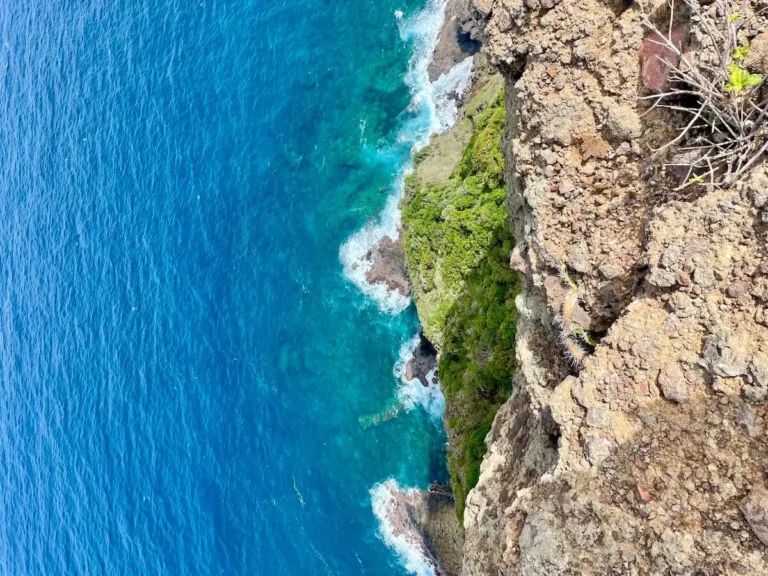
This is the region for snorkeling at Champagne Reef, diving or freediving in the Soufrière-Scotts Head Marine Reserve, kayaking along the bay, or ending the day with a drink near the water in Soufrière. Scotts Head also gives you one of the island’s best coastal views, where green hills, fishing boats and deep blue water meet in a way that feels unmistakably Dominican.
Good for: snorkeling, diving, freediving, kayaking, beach bars and volcanic scenery.
Also nearby: Champagne Reef, Soufrière village, Scotts Head viewpoint, hot springs and the Soufrière-Scotts Head Marine Reserve.
Soufrière and Scotts Head: Small Beach Moments on a Volcanic Bay
Location: Southwest tip of Dominica, around Soufrière village and Scotts Head peninsula.
Around Soufrière and Scotts Head, Dominica’s coast feels especially different from the resort Caribbean.
The beaches and bays here are smaller, more volcanic and more connected to village life. You may find dark sand, pebbles, warm water, local beach bars, fishing boats and views of green hills dropping toward the sea. It is not polished, but it is beautiful in a very Dominican way.
This part of the island is also excellent for water activities. The Soufrière-Scotts Head Marine Reserve covers the area around the villages of Soufrière and Scotts Head and is known for snorkeling, diving, kayaking and freediving. The coastline is scenic from the road, but it becomes much more interesting once you are actually on or in the water.
For me, the south works best as a full coastal day: a water activity, lunch near the sea, Scotts Head viewpoint, and time for a beach bar or small swim stop. That rhythm fits Dominica well. You do not come here to lie on a beach for eight hours. You come to move between sea, village, viewpoint and food.
That made the beaches feel more appealing, not less.
Champagne Reef: More About Snorkeling Than Sand
Champagne Reef is one of the best examples of why Dominica’s beaches are different.
You do not really come here for a long lazy day on soft sand. You come for what happens under the water. The area is known for its volcanic bubbles rising from the seabed, which makes snorkeling feel completely different from a normal reef swim.
That is the appeal.
Champagne Reef reminds you that Dominica is volcanic above and below the surface. The coastline may not be classically beachy, but the underwater world gives it another kind of beauty.
This is a good stop if you like snorkeling, geology or unusual natural experiences. It also fits well into a south coast day with Soufrière and Scotts Head. Bring water shoes if the entry is rocky, use reef-safe sunscreen or a rash guard, and avoid touching coral or marine life.
This is not a beach to judge by the sand. Judge it by the water.
West Coast Dominica: The Easiest Beach Stops from Roseau
The west coast is the easiest part of Dominica for a straightforward beach break, especially if you are based in Roseau. The sea is often calmer than on the Atlantic side, the drive is simpler, and beaches like Mero make it possible to swim, eat, slow down and still keep the day flexible.
Mero Beach is the most practical choice here: dark sand, local food, a relaxed atmosphere and enough facilities to make it feel easy without becoming polished. It works well after Carnival, after a long travel day, or whenever you want a low-effort afternoon by the sea.
Good for: easy beach time, swimming, local food and a relaxed afternoon from Roseau.
Also nearby: Roseau, west coast villages, sunset drives and casual beach bars.
Mero Beach: The Easiest Classic Beach Day
If you want one of the easiest beach days in Dominica, Mero Beach is often the place to start.
It is one of the island’s better-known beaches and feels more set up for visitors than many others. The sand is dark rather than white, the atmosphere is relaxed, and there are usually places nearby where you can get food or a drink. This makes it a practical option if you want a straightforward beach stop without too much planning.
Mero works especially well if you are based in Roseau and want a simple afternoon by the sea. It is not the most remote or dramatic beach on the island, but that is not always what you need. Sometimes you just want to swim, sit down, eat something local and not turn every stop into an expedition.
That is where Mero makes sense.
Go with the right expectations: dark sand, a more local beach atmosphere and easier facilities than many other beaches in Dominica. Check sea conditions before swimming, bring cash, and do not expect a luxury beach club scene.
North and Northeast Dominica: The Prettiest Wild Beaches
The north and northeast have some of Dominica’s most beautiful beach scenery. This is where the coast feels more remote, lush and cinematic, especially around Calibishie and Hampstead.
Batibou Beach is one of the island’s prettiest beach escapes, with palms and a more tucked-away feeling. Number One Beach is wilder and moodier, with black sand, strong Atlantic energy and scenery that is often better for walking, photography and atmosphere than swimming. Come for beauty, but check conditions before entering the water.
Good for: scenery, photography, quiet beach escapes and a wilder coastal mood.
Also nearby: Calibishie, Batibou Beach, Number One Beach, Hampstead, Red Rocks, coastal viewpoints and small north coast villages.
Batibou Beach: One of Dominica’s Prettiest Beach Escapes
If you want one of the more classically beautiful beaches in Dominica, Batibou Beach is often mentioned for a reason.
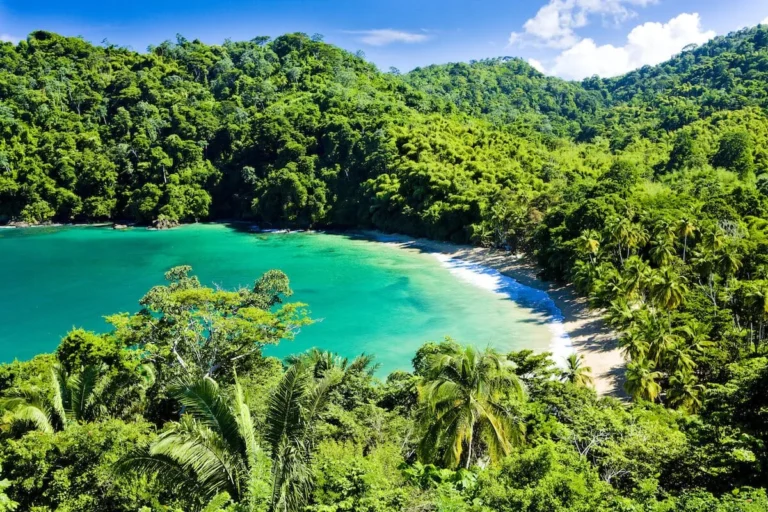
Located on the north coast, it is palm-fringed, scenic and more “beach escape” than many other parts of the island. It comes closer to what travelers may imagine when they think of a Caribbean beach, but it still feels more natural than polished.
Batibou is the kind of beach I would plan as an intentional stop rather than a quick add-on. It can feel more remote, and access may require planning, a fee or local directions depending on current arrangements. Check before you go rather than assuming you can simply arrive without preparation.
The appeal here is not resort convenience. It is the setting: palms, sea, quiet, and that feeling of being further away from the main road of the island.
Number One Beach: Wild, Scenic and Not Always for Swimming
Number One Beach is a beach to approach for scenery first.
This is the kind of place that shows Dominica’s wilder side. It is dramatic, more rugged and often better for looking, walking and photographing than for an easy swim. Conditions can change, and the sea may be rough, so this is not a beach where you should assume the water is safe.
That does not make it less worthwhile.
Some beaches are not about swimming. They are about the landscape: the colour of the sand, the movement of the waves, the coastline, the feeling of being somewhere less controlled. Number One Beach fits that category.
If you are exploring the north, it can be a beautiful stop — just go with caution and ask locally about conditions before entering the water.
Northwest Dominica: Portsmouth, Indian River and Easy Coastal Pauses
The northwest is where beaches work best as part of a wider day. Around Portsmouth, the coast feels slower and more open, with easy beach stops that pair naturally with Indian River, Cabrits National Park and lunch by the water.
Purple Turtle Beach and Bell Hall are not necessarily Dominica’s most dramatic beaches, but they make sense in the rhythm of the north. Take a boat ride on Indian River, explore Fort Shirley, stop for food near the coast, then swim or sit by the sea before heading back. It feels local, unforced and very Dominica.
Good for: relaxed beach lunches, easy swims, river trips and slower northern itineraries.
Also nearby: Portsmouth, Indian River, Cabrits National Park, Fort Shirley, Prince Rupert Bay, Purple Turtle Beach and Bell Hall Beach Spot.
Purple Turtle Beach: An Easy Northern Beach Stop
If you are spending time near Portsmouth, Purple Turtle Beach can be a useful and relaxed beach stop.
It works well with northern experiences such as Indian River or Cabrits National Park. The appeal is not that it is the most dramatic beach on the island, but that it is easy to include in a northern itinerary. You can swim when conditions are good, pause by the coast, eat nearby and slow down between more active stops.
That is often how Dominica’s beaches work best.
They are not always the headline attraction. They are the breathing space between river, forest, history and road time.
Belle Hall and Northern Beach Bars
One of my favourite ways to experience Dominica’s beaches was not through a major “beach day” at all.
It was through small coastal pauses.
After Indian River, our itinerary included lunch at Belle Hall Beach Bar, and that kind of stop makes a lot of sense in Dominica. You spend the morning on the river, then sit by the sea, eat something, drink something cold and let the day slow down.
This is where Dominica’s beach culture becomes easier to appreciate. It is not always about the beach itself being spectacular. Sometimes it is about the setting: a simple bar, a small bay, local food, sea air and the feeling that you are not in a curated resort zone.
For me, those moments made the coast feel more connected to the island.
East Coast Dominica: Wild Atlantic Energy and Cultural Routes
The east coast is not the place for an easy beach-club day. It is rawer, greener and more exposed to the Atlantic, with beaches that are often better for scenery than swimming.
Around Rosalie Bay, the coast feels powerful and untamed: black sand, river scenery, crashing waves and rainforest close by. This region works best as part of a wider east coast route, especially if you combine the coastline with Kalinago Territory, Emerald Pool or local food and farm stops.
Good for: wild scenery, road trips, cultural routes and seeing a different side of Dominica.
Also nearby: Rosalie Bay, Rosalie River, Kalinago Territory, Kalinago Barana Auté, Emerald Pool, east coast viewpoints and rainforest stops.
Rosalie Bay: Wild Atlantic Energy
The east coast of Dominica has a very different feeling from the calmer western and southern bays.
Around Rosalie Bay, the coastline is more exposed to the Atlantic. This side of the island feels wilder, greener and less controlled. It is scenic, but not always the place for a casual swim. Sea conditions can be stronger, and you should always ask locally before entering the water.
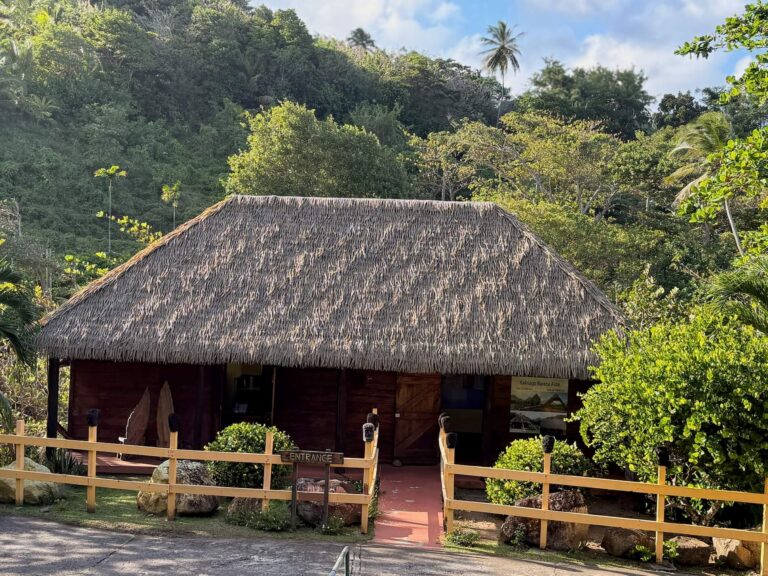
Rosalie works well as part of an east coast day, especially if you are combining it with Kalinago Barana Auté, Emerald Pool or Rosalie Bay Distillery. In that context, the coast becomes part of a larger route: rainforest, Indigenous heritage, local production and Atlantic scenery.
This is not beach-club Dominica. It is the rawer side of the island, and that is exactly why it is worth seeing.
Dominica Beaches by Travel Style
If you are trying to decide which beach or coastal area to include, think less in terms of “best beach” and more in terms of what kind of day you want.
For an easy beach day: Mero Beach or Purple Turtle Beach.
For snorkeling: Champagne Reef or the Soufrière-Scotts Head Marine Reserve.
For diving and freediving: Soufrière and Scotts Head, especially with operators in the marine reserve.
For scenery: Scotts Head, Number One Beach or Rosalie Bay.
For beach bars: Mero Beach, the Soufrière area or northern beach stops such as Belle Hall.
For a more remote feeling: Batibou Beach or Number One Beach.
For combining with other activities: Purple Turtle with Indian River and Cabrits; Champagne Reef with Soufrière and Scotts Head; Rosalie Bay with Kalinago Territory and Emerald Pool.
This is the most useful way to plan beach time in Dominica. Do not build the whole trip around one perfect beach. Build the beach into the wider island experience.
How to Fit Beaches Into a Dominica Itinerary
Dominica’s beaches make the most sense when you plan them by region. The south is best for marine life and volcanic coastline. The west is easiest from Roseau. The northwest works beautifully with Indian River and Cabrits. The north and northeast offer some of the island’s most dramatic beach scenery. The east coast is wilder, greener and more Atlantic-facing.
If you have one beach afternoon from Roseau, go to Mero Beach or plan a lighter Soufrière and Scotts Head trip.
If you are exploring the north, combine Indian River with Purple Turtle, Belle Hall or Batibou, depending on your route and how much time you have.
If you want snorkeling, choose Champagne Reef or the Soufrière-Scotts Head Marine Reserve.
If you want scenery more than swimming, consider Scotts Head, Number One Beach or the Rosalie Bay area.
If you are recovering after Carnival, choose a beach bar, a gentle swim, lunch by the water and an early night. Dominica rewards adventurous travelers, but it also rewards those who know when to slow down.
Practical Travel Tips for Dominica

Things to do in Dominica
Waterfalls, rainforest, hot springs and volcanic coastlines — Dominica is wild by nature.
-
Visiting Kalinago Barana Auté
Voices of Dominica’s First People Dominica is often described through its landscapes first. Rainforest. Rivers. Waterfalls. Hot springs. Volcanic peaks. Roads that twist through the mountains before opening suddenly to the Atlantic. It is an island that feels physical from the moment you arrive — green, humid, steep, alive. And yet, if you only come…
-
Roseau, Dominica: What to See in the Island’s Colorful Capital
Roseau Beyond the Waterfront Roseau is small, colourful, busy and a little rough around the edges. It is not the kind of Caribbean capital that feels polished for visitors — except perhaps around the waterfront, where the city briefly becomes more arranged for cruise arrivals. Beyond that first layer, Roseau feels much more local. You…
-
How to play mas in Dominica
Costumes, Culture and Mas There is a moment when Carnival stops being something you watch and becomes something you feel in your body. For me, that moment came on the road with Hysteria Mas in Dominica. The music was already moving ahead of us, the streets of Roseau were filling with people, and suddenly I…
-
Bouyon Music in Dominica: The Soundtrack of Mas Domnik
The Soundtrack of Mas Domnik Bouyon does not politely stay in the background. It pushes forward. It repeats. It builds pressure. It gets into your body before you have fully understood what you are hearing. During Mas Domnik, Dominica’s Carnival, bouyon is everywhere: on the road, at parties, during J’ouvert, from trucks, passing cars, street…
-
Soufrière and Southern Dominica: A Guide to the Island’s Volcanic Coast
Where the Island Turns Volcanic After the intensity of Mas Domnik in Roseau, southern Dominica felt like a different island. The capital had been all music, movement and Carnival rhythm. Bouyon in the streets. Costumes on the road. People watching from balconies. The same corners appearing again and again as we circled Roseau during Carnival….
-
Dominica Beyond Carnival: Best Things to Do Before or After Mas Domnik
Waterfalls, Rainforest and Culture Beyond Mas Domnik You may come to Dominica for Mas Domnik, but you should not leave having only seen Carnival. That was one of the biggest lessons of my trip. Mas Domnik gives you Dominica at full volume: bouyon on the road, J’ouvert in the early hours, T-shirt bands, pretty mas,…