San Salvador
EL SALVADOR
A resilient capital rich in history, scars, and hope
San Salvador is exciting, its energy infectious. The city, with its many museums, churches, and murals, offers visitors the opportunity to learn and understand El Salvador’s history. Colorful murals often grace San Salvador’s walls. Pay attention when passing them. They often tell the stories of recent history and aim to raise awareness of social issues.
We were in complete awe every time we explored and loved learning about the culture through its friendly people. We highly recommend this amazing city, as San Salvador has so much to offer no matter what type of experience you’re hoping for.
A capital between volcanos and beaches
The pulsing capital is surrounded by stunning volcanos, frolicking with many day trip opportunities.
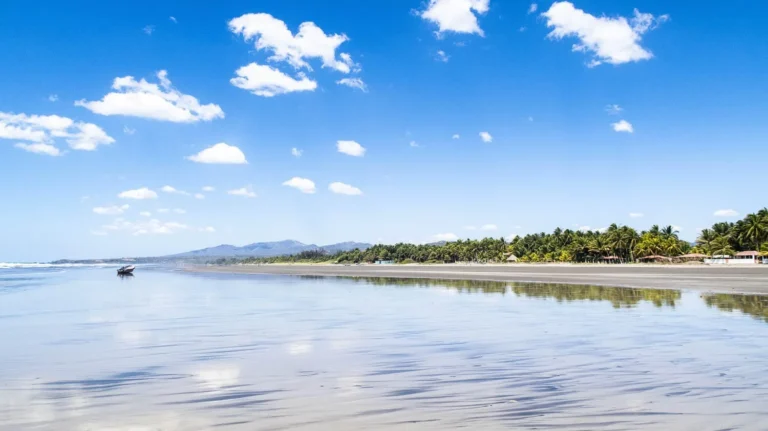
If these weren’t enough reasons to visit, you could also reach some of the most lively beaches in El Salvador are a short bus (about one hour) away. San Salvador mesmerized us and stole our hearts. We can only recommend visiting and getting to know its fabulous people.
San Salvador, El Salvador’s resilient heart. The capital bears deep scars. Many of them are still visible at Centro Histórico and tangible in the hearts and memories of its inhabitants. Its heartache was omnipresent. Yet the city’s fierce determination for a better future and aspirations are infectious, making San Salvador our favorite capital in Central America.

Best places to stay in San Salvador
San Salvador is not a city where I would choose a hotel only by price or star rating. The capital is spread out, traffic can be heavy, and the neighborhood you stay in will shape how easy the city feels. For this guide, I would look for smaller, more thoughtful stays — places with gardens, local character, conscious hospitality or a stronger connection to the people and neighborhoods around them.
Árbol de Fuego is the place I would choose if I wanted San Salvador to feel calmer from the start. It is a small eco-hotel in Antiguo Cuscatlán, with gardens, solar energy, water-saving practices, recycling and a long-standing focus on environmental education.
What I like about it is that the sustainability story feels more grounded than decorative. It is not just a few green words on a hotel page; the hotel also connects to workshops for children and young people, local artisan products and a more thoughtful way of hosting in the city. After a day of museums, markets, traffic and heat, this feels like the kind of place where you can come back, breathe and reset.
Cinco Hotel B&B is the stay I would consider if I wanted to be closer to San Salvador’s contemporary side — cafés, restaurants, museums and the easier logistics of San Benito and Zona Rosa — without moving into a large, impersonal hotel.
It feels more intimate and human-scale, with a softer wellness angle through its garden and Soya Nutribar connection. I would not describe it as the strongest sustainability stay in the city, but it has the right feeling for travelers who want comfort, warmth and a base that still feels connected to the neighborhood.
Las Magnolias is the practical boutique option. I would include it honestly: not as the most sustainable choice, but as a smaller, comfortable stay in one of the easiest areas for first-time visitors. If you want to walk to restaurants, keep evenings simple and avoid overcomplicating your San Salvador base, it can make sense.
For me, this is the hotel I would choose for convenience — then make the rest of the stay more intentional by eating locally, visiting independent cultural spaces and giving the city more attention than most travelers do.
Centro Histórico
San Salvador’s historic center is a window to the past. Until recent years, most middle-class people did not dare to visit their Centró Histórico after the civil war ended in 1992. Then, step by step, the San Salvadorians took back their center as the wounds slowly started to heal. Restoration is taking place between the bullet-scarred walls and crumbling buildings, and several bargain shops, food vendors, and visitors have sprung up. There are various second-hand stores, and we indulged in a shopping spring. We have gotten to know the El Salvadorians as fierce and optimistic, and the historic center represents precisely this to us.
National Library
We visited the National Library, where the peace bibliography is exhibited. Shortly after Valentine’s day, we found a wall created by visitors expressing their love for their country, peace, and literature.
Palacio Nacional
It sits right next to the Catedral Metropolitana. The impressive Palacio National, the republic’s first building, was constructed in 1870. Today the Palacio Nacional is home to the national archives and sometimes features art exhibitions.
Teatro Nacional
San Salvador’s Teatro Nacional might be the oldest theater in Central America. It is the most important for arts and culture in El Salvador.
Iglesia El Rosario – A must-visit church
Our favorite building, and the fascinating one, is Iglesia El Rosario. While the building is rather unimposed from the outside, you’ll find a kaleidoscope of colors once you enter. Thousands of colored glass pieces set in the half-moon-shaped ceiling create and fantastic play of colors as the light shines into the building. The atmosphere is sheer beautiful. Designed by the young Ruben Martinez, the church aims to be the first statement against the elitism of the Latin mass. A symbol of equality and solidarity with the working class and the poor.
Catedral Metropolitana
The cathedral is perhaps the most impressive building on the central plaza. The original building, constructed in wood, burnt down in 1956. The church also played an essential role in the civil war when anti-government protestors overtook the cathedral on several occasions. Tragically, 24 people were killed on the cathedral steps in 1979. When one year later, tragedy struck again. While human rights champion and archbishop Monsenor Oscar Romero’s funeral took place, security forces opened fire, killing another 44 people. The late archbishop’s thumb is located in the cathedral’s basement and can be visited during opening hours.
Party the night away in Zona Rosa
No Latin American capital is complete without its Zona Rosa. This elegant and affluent part of the city stands in contrast to San Salvador’s Centro histórico. Hip cafés, lively nightspots, and many fancy restaurants make up Zona Rosa.
Hike Parque National El Boquerón
Known as the “big mouth” because of its steep-walled crater, we reached El Boqueron within a 30 minutes drive from San Salvador. The national park consists of two significant peaks making up Volcan San Salvador. It also goes by the name Quezaltepe. There are various hikes you can do within the national park. Some of them lead to lookout points with views over San Salvador. Walking around the crater is possible. With a guide, you can challenge yourself by hiking down the crater’s walls. You’ll find some (pricey) but delicious restaurants on the road to the park. It is the perfect spot to spend a relaxed evening amongst San Salvador’s hip crowd. The views over the city by night are stunning! We loved “Pupuseria Loka.” The Llorc con queso pupusas are our favorite!
Live the surfer’s life at Costa de Balsamico
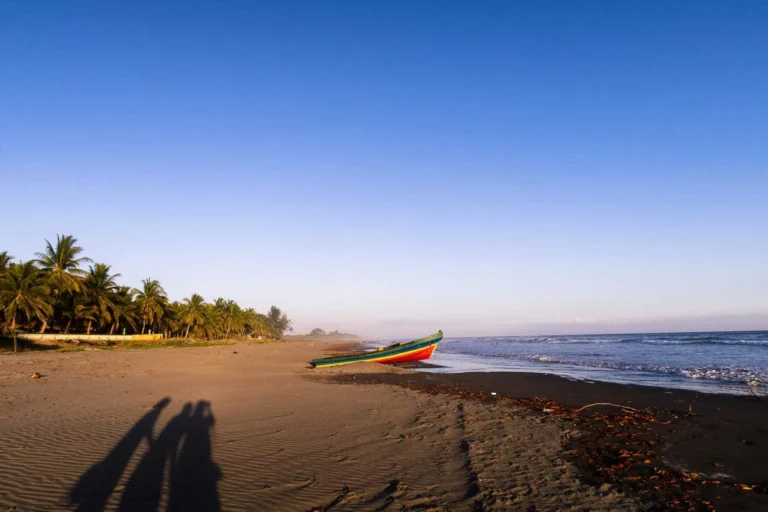
The distinct places lay 2 hours outside of the city. The two black sand beaches offer fantastic surfing opportunities and buzzing nightlife on the weekends.
Our favorite beaches around San Salvador

El Tunco
Even though we really wanted to visit the well-known El Tunco beach, we almost couldn’t get ourselves to leave San Salvador. Take this as a token of how mesmerizing the city truly is. Yet, we made it for at least a long weekend! Let us tell you: El Tunco parties hard on the weekends but is super relaxed during the week.
Best places to stay around in El Tunco

El Zonte Beach
Playa El Zonte, on the other hand, is supposedly much quieter. The waves make it the perfect spot to learn how to surf.
Where to stay in El Zonte
Santa Tecla – the place to spend the weekend
Because of San Salvador’s complicated past, many locals were afraid to go out and enjoy their city. “Nueva San Salvador” sprung up 15 km outside of San Salvador. Santa Tecla, a pedestrian-only strip, turns into a lively weekend market. At night bars and nightclubs are open to entertaining Santa Tecla’s visitors.
Practical Travel Tips for San Salvador


Traveling El Salvador?
Places to visit in El Salvador
Do not skip El Salvador! It’s one of the most amazing countries to visit in Central America!
-
Beaches in El Salvador | Central America’s hidden germs
After a memorable journey through Nicaragua and a beautiful border crossing via Golfo de Fonseca, we arrived in El Salvador, where warm hospitality awaited us. El Salvador quickly become one of our favorite countries to visit for its welcoming people, stunning volcanos and beautiful beaches. We’ve talked a lot about why El Salvador should absolutely…
-
Golfo de Fonseca | The most unique border crossing
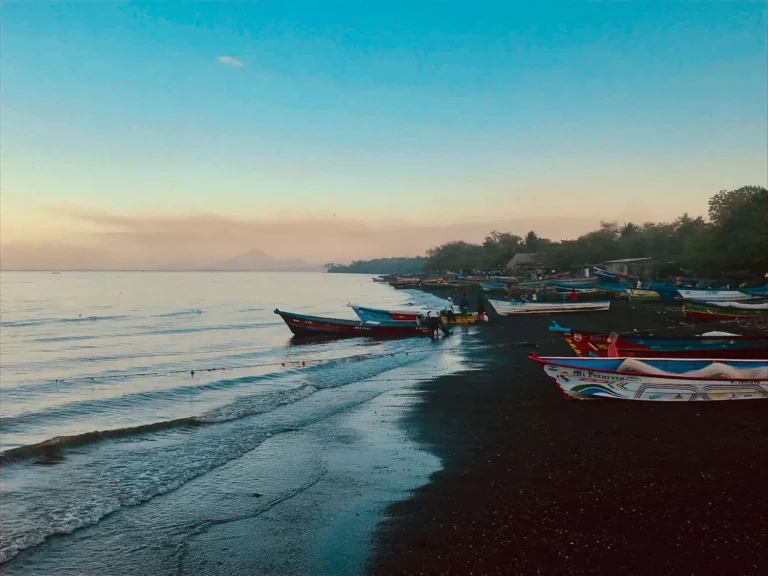
The most scenic border crossing Getting from Nicaragua to El Salvador can be quite a ride if you travel by bus via Honduras. Luckily we stumbled upon the most scenic and relaxed way to cross borders: A boat ride via Golfo de Fonseca. Golfo de Fonseca is a gulf on the Pacific coast bordering Nicaragua,…
-
El Cuco & Playa Las Flores | Surfing & Turtles
Secluded beaches and world-class surfing On either side of El Cuco, you’ll find two of El Salvador’s most stunning beaches – Playa Esteron and Playa Las Flores. Playa Esteron is a secluded white sandy beach, lush with greenery, and the perfect spot for anyone who wants to escape to peace and tranquility – it’s even…
-
Santa Ana | Volcanic crater lake & colonial charm
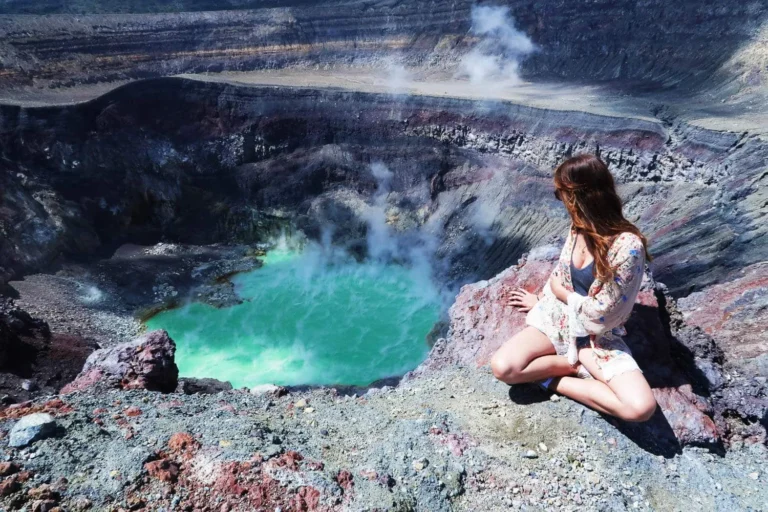
The most amazing volcano experience in El Salvador Volcano Santa Ana”s incredibly impressive crater marks the highlight for many travelers coming to El Salvador for a good reason. We were left speechless (and breathless) when we first saw the turquoise crater lake. Despite stunning landscapes, Santa Ana offers a perfect base for travelers seeking to…
-
Ruta de Las Flores | picturesque trip through colorful villages
Food markets, volcanos & colorful villages Ruta de las Flores is undoubtedly one of El Salvador’s most popular tourist destinations. The 40 km winding road leading from Sonsonate to the colonial town Ahuachapán includes picturesque villages such as Juayúa, Concepción de Ataco, and Nahauizalco.Each of them is unique with its colonial architecture and indigenous tones….
-
Suchitoto | History, weekend markets & history
The place of flowers and birds Suchitoto almost feels like a bit of a time and space journey after visiting busy San Salvador. The city’s name originates from the Nahutal language and translates into “place of flowers and birds.” As the cultural capital, Suchi’s colorful historic houses are home to art galleries, boutique hostels, and…