Suchitoto
EL SALVADOR
The place of flowers and birds
Suchitoto almost feels like a bit of a time and space journey after visiting busy San Salvador. The city’s name originates from the Nahutal language and translates into “place of flowers and birds.” As the cultural capital, Suchi’s colorful historic houses are home to art galleries, boutique hostels, and NGOs.
El Salvador’s finest city
The tiny town charms you with its tranquil vibe as you wander around the cobblestone streets. Suchitoto’s affectionately planted and decorated streets and laid-back inhabitants radiate an authentic appeal. Located just 50 km northeast of San Salvador, Suchitoto is often visited on the weekends when streets come alive for arts and food festivals.
From a turbulent past to a flourishing future
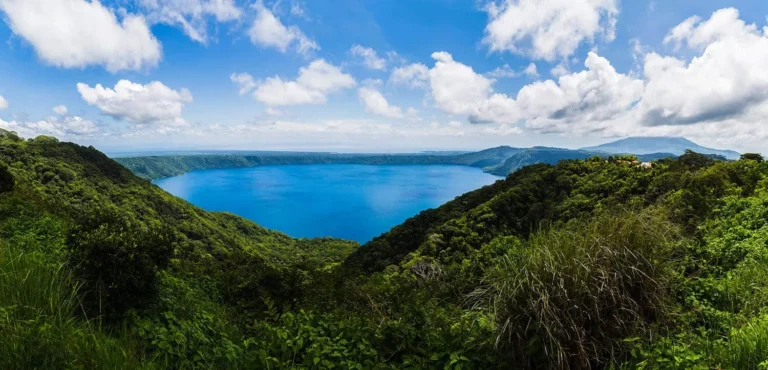
Guanaco pride is celebrated and lived in Suchitoto. Everyone we met told us affectionately how Suchi must be the best place to live in all of El Salvador. On top of that, little Suchitoto offers exciting surroundings for outdoor and history enthusiasts. El Salvador’s largest artificial lake, Lago Suchitlán, offers relaxing walks and excellent bird watching. The more active and history-interested shouldn’t miss a hike of volcán Guazapa, a former guerrilla stronghold.

Best places to stay in Suchitoto
Suchitoto is a town where I would always choose character over convenience. The best stays here are not large hotels, but restored houses, quiet courtyards, lake views and small places that keep you close to the town’s rhythm — church bells, cobbled streets, galleries, painted walls and slow evenings around the plaza.
Los Almendros de San Lorenzo is the place I would choose if I wanted Suchitoto to feel elegant without losing its soul. Set in a restored colonial house, it has the atmosphere that makes the town so special: tiled floors, art, old walls, a quiet pool and that sense of stepping into a slower Salvadoran interior world. It is the most refined option, but still feels deeply connected to Suchitoto’s cultural character.
Casa 1800 is the stay for views. Its gardens and terrace look out toward Lake Suchitlán, giving you that wide, open feeling that balances the intimacy of the town’s cobbled streets. I would choose it if you want comfort, a good location and a place to sit for a while between walks, boat trips and slow afternoons in town.
ICasa de la Abuela is the more personal, homely option. It is simple, central and warm — the kind of place that suits travelers who want to stay close to everyday Suchitoto rather than in a polished boutique bubble. I would recommend it if you care more about local feeling, walkability and a gentle welcome than hotel-style perfection.
Take in the view from a mirador
We arrived shortly before lunch with growling stomachs. We liked Suchitoto from the very first moment. It was challenging to stop for food before exploring the city. We were so eager to see more. After we asked some locals for recommendations, we ended up at a lovely and delicious Mexican restaurant called Suchimex. As the only visitors, we quickly befriended the staff and heard the first stories about Suchitoto. It seemed like everyone was fond and proud to live in such a beautiful, quiet town. After we feasted on some tasty burritos, the kind staff showed us a little mirrador from which we could look down on the red roofs of Suchitoto. We could even make up Lago Suchitlán in the distance.
Enjoy the laid-back vibe and stroll around the colonial city
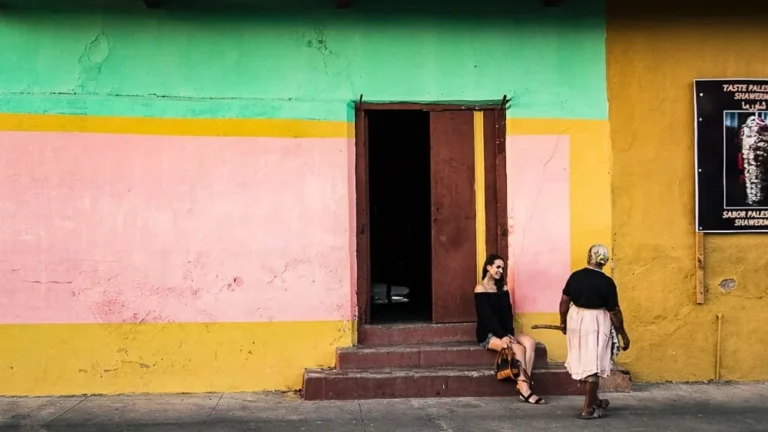
Revitalized from our delicious lunch, we wandered the cobblestone streets and started discovering the city. The roads are seamed with colorful colonial buildings, which automatically brighten your mood.
Iglesia Santa Lucia
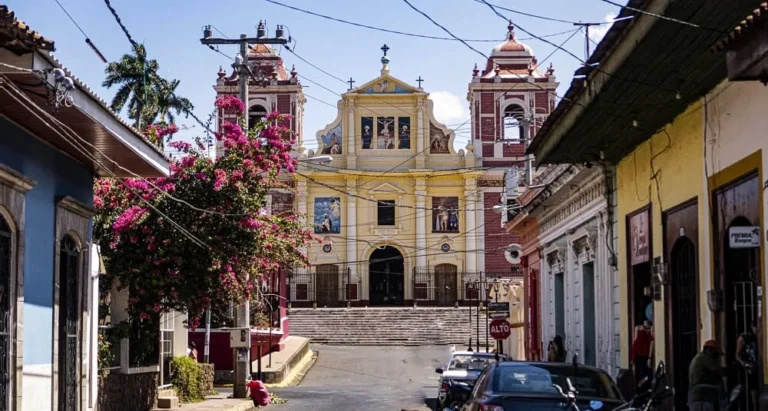
Iglesia Santa Lucia shines so brightly that it can’t be missed. The church is one of El Salvador’s oldest religious sites and was built when Suchitoto was still a Mayan town. The city’s streets are picturesque, so it’s a lot of fun just strolling around. In addition, there are plenty of artistic boutiques.
Casa de Museo
If you want a deeper understanding of Suchitoto’s role in the civil war and how it escaped destruction we recommend visiting Casa de Museo de Los Recuerdos Alejandro Cotto. Suchitoto’s most famous arts patron played a crucial role in saving the town. Today, the former house is home to a museum.
Go bird watching at Lago Suchitlán
El Salvador’s biggest artificial lake is a haven for bird-watching enthusiasts. Suchitoto’s spectacular backdrop was built in 1973 and now provides electricity to about 500 000 people in El Salvador. In addition, you can easily arrange boat tours at the port. Costs vary from $25 for a 45 minutes tour to the tranquil island of Isla de Ermitano and $30 for a one-hour bird-watching tour. It will take about 1 hour to visit Isla las Pájaros, the island of the waterbirds. ($30) A ferry across the lake also connects Suchitoto and San Francisco de Lempa.
Explore Volcán Guazapa and learn about the guerilla history
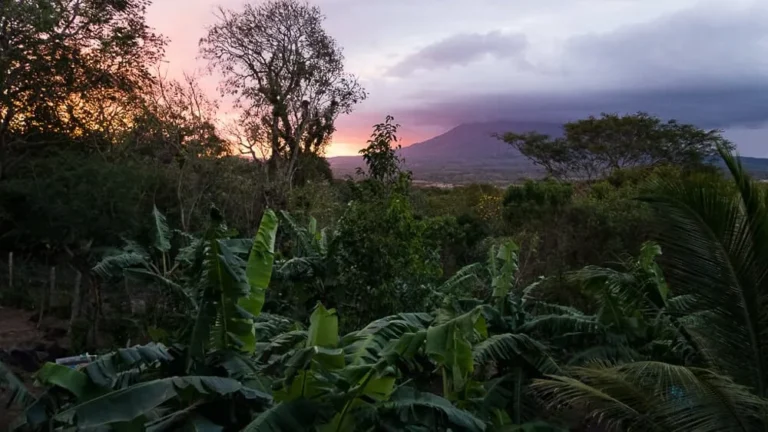
The extinct volcano does not only offer beautiful hikes but also provides its visitors with profound insights into El Salvador’s past. During the 1980s, the guerrilla stronghold became a war zone. The national army undertook massive military operations to fight the “Rebel Army.” Due to its strategic location, the rebels referred to Volcáno Guazapa as “a dart in the ribs enemy.” As a result, many families and veterans of the civil war live in this area. Nowadays, ex-guerrillas give visitors an insight into the life of a rebel during the civil war. You’ll see underground tunnels, shelters, and even a hospital as you wander around. It’s profoundly moving to listen to the stories of those who fought and have been fought.
Hike Cascada Los Tercios
This hike is super easy to do on your own. You’ll find Cascada Los Treciosis just 1.5 km outside of town. The 10-meter high wall of the waterfall consists of Basalt, which can also be found on the moon. Basalt is packed with tiny quartz crystals which sparkle in the sun and give the waterfall a distinct from-another-world look. Unfortunately, the rushing waterfall is only active from June to November. Usually, there are no security concerns if you want to walk alone, but make sure to ask around beforehand as the situation might change quickly.
Practical Travel Tips for Suchitoto


Traveling El Salvador?
Places to visit in El Salvador
Don’t skip El Salvador – our favorite Central American country <3
-
Golfo de Fonseca | The most unique border crossing
The most scenic border crossing Getting from Nicaragua to El Salvador can be quite a ride if you travel by bus via Honduras. Luckily we stumbled upon the most scenic and relaxed way to cross borders: A boat ride via Golfo de Fonseca. Golfo de Fonseca is a gulf on the Pacific coast bordering Nicaragua,…
-
Léon | City, beach and volcanos
A charming city between volcanos and beaches Léon is Nicaragua”s second largest city, though it’s much less commercial and touristy than Granada. Despite being a city of more than 200,000 people, Léon still retains its genuine charm, mainly through its intense passion for poetry. Poetry and literature are at Léon’s core – locals honor their…
-
Granada | Nicaragua’s colonial beauty
Nicaragua’s colonial colorful beauty G-R-A-N-A-D-A, we almost want to color every letter when we think about this stunning colonial city. But unfortunately, we arrived in the dark and only saw the town after sunset. While looking for our Airbnb, we passed grand churches and Calle la Calzada, a street lined with cafes, restaurants, and shops…
-
Isla Ometepe | Nicaragua’s mysterious volcanic island
The mysterious volcanic island Visiting Isla Ometepe in Nicaragua was a surreal experience! The scenery and wildlife were simply spectacular – from soaring volcanoes to lush forests, it’s the perfect place for an unforgettable adventure. The lake surrounding the island, Lago Nicaragua, was unbelievably pristine, and it’s actually the biggest freshwater lake in all of…
-
Masaya | Nicaragua’s folklore capital
Nicaragua’s folklore capital & glimmering lava After admiring the stunning beauty of Granada, we decided to make our way to Masaya: Nicaragua’s cultural and folklore capital. Things we did? Well, for one, street strolling was a must! The vibrant streets of Masaya were alive with the sound of music, dance, and crafts. Everywhere we looked…