Dakar
SENEGAL
Between Ocean, Art and Memory
Dakar is a bustling, exciting metropolis that will make you want to explore Senegal. The capital of this African country has over one million inhabitants, and it’s only growing as more people move into Dakar from all around the region in search of opportunities. Dakar’s bustling vibes are displayed at every turn. Food vendors selling fried doughnuts covered with honey-waxed peanut butter are served during breakfast until late-night DJ sessions start soon after sunset!
Sand colors dominate the bustling metropolis. At the same time, it has bright hues and decorations throughout its landscape–whether in lavish buses or carefully tailored clothes worn on people’s bodies (or even artwork). The city seems like an exploration of color: every splash looks like someone went out just for this purpose!
For me, Dakar was love at second sight. Dakar is the capital of contradictions. Traditional and modern, modest yet elegant. But also loud, dusty, and partly incredibly dirty. Dakar itself seems to be still under construction or already falling apart. One wonders why the city is so neglected. But Dakar became a place of longing, and if you give the metropolis a little time and look behind the facades, you will quickly realize what makes the city so unique.
If you ever feel like taking a break: Dakar’s three sides are lined with beaches that invite surfers to ride the waves of the Atlantic.

Best places to stay in Dakar
Dakar is not a city where I would choose a sealed-off hotel and disappear behind its walls. The best stays here should keep you close to the city’s rhythm — the Atlantic light, the art scene, the neighbourhood cafés, the surf culture of Ngor, or the historic layers of Plateau. For Unique Universe, I would focus on smaller, design-led places that feel rooted in Dakar rather than interchangeable.
Seku Bi is one of the most interesting boutique stays for an editorial Dakar guide. Set on the Petite Corniche, close to Place de l’Indépendance and the city centre, it has the feeling of a small “jewel box” hotel rather than a standard business stay. It also connects naturally to Dakar’s creative side through design, ocean views and the wider Bantu Wax universe around surf, style and African coastal culture.
BOMA is the more contemporary, social option — a boutique hotel in Ngor/Almadies with bungalows set in a large garden, plus food, music, wellness and nightlife woven into the experience. I would recommend it for readers who want Dakar’s modern creative energy: not a quiet retreat exactly, but a place that reflects the city’s young, design-conscious, after-dark rhythm.
La Maison Abaka is a softer coastal choice, set by the sea in the village of N’Gor with views toward Ngor Island. It feels right for travelers who want Dakar to be more about ocean air, beach access, seafood and local neighbourhood life than downtown traffic. It is not the slickest option, but that is partly the point — it gives the city a gentler, more Atlantic-facing base.
Monument de Rennaissance africaine
The Monument de Rennaissance Africaine, or African Renaissance Monument, is a bronze statue on top of one of the hills in Dakar. The monument is 49 meters tall and overlooks the city.
The statue was built to commemorate the 50th anniversary of Senegal’s independence from France. It is the tallest statue in Africa and one of the tallest statues in the world.
The monument has three levels:
- A base
- A middle level with an observation deck
- A top-level with a restaurant and bar
The Observation Deck offers views of Dakar and the Atlantic Ocean.
If you’re interested in learning more about Senegal’s history and culture, I recommend visiting the Museum of African Art, located in the same complex as the monument. The museum has a traditional and contemporary African art collection, library, and research center.
Plenty of shops also sell locally made goods at the monument complex. You can find anything from wood carvings to jewelry to wax print fabrics.
When planning your trip to Dakar, remember that it’s a large city with plenty to see and do. However, if you’re pressed for time, I recommend focusing on three main areas: the HLM Market, the Monument de Rennaissance Africaine, and the Museum of African Art.
Each of these places offers a unique glimpse into Senegal’s history and culture, and you’re sure to come away with some fantastic souvenirs
Dakar Plateau – Our favorite place
Take your time and spend some time at the Pleateau de Dakar. During the day you can explore the historic city center with the government district and the port area. As you leave the bustling neighborhood for the Atlantic, you’ll find jetties jutting far out into the Atlantic, inviting fishers to fish. You will discover a vast, sandy, rocky coast on the other side of the neighborhood. You can end the day on the rocky shore with one of the most beautiful sunsets in Dakar. Surrounded by happy people, the mighty ocean, and a feeling of freedom.
Pay a visit to the Dakar’s colorful HLM quarter
Dakar’s HLM quarter is another cool place to visit. Here you’ll find the Presidential Palace and many other essential government buildings. The area is heavily guarded, so take your passport and dress conservatively.
The HLM Quarter is also home to Dakar’s best hotels, restaurants, and nightlife. HLM Quarter is the place to stay if you want a luxurious experience. However, if you’re on a budget, there are plenty of cheaper options in the city center.
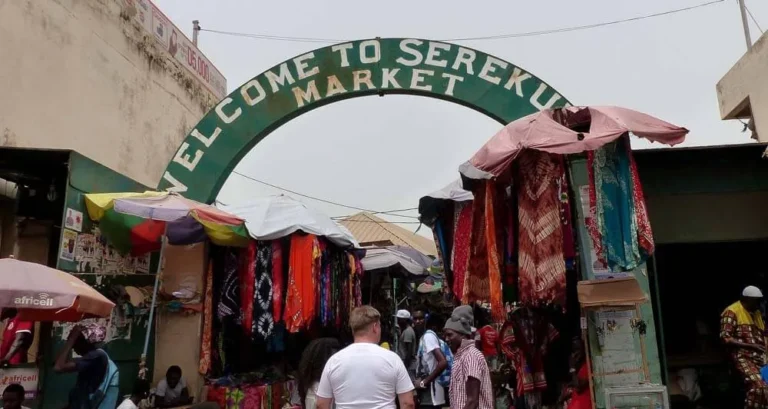
The HLM quarter is also home to the Fabric Market, one of the best places to find fabric in Dakar. The market is full of vibrant colors and patterns; you can find everything from traditional wax print fabrics to modern prints. Bargaining skills are key here!
Visit Dakar’s Grand Mosque
Dakar’s Grand Mosque is one of Senegal’s most important religious sites. The mosque was built in 1964 and can accommodate up to 20,000 worshippers. It is an active site of worship and also a place of study for students of Islam.
The Senegalese people are known for their open and welcoming culture. They enjoy sharing traditions, especially those related to faith-based beliefs!
Therefore also, Non-Muslims are welcome to visit the mosque, but there are a few things to keep in mind:
Dress conservatively (cover your shoulders and knees).
Remove your shoes before entering.
Be respectful of those who are praying.
You can take pictures inside, but make sure not to use a flash.
One of the best times to visit the mosque is during Friday prayers when the courtyard is full of people worshipping together.
Feel the beat
What better way to spend your time in Dakar than with music and dancing all night? The people of Senegal are deeply religious, but they also love having fun. A lot is going on that will make you want to move along the streets. Music plays an important role, especially in Senegalese hip hop, attracting more attention from around Africa over recent years.
Get a custom dress done
If you’re unsure what to do with all the fabric you’ve bought, consider having a custom piece made by a local tailor. It is a great way to support local businesses and get something unique you’ll cherish for years to come.
By the way: Dakar prides itself on being an African fashion hub. I admired their love for fashion and print showcased in their daily wardrobe. The women and men of Senegal are always dressed to impress. Their brightly patterned wax prints perfectly represent this continent-leading style that has come so far from its even pre-colonial roots. These folkloric garments date back centuries before colonization; they were initially brought over directly after dorsals. Then, Dutch companies started making items out of colorful fabric, which became wildly popularized because people could easily recognize each symbol.
Rather than being a design feature, the colors and patterns used served an essential purpose, indicating marital status and denoting ethnic identity.
Wax prints are gorgeous and have a deep meaning and history behind them. If you’re interested in learning more about the fabric. In that case, I recommend checking out the website of The University of Ghana’s Department of Textiles, where you can find a wealth of information on wax prints and their significance in West African culture.
Meet the City at the Beach
Dakar is not a classic beach destination in the soft, postcard sense — and that is exactly what makes its coastline interesting. Here, the Atlantic is not just scenery; it shapes the city’s rhythm. Waves break against volcanic rock, fishing boats pull into sandy coves, surfers gather at Ngor and Yoff, and beach restaurants fill with the sound of music, smoke from grilled fish and late-afternoon conversation. Dakar’s beaches are urban, lived-in and full of contrast: beautiful in places, rough around the edges in others, always tied to the city around them. This is not the coast you come to escape Dakar — it is one of the best ways to understand it.
Île de Gorée – UNSECO woord heritage site
The small island of Gorée, located just off the coast of Dakar, has a captivating and sad history. Thousands upon thousands of enslaved people were held here before being shipped to North America. You can still see pieces left behind, such as a slave house built around 1778 with its brick walls intact today; it’s now run by an association that offers tours in French & English so you may learn more about these events that happened on what was once “Les quatre verges” (the four margins).
Today Île de Gorée is a quiet island where you can find peace at the doorsteps of Senegal’s capital. The island is car-free and very quiet. Unfortunately, sometimes too many tourists come to the island at once, so you should respect the privacy of the locals and not take pictures of the people.
Lauri took surf lessons at the Ngor Island Surfcamp. While searching for the best waves of the day by minibus or boat, we enjoyed getting to know the island.
Go surfing
Dakar is a city that not only offers you the option to relax on its beautiful beaches but also has some great waves.
Dakar’s not so “secret beach”
The “Secret Point” is not a secret anymore. The beginner-friendly beach enjoys high popularity and might have become one of Dakar’s most famous surf spots! It’s deep enough that intermediates can enjoy it, but stony beach floors mean those who want a true challenge will have to head elsewhere for their fix of waves crashing over rocks in an ocean filled with sea urchins!
Yoff district beaches
I recommend checking out Yoff District’s north coast – plenty of surf schools offer courses. The beach is also an excellent place to relax with a cool drink.
Psst: If your body is aching from too much surfing, you can rent a SUP here!
Practical Travel Tips for Dakar