Marrakesh
MOROCCO
A Love Letter to the Beautiful Madness of Marrakech
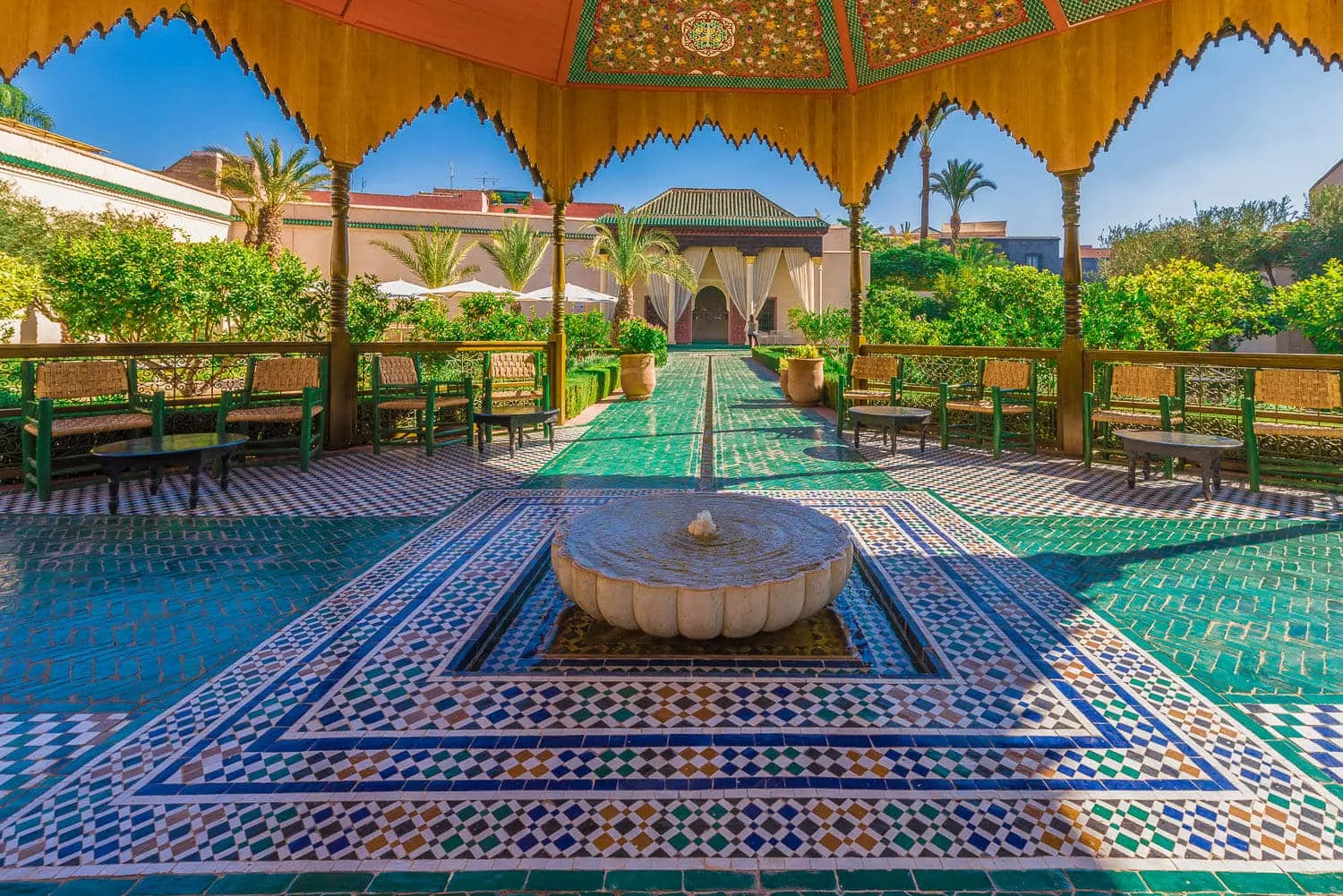
Marrakesh mesmerized me from the first second. Immediately we were surrounded by “guides” eager to lead us to our Riad. We would have never found our Riad, even though the taxi left us only about 300 m from the entrance. The unimposing door was hiding a beautifully decorated and colorful Riad. We were confronted with the incredible detail of Moroccan style. We stood there with our mouths open: Deeply impressed and taken aback by so many impressions and beauty.
Marrakesh is often the first stop for visitors coming to Morocco. The colorful and lively media attracts people from around the world. Moroccans are not only very talented artisans but genuinely talented in languages. In Marrakesh, you will find people to help you, no matter which language you speak. Marrakesh offers so many things to do and experiences guaranteed to keep you entertained for a while. However, if you ever feel like the medina swallowed you up, Essaouira, with its laid-back vibe, is only a 3,5 hours bus ride away. When people think of Morocco, the first city that comes to mind is usually Marrakesh. This ancient and vibrant city is full of things to do and see, from the Jemaa el-Fnaa square with its snake charmers and storytellers to the beautiful palaces and gardens. So if you’re looking for an introduction to Moroccan culture and history, Marrakesh is a great place to start.
I first visited Marrakech a few years before starting this blog. None of us had been to Morocco before, and I arrived curious, slightly cautious, and quietly hoping the city would live up to its promise. I had heard both sides: that Marrakech could be spellbinding, but also demanding.
Both were true.
The medina had the theatre I imagined — lanterns, spice stalls, carved doors, courtyards hidden behind plain walls. But it also asked a lot of you. Some sellers were relentless, and at times the attention from men felt less like harmless curiosity and more like something I had to constantly navigate.
Still, Marrakech left a mark. Not because it was easy, but because it was so alive. It overwhelmed me, surprised me, and then, slowly, won me over.

Best places to stay in Marrakech
Marrakech is full of beautiful riads, but the most memorable places to stay are not only about tiled courtyards, rooftop breakfasts and candlelit rooms. The riads below are beautiful, but also special — chosen for the way they connect design with craft, sustainability, local sourcing or community impact.
A small, design-led riad with one of the strongest social-impact stories in the city. Part of its revenue supports Skate to Create, a foundation offering free skating lessons and equipment to young people in Morocco; the riad has also been noted for solar water heating and greywater recycling.
A calm, elegant medina stay with a more conscious approach behind the beauty. The riad highlights recycled glassware, locally designed dinnerware, seasonal food sourcing and efforts to reduce food waste.
The more classic Marrakech choice: intimate, quiet and close to Jemaa el-Fna, but with a stated sustainability policy around local suppliers, eco cleaning products, water and energy use.
Explore the medina of Marrakesh
Colored in pisé, the walls of Marrakesh’s medina shine in many shades, from pink to terracotta. Walking inside the medina for the first time was a bit overwhelming. We mixed with donkeys and people as we passed colorful souks. We stopped every once in a while to marvel at the exquisite architecture. The closer we got to Djemaa El Fna, the busier the streets would get. The medina of Marrakesh is a delightful mix of lively streets and quiet alleys. Even though the salespeople tend to be a little too persuasive, it’s still interesting to visit the shops and souks to learn about the art of creating traditional handicrafts.
Marrakesh’s rooftops
Whenever the hustle and bustle of the medina got too much, we would retreat to one of Marrakesh’s rooftop cafes. Sip a fresh mint tea and enjoy the view! Check out Atay Cafe or Cafe Nomad right across from it.
La Pergola Jazz Bar makes its claim of “house of wonders” justice: it’s stunning! The decor, food and drinks are superb! It is sitting on top of the stunning Monceau Hotel right in the center of Jemaa El Fna square.
Jemaa el-Fnaa
The “Place of the dead” is, without a doubt, Marrakesh’s heart and one of Morocco’s most famous sights. To me, no other place represents the dream of 1001 nights more. Jemaa el-Fnaa comes to live at night. You’ll find food stands, Snake charmers, monkey men, healers selling mysterious potions, and fortune tellers competing for the favors of the visitors. Walking across Jemaa el-Fnaa, you’ll hear anything from modern Morrocan music to traditional Gnaoua sounds.
Koutoubia Minaret
Standing at Djemaa El Fna, we could glimpse the top of Koutoubia Minaret. With its 77 m high minaret, the minaret is the second tallest in the world and sets the limit to Marrakesh’s skyline. According to Islamic law, no other building is allowed to be higher. We used the impressive tower of the minaret many times for orientation and guidance. But, unfortunately, as non-muslims, we couldn’t enter.
Moroccan Hammam – the ultimate pampering experience
The small, hidden hammam Le Bain Bleu was my first-time visit to a hammam. Let me tell you: It’s an experience I won’t ever forget! Le Bain Bleu in Marrakesh has become my heavenly place. Never, ever have I been pampered in such a way. This wasn’t the typical hammam experience one gets in a public hammam, yet it’s something I can only recommend to everyone! After being thoroughly scrubbed and soaked in soap, we were guided to a room covered with black tiles and two bathtubs. The room was lit by candles only. It was incredible. While each of us enjoyed a bath with roses, petals, oils, and lots of foam, two employees washed our hair. I thought I’d gone straight to heaven. We finished with a massage, a mani- and a pedicure. By the time we left, we almost felt too relaxed to walk. I highly recommend visiting a hammam on our Morocco trip
Find peace in El Jardin Majorelle
The garden is often referred to as the Garden of Yves Saint Laurent. It’s home to more than 300 species of desert flowers. The garden is somewhat unimpressive by size, but I loved how the walkways were arranged alongside colorful vases. The smell and the view of lush green were relaxing to the eyes, which had become a little tired from the business of Marrakesh’s medina. Yves Saint Laurent’s donation of a garden to the city of Marrakesh is indeed a generous and fantastic gift. The park began cultivation in 1924 and is a beautiful oasis with 300 plant species from five continents. Thanks to Marrakshi ethnobotanist Abderrazak Benchaâbane, the garden is wellmaintained and continues to be a psychedelic desert mirage. If you’re ever in Marrakesh, visit this one-of-a-kind garden!
Marvel Villa Oasis
Pay an homage to Yves Saint Laurent. Marrakech was a second home to Yves Saint Laurent, who often stayed in the famous La Mamounia hotel. He was so inspired by the city that he created a fashion collection based on traditional Moroccan clothing. A visit to his former home, now a museum, is a must for any fan of the late designer. The electric-blue villa is now home to Marrakech’s fashion museum. The museum celebrates the life and work of one of fashion’s greatest icons, and his timeless style is on full display. From his early days as a designer for Christian Dior to his groundbreaking work with YSL Couture, the museum traces the evolution of YSL’s unique vision. The museum also features a beautiful garden and art-deco studio, both worth a visit. After exploring the museum, check out the Musée Berbère, which showcases the rich panorama of Morocco’s indigenous inhabitants through displays of some 600 artifacts. Finally, the Yves Saint Lauren Museum is a must-see for anyone interested in fashion or history, and it offers a glimpse into the mind of a true style icon.
Party the night away in the Ville Novelle
We met Simon and Sami at the beginning of our time in Marrakesh. The two passionate entrepreneurs showed us around the medina, and we got to see it through the eyes of young, aspiring, and modern Moroccans. We almost couldn’t believe them when they asked us to go out and party. We didn’t expect a lively nightlife scene in Marrakesh, where alcohol is prohibited inside the medina’s walls. While there certainly is no party within the walls of the medina, the bars, and clubs found in Ville Novelle attract tourists and locals alike. To our surprise, the nights in Marrakesh’s club are quite wild and definitely worth a try!
Popular Tours in Marrakesh
Practical travel tips for Marrakesh


Traveling Morocco?
Places to visit in Morocco
Live the dream of 1001 nights!
-
Meknès | Authentic vibes between beauty and roughness
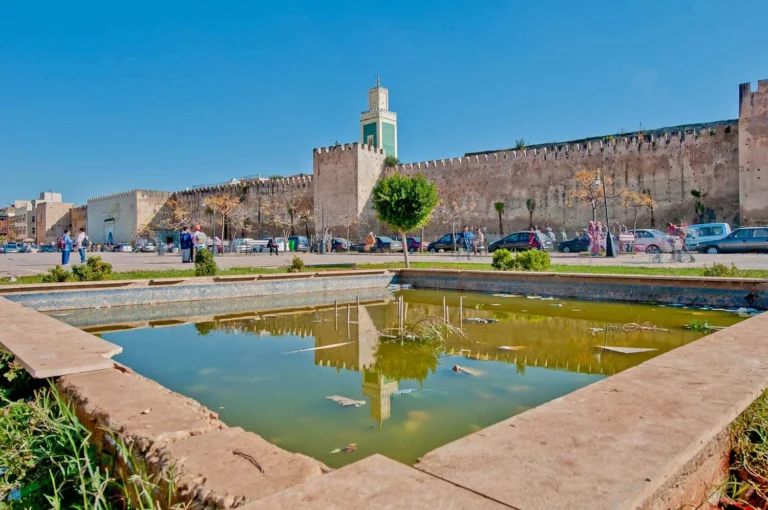
A Medina Without the Performance Meknès is not as often visited as its glamorous neighbor Fez. We really can’t understand why. To us, Meknès was a fascinating city to see because it allowed for more authentic impressions of Morocco. It’s not as busy or big as its famous neighbor Meknes, but that only adds to…
-
Chefchaouen | Morocco’s blue city
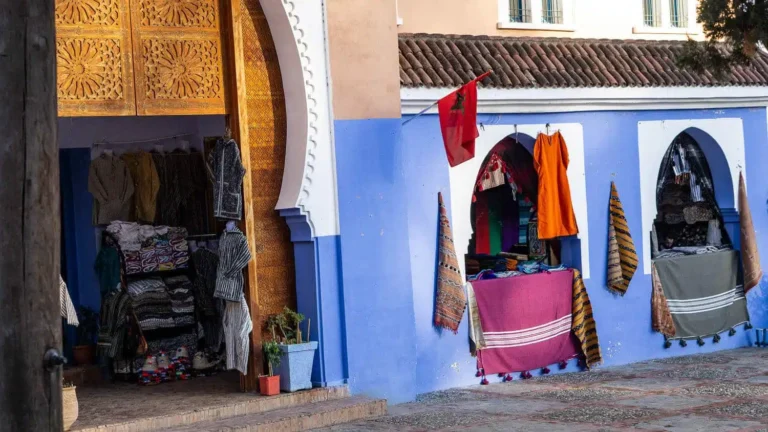
Beyond the Blue Many travelers have been enthused by the charm of Morocco’s blue city: Chefchaouen. So, of course, we were eager to discover the blue town for ourselves. After getting a CTM bus ticket, we were off to the Rif mountains. As soon as we arrived at the bus station, we were a little surprised: at…
-
Fez, Morocco | The world’s biggest maze
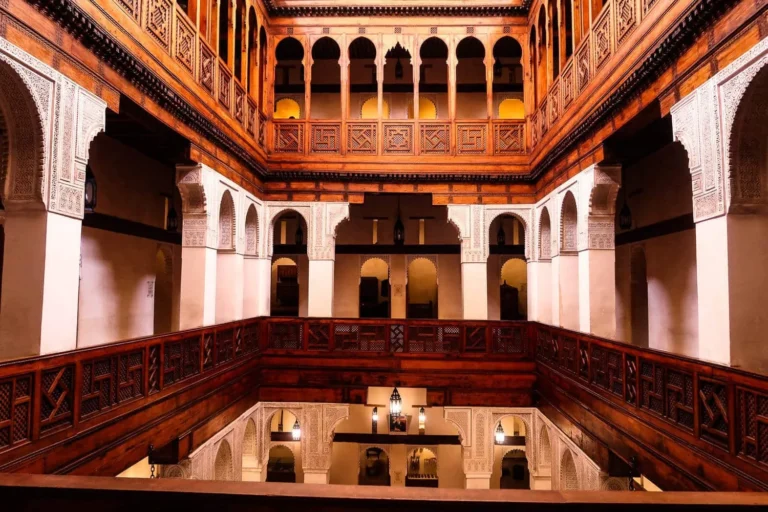
The world’s most extensive maze Until today, the medina of Fez is the largest car-free zone in the world. Fez’s old city, the medina, consists of more than 9400 alleys. Some of them are more extensive; some so narrow you almost don’t recognize them as a path. Moroccans are proud of their traditions and heritage….