Lake Natron
TANZANIA
A red lake turning animals into stone
Lake Natron in Tanzania is one of the most unique destinations we’ve ever had the chance to visit, and not just for its vivid range of colors. We read about Tanzania’s red Lake and its bizarre ability to turn animals into stone and were excited when our Maasai friend Papakinye invited us to visit his family. Lake Natron is the centerpiece of a traditional homeland for the Maasai people, where they pass on stories and lessons to generations through song, dance, and cultural traditions. Until today, our visit with Papakinye marks one of our most unique travel experiences as we did not just get to see surreal landscapes but also dive head first into the Maasai culture.
The journey is the destination. For Lake Natron, this is even truer. The ride was rough but stunning. Precisely as our following days with Papakinye’s family. We drove through dry savage vegetation, and climbed or jumped over dried-out rivers while spotting herds of zebras and giraffes. The journey itself was already bearing the promise of an unforgettable time.

Best places to stay near Lake Natron
Lake Natron is not a place where accommodation should feel separate from the landscape. This is one of northern Tanzania’s most dramatic, fragile and remote regions — a world of salt flats, flamingos, volcanic slopes, Maasai villages and the sacred presence of Ol Doinyo Lengai. For this part of a Tanzania itinerary, I would choose small, low-impact stays that help you feel the scale of the place rather than hide from it.
If I had to choose one place that really fits the spirit of Lake Natron, it would be Lake Natron Camp. It feels more like a base for understanding the landscape than simply a place to sleep: close to the lake, the flamingo areas, the ancient footprints, the waterfalls and the routes toward Ol Doinyo Lengai. The appeal here is not glossy comfort, but immersion — waking up in a place that still feels remote, elemental and deeply tied to its surroundings.
Maasai Giraffe Eco Lodge is a good option if you want something simpler and more locally rooted. Set near Engaresero village, it gives you easier access to Maasai cultural experiences, birdlife, the lake and the wider Rift Valley scenery. I would recommend it for travelers who do not need a high-end camp, but want a stay that feels grounded in the region and close to local life.
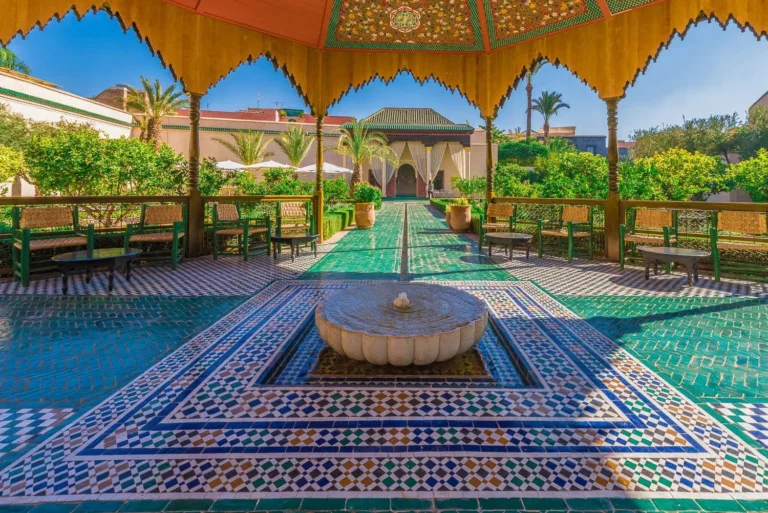
The more classic Marrakech choice: intimate, quiet and close to Jemaa el-Fna, but with a stated sustainability policy around local suppliers, eco cleaning products, water and energy use.
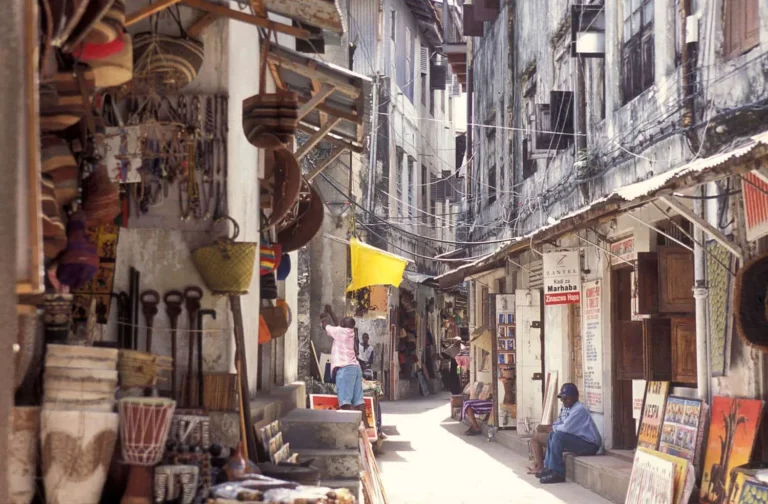
Wander through the maze of alleys
Waterfalls by the Ngare Sero river
Massai and Papakinye proposed to visit the “nearby” waterfalls along the Ngare Sero river. What we didn’t know back then: You can entirely rely on Masai people with anything BUT their definition of “nearby.”
Their semi-nomadic lifestyle accustoms them to walking long distances under the burning sun of the African savannah. So, equipped and prepared for a “short” walk, we started walking in flip-flops with very little water. We quickly earned our new nickname, “pole & pole,” which translates into slow.
The walk through the dramatic landscape of a savage was impressive. But we were excited to cool down after 2 hours of sweltering heat. Seeing such a powerful and high waterfall after walking through absolute dryness for two hours is almost unreal. We dived right into the freshwater pouring down on us. Looking back, we should have enjoyed the water a bit longer. It was the last time for days that we had access to water.
Trying to protect our feed from the hot sand, we quickly began to recognize the virtue of Masai shoes. Masai shoes are often crafted from old tires. They are constructed to keep the hot sand from burning your feed. Walking through the golden savannah, we encountered kids as young as five years herding goats.
Learn about Maasai culture
Even though there is one village, a hub for the surrounding Masai tribes, which offers some places to get food and one hostel with western standards, we decided to stay with Papakinye and his family.
Maasailand Tanzania

The Maasai: Where do they live?
It had become pitch black when we arrived at what seemed the side of an unpaved road. Only the stars offered some light. For a split second, we were confused until we could see flashlights coming towards us.
The Masai lead a semi-nomadic life in which cattle and the seasons dictate the course of life. Traditional Masai settlements consist of bomas, tiny houses made of cow dung.
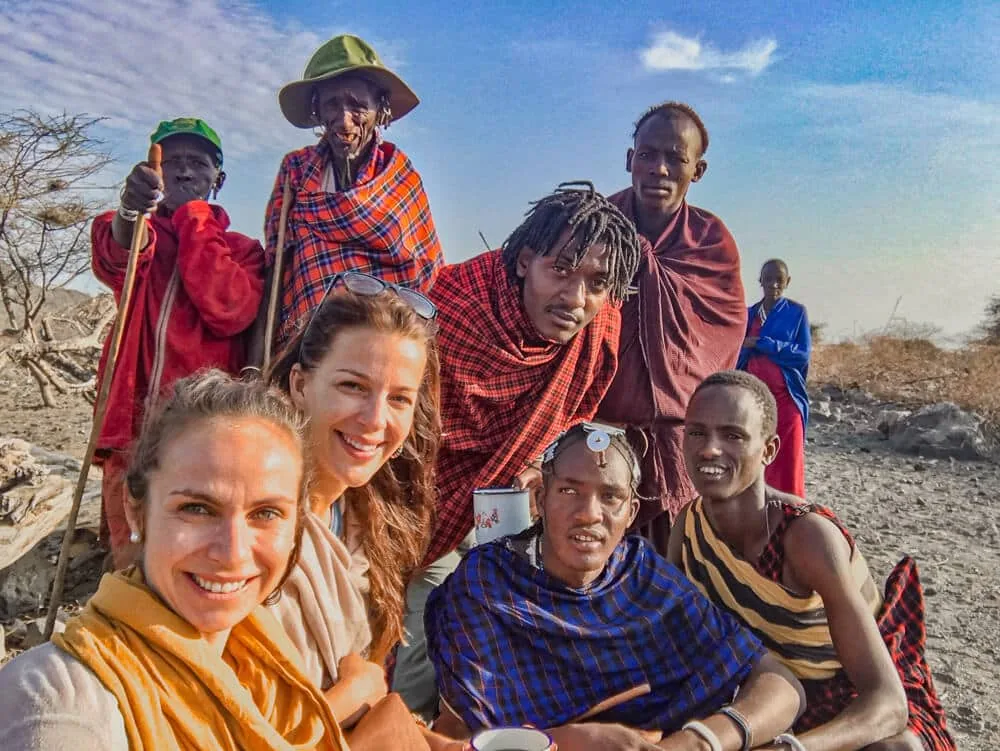
Arrival at the boma – Meeting Papakinye’s family
Suddenly, we were surrounded and warmly greeted by Papakinye’s family members. Greetings are essential in the Maasai culture, so it took some time till we walked back to their bomas.
The traditional cow skin under the African sky would become our bed for the following days. Exhausted from the travel and the impressions, we unfolded our sleeping bags on the cow skins right in front of the boma. That night we quickly fell asleep under the stars. The rising sun woke us the following day. We rose to see the boma for the first time.
Thorny acacia branches were wrapped around the bomas in a circle. In the middle, we found another circle of branches home to the cattle during the rainy season. Beyond that, there was nothing. Nothing. We have landed in the middle of nowhere.

The jumping dance of the Maasai
On our second night, we were sharing a coup of porridge when we heard the whistling sounds come closer. We joined the group and followed them to the next bigger boma. Walking through the night, our excitement rose. We have heard of the typical Masai dance and its mesmerizing music.
But never did we expect to be invited to such an occasion. More and more warriors gathered. Soon they formed a circle and started to sing in a chorus. One after another entered the middle and jumped as high as possible while the others continued with the mesmerizing rhythms. We were overwhelmed and entirely in awe by this ritual.
Climb Ol Doinyo Lengai – Maasai’s “Mountain of God”
The active volcano offers a dramatic, picturesque backdrop. Ol Doinyo Lengai is unique in the world. From a distance, the summit looks as if covered with snow. But the impression is deceptive. Instead, it is the only volcano that spits white lava during the eruption. The whitish color is caused by lava consisting of sodium carbonate, which also gave the soda lake its name.
Ol Doinyo Lengai means “mountain of God”. The Maasai believe that the holy volcano is the residence of their god. The volcano can be climbed with a tour guide and offers an adventurous journey, far away from any tourism. The ascent to the volcano, with its steep, rough rock ramp, is quite challenging. We decided against it but are convinced that the hike can be an exciting and unique trekking experience for every enthusiastic and well-equipped mountaineer. The cost for the ascent with a tour guide is $100.
Hot springs and flamingos
However, it becomes home to millions of migrating flamingos of magnificent pink color. Even though the mysterious Lake Natron, with its surreal and drastically varying landscape, is located close to Arusha, it was spared by mass tourism. Visiting Lake Natron was one of our highlights!
Besides feeding into the lake, the up to 50 degrees hot springs provide warm, mineral-rich water, which is ideal for the growth of salt-loving microorganisms devoured by millions of flamingos. In fact, over three-quarters of the world’s population breeds here because food is plentiful and nesting sites abound. They built their nests on islands of evaporated salt. We spotted beautiful pink flamingos as we walked across the dried lakebed and came close to the shoreline.
Washed up along the shoreline, one can discover the bizarre calcified corpses of all kinds of birds and bats. According to National Geographic, the creatures presumably died of natural causes and were salt-encrusted after death. Lake Natron is indeed a surreal place!
Practical Travel Tips for Lake Natron

Going to Tanzania?
Let us inspire you!
Places to visit in Tanzania
With its diverse cultures, beautiful nature and rich history Tanzania is a country not to be forgotten.
-
Diving in Zanzibar
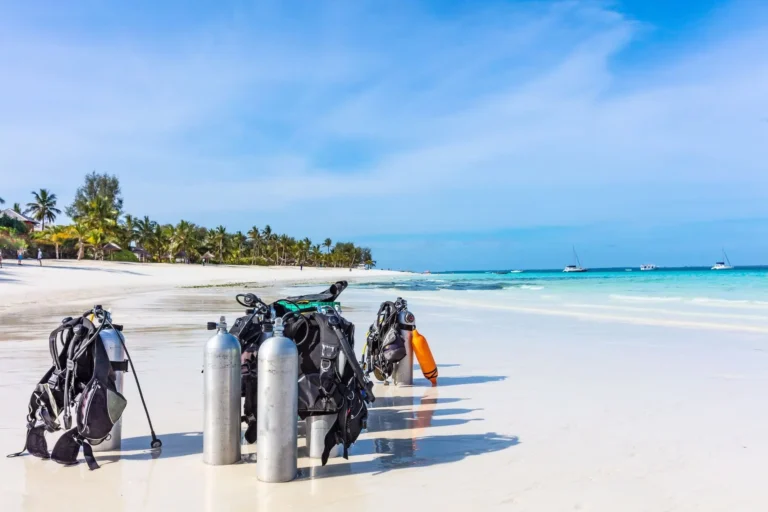
What to Expect Beneath the Indian Ocean Zanzibar is usually described from above the water: pale beaches, dhows, spice farms, Stone Town rooftops and that bright Indian Ocean blue. Diving changes that perspective. Below the surface, the island becomes quieter, more technical and more fragile — coral gardens, reef fish, shifting visibility, currents, and the…
-
Two weeks Tanzania itinerary
A Complete Safari & Beach Itinerary Tanzania was my first African destination — and the one I keep returning to. It”s a country that lingers in your mind: the golden sweep of the Serengeti, the salty air of the Indian Ocean, the earthy scent after a burst of rain. If you have just two weeks,…
-
Tarangire National Park
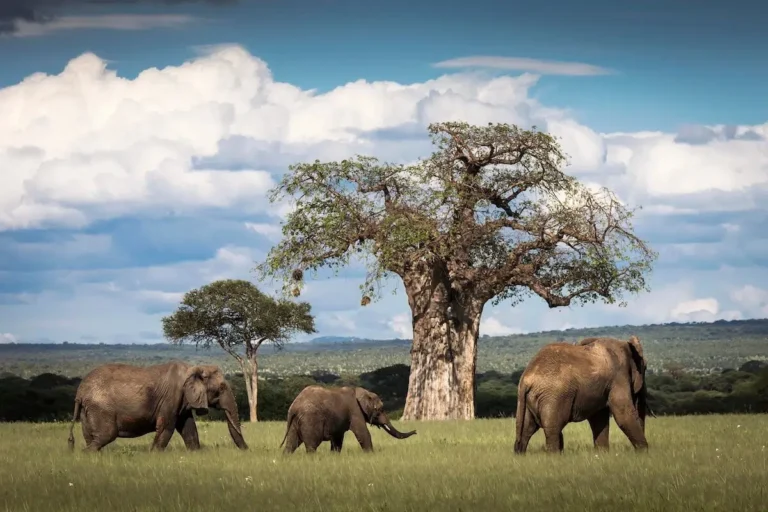
Tanzania’s Quiet Elephant Kingdom Tarangire was the very first national park I ever set foot in Tanzania—and I only had one day. I still remember the dusty hush, the surreal baobab silhouettes, and an elephant herd so large the ground seemed to move. That single day trip from Arusha ignited a lifelong love of African…
-
Zanzibar | Discover the most beautiful beaches
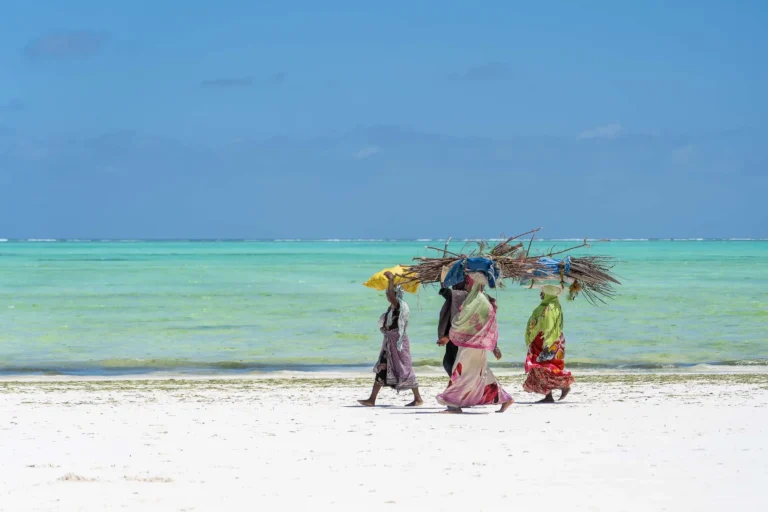
Where Zanzibar Meets the Tide We loved mainland Tanzania, and the experiences surpassed our imagination. After our eventful time on the mainland, we were yearning for some lazy days in the sun. Zanzibar not only affords its visitors some of the best beaches in the Indian Ocean, but it’s also within comfortable and cheap reach…
-
Safari | A once in a lifetime wildlife experience
How to Choose the Right Parks Tanzania’s Northern Circuit is the safari route most travelers imagine before they ever set foot in East Africa: the Serengeti, Ngorongoro Crater, Tarangire, Lake Manyara, and the landscapes around Arusha. It is the country’s most famous safari circuit for a reason. The wildlife is extraordinary, the distances are manageable…
-
Arusha | City life & safari adventures
Tanzania’s safari capital Arusha, Tanzania, is a city in the middle of two worlds. On the one hand, you have the traditional cultures and lifestyles of the locals. On the other hand, you have the modern influences of globalization and tourism. This creates an exciting mix of people and cultures that make Arusha unique. Arusha…