Burning of the Vaval – Kalinago Barana Autê
Dominica
The Night Dominica Says Goodbye to Carnival
After the colour, music and movement of Carnival Monday and Tuesday, the Burning of the Vaval felt different.
It was still Carnival, but the mood had shifted. The big parade days were over. The road energy had changed. What remained was something more symbolic: a closing ritual, a farewell to the Carnival spirit, and a reminder that Mas Domnik is not only about celebration, but also about tradition.
For me, this was the moment the whole experience came full circle.
I had come to Dominica for Carnival — for the music, the costumes, the road, the energy of Roseau during Mas Domnik. But by the time Vaval was carried through the streets and finally burned, the journey had become something much more cultural and rooted. It was no longer only about watching or taking part in Carnival. It was about understanding how Carnival fits into the rhythm of the island.
Dominica is often called the Nature Island of the Caribbean, and usually that means rainforest, rivers, waterfalls and volcanic landscapes. But during Mas Domnik, you begin to understand that the island’s cultural landscape is just as powerful.
The Burning of the Vaval is one of the clearest examples of that.
What Is the Burning of the Vaval?
The Burning of the Vaval, also known as Téwé Vaval or Tewey Vaval, is the traditional closing of Dominica’s Carnival season. It takes place after Carnival Monday and Tuesday, usually on Ash Wednesday, and marks the symbolic end of Mas Domnik.
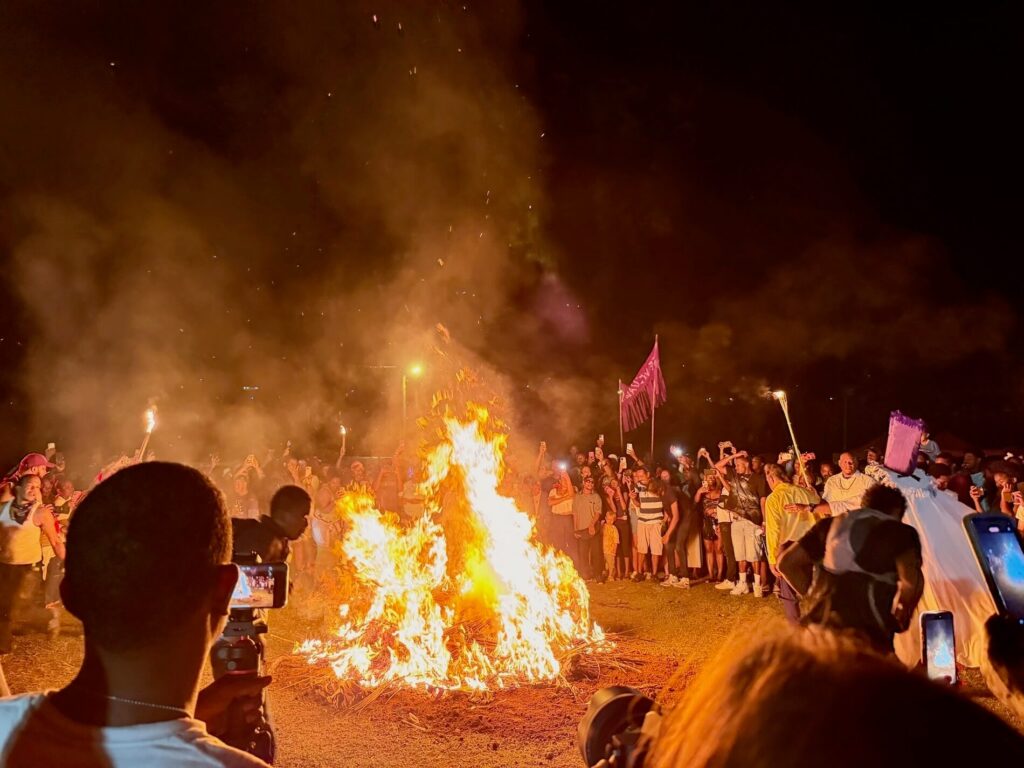
At the centre of the tradition is Vaval, a symbolic Carnival figure often understood as the spirit or king of Carnival. After the music, masquerade, satire, dancing and street celebration of the season, Vaval is laid to rest. In Dominica, this ending is marked through a procession and the burning of an effigy or coffin representing Vaval.
The meaning is simple, but powerful: Carnival has had its time. Now it must end.
That ending matters. Without it, Carnival could simply fade out after the last parade or the final song. The Burning of the Vaval gives Mas Domnik a clear closing moment. It turns the end of Carnival into something communal, visible and symbolic.

Best Places to Stay for Visiting Kalinago Barana Autê
You can absolutely visit Kalinago Barana Autê as a day trip from Roseau, and for many travelers that will be the easiest option. But if this part of Dominica is more than a quick stop for you, I would also look at stays inside the Kalinago Territory or along the east and northeast coast. Staying closer gives the visit more context — the Atlantic side, the forest roads, the villages, the slower rhythm — and makes the experience feel less rushed.
A homestay in the Kalinago Territory is the most meaningful choice if cultural understanding is the reason for your visit. It will not be the most polished stay, but that is not the point. The value is in time, proximity and exchange — learning from daily life, local stories, food, family rhythms and traditions shared on local terms.
I would choose this if you want your visit to feel less like an excursion and more like a respectful encounter with the community.
Rosalie Forest Eco Lodge is the nature-led choice. Set in the Rosalie rainforest valley, it gives you rivers, forest, mountain air and a slower east-coast feeling. It is a good fit if you want to stay somewhere low-key and close to Dominica’s wilder interior.
I would choose it if you want your visit to the Kalinago Territory to be part of a wider east-coast experience — nature, community and quiet rather than city logistics.
Carib Territory Guest House is another strong option because it keeps you directly in the Kalinago Territory. It is simple and locally rooted, best suited to travelers who care more about context than hotel style.
I would recommend it if you want to stay close to Kalinago Barana Autê and give yourself more time to understand the area beyond a short visit.
The Ritual Side of “The Real Mas”
Mas Domnik is often called “The Real Mas”, and after experiencing it, I understand why.
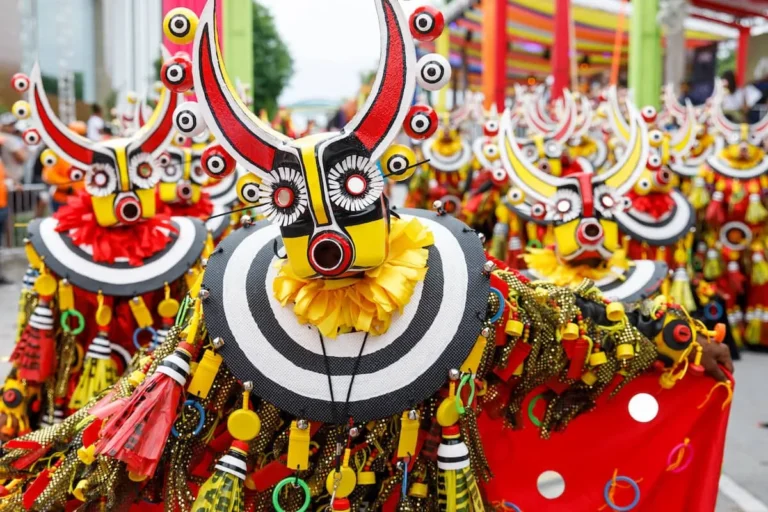
Many Caribbean Carnivals are known internationally for feathers, costumes, music trucks, road marches and parties. Dominica has road energy too, but Mas Domnik also holds closely onto traditional forms of Carnival expression. You feel it in the music, in the masquerade, in the characters, in the smaller scale, and in the way the streets still feel connected to local life rather than fully shaped around visitors.
The Burning of the Vaval belongs to that deeper layer.
It is not just an extra event after Carnival. It is part of the cultural structure of the season. Carnival creates a temporary world. For a few days, the streets belong to music, masquerade, satire, costume, freedom and release. Normal life loosens. People dress differently, move differently, speak differently. The city changes its rhythm.
Vaval gathers that Carnival spirit into one figure.
When Vaval is burned, the season is symbolically released. Carnival is closed. The island moves from celebration into reflection, from the extraordinary back into everyday life.
After the Road, the Fire
What struck me most was the change in atmosphere.
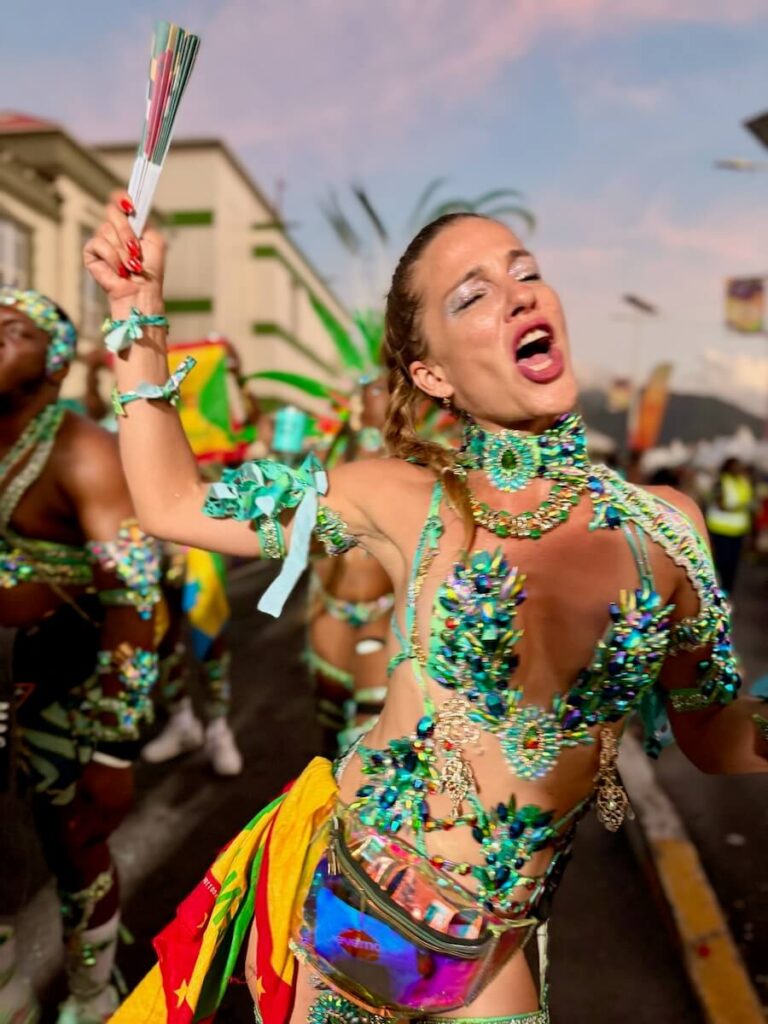
Carnival Monday and Tuesday had been loud, colourful and full of movement. There was bouyon on the road, costumes in the streets, people dancing, watching, laughing, moving between the parade and the sidewalk. Roseau felt open and alive in that very physical Carnival way.
The Burning of the Vaval felt more concentrated.
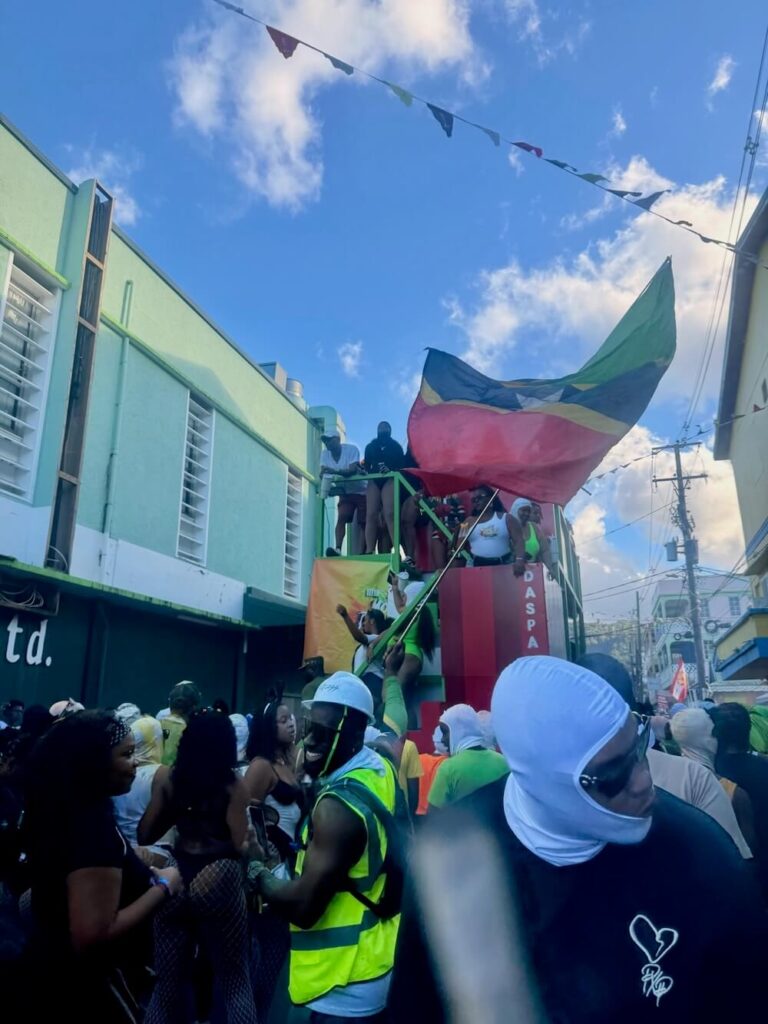
There was still music. There was still energy. But it had a different weight to it. People were not simply continuing the party. They were taking part in something with a clear purpose: to bring Carnival to an end.
That is what made it so memorable. The fire was visually striking, of course, but the power of the moment was not only in the flames. It was in the feeling of closure. The sense that something had been carried, witnessed and then released.
For me, that changed how the whole Mas Domnik experience landed. It did not end with a party fading out into the night. It ended with a ritual.
The Kalinago Territory Connection
I want to be careful here, because different cultural traditions should not be merged too easily. The Kalinago Territory has its own history, identity and meaning, and the Vaval tradition should not be casually explained through assumptions. But experiencing the end of Mas Domnik in this setting made the closing ritual feel even more connected to place.
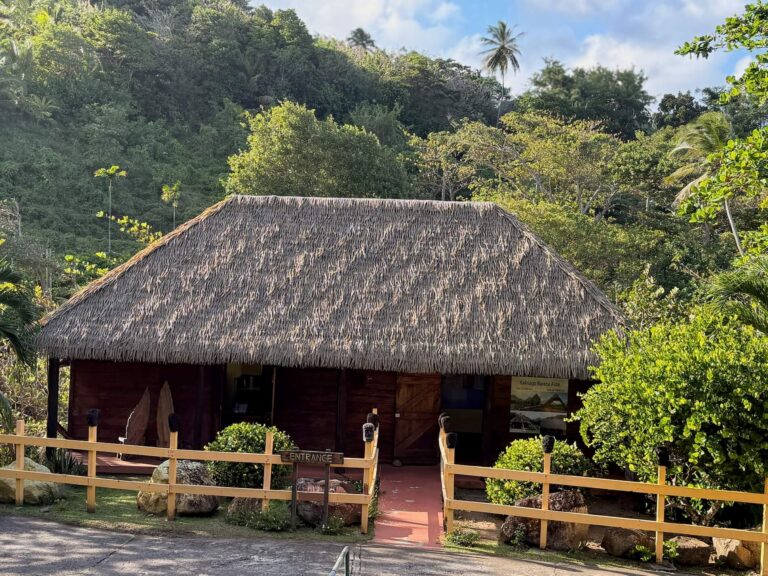
Earlier in the trip, visiting Kalinago Barana Auté had already added cultural depth to my understanding of Dominica. There, the focus was on Indigenous heritage, plants, water, building traditions and the relationship between people and land. Later, at the Burning of the Vaval, Carnival itself revealed another layer: the way celebration can also carry symbolism, memory and ritual.
Together, these experiences made Dominica feel more layered than I expected.
The island is rainforest, waterfalls and volcanic landscapes, yes. But it is also ceremony, community knowledge, storytelling and cultural continuity.
Who Are the Kalinago?
The Kalinago are the Indigenous people of Dominica. Today, Dominica is home to the largest Kalinago community in the Caribbean, and the Kalinago Territory on the island’s east coast remains an important part of the country’s identity.
This is not a minor detail in Dominica’s story. It is central to understanding the island.
Caribbean travel is still too often reduced to beaches, resorts and postcard views. Dominica already challenges that idea through its nature, but the Kalinago Territory adds something deeper: cultural and historical context. It reminds you that the island was never an empty paradise waiting to be discovered. It was, and remains, home.
When writing or speaking about the community, the word Kalinago matters. Older colonial terms may still appear in historical sources, but Kalinago is the respectful name to use today.
Why the Burning of the Vaval Felt So Rooted
The Burning of the Vaval was not the loudest Carnival moment for me, but it may have been the one that stayed with me most.
It made the trip feel complete.
The parades showed the colour and movement of Mas Domnik. Bouyon gave it sound. Traditional mas gave it character. But the Burning of the Vaval gave it an ending.
That ending mattered because it made Carnival feel less like a series of events and more like a cultural cycle. There was anticipation, release, celebration and closure. There was a sense that Carnival belonged to the year, to the community and to a rhythm older than any visitor itinerary.
This is what I mean when I say the experience felt rooted.
It did not feel created for tourists to consume. It did not feel like a performance arranged to impress outsiders. It felt like something that existed whether or not I was there — and that I was lucky to witness because I happened to be present.
That distinction matters.
Some travel experiences feel arranged around you. Others remind you that you are entering something already alive. The Burning of the Vaval belongs to the second category.
Vaval and the Wider Caribbean Carnival Tradition
Vaval is not only found in Dominica. Similar Carnival figures appear in several French Caribbean traditions, including Martinique and Guadeloupe, where Carnival also ends with the symbolic death or burning of King Vaval on Ash Wednesday.
That wider context helps explain why the ritual feels both local and regional.
Carnival across the Caribbean has always been layered. It carries African, European, Catholic, colonial and post-emancipation histories, reshaped by each island into its own expressions. Dominica’s version is deeply Dominican, but it also speaks to wider Caribbean patterns: masquerade, satire, inversion, music, procession, excess, release and return.
The Burning of the Vaval fits into that logic.
Carnival allows the world to turn temporarily upside down. Vaval gathers that energy into a symbolic figure. His burning marks the moment when the world begins to turn back again.
Practical Travel Tips for Dominica
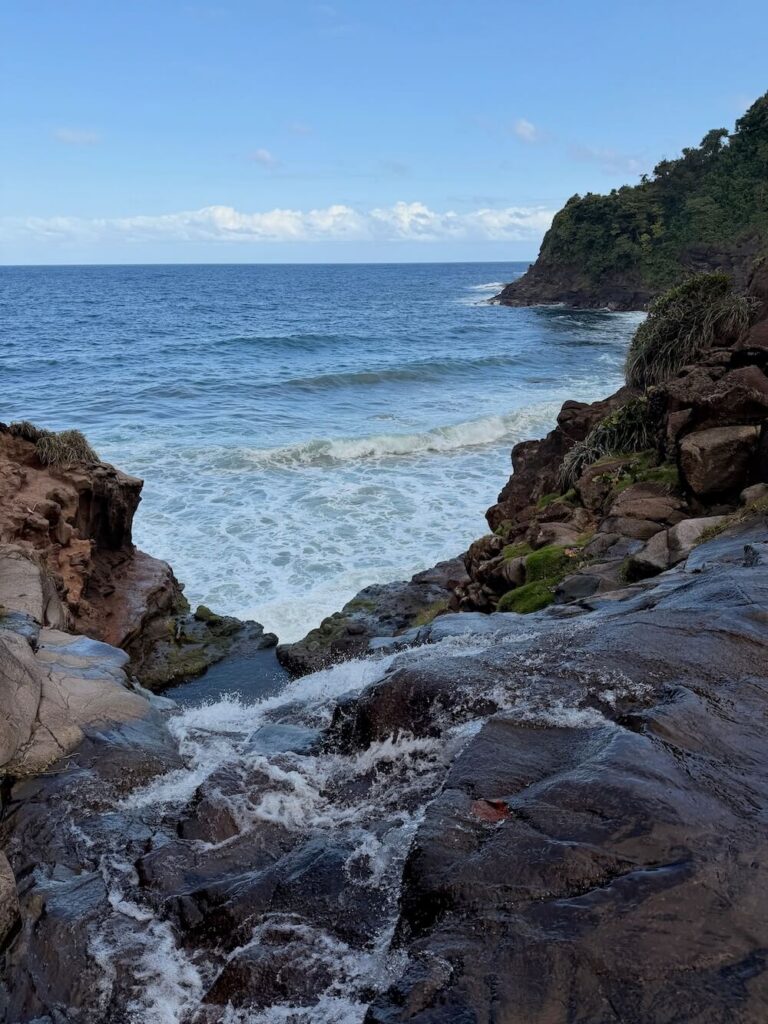
Things to do in Dominica
Waterfalls, rainforest, hot springs and volcanic coastlines — Dominica is wild by nature.
-
Visiting Kalinago Barana Auté
Voices of Dominica’s First People Dominica is often described through its landscapes first. Rainforest. Rivers. Waterfalls. Hot springs. Volcanic peaks. Roads that twist through the mountains before opening suddenly to the Atlantic. It is an island that feels physical from the moment you arrive — green, humid, steep, alive. And yet, if you only come…
-
Roseau, Dominica: What to See in the Island’s Colorful Capital
Roseau Beyond the Waterfront Roseau is small, colourful, busy and a little rough around the edges. It is not the kind of Caribbean capital that feels polished for visitors — except perhaps around the waterfront, where the city briefly becomes more arranged for cruise arrivals. Beyond that first layer, Roseau feels much more local. You…
-
How to play mas in Dominica
Costumes, Culture and Mas There is a moment when Carnival stops being something you watch and becomes something you feel in your body. For me, that moment came on the road with Hysteria Mas in Dominica. The music was already moving ahead of us, the streets of Roseau were filling with people, and suddenly I…
-
Bouyon Music in Dominica: The Soundtrack of Mas Domnik
The Soundtrack of Mas Domnik Bouyon does not politely stay in the background. It pushes forward. It repeats. It builds pressure. It gets into your body before you have fully understood what you are hearing. During Mas Domnik, Dominica’s Carnival, bouyon is everywhere: on the road, at parties, during J’ouvert, from trucks, passing cars, street…
-
Soufrière and Southern Dominica: A Guide to the Island’s Volcanic Coast
Where the Island Turns Volcanic After the intensity of Mas Domnik in Roseau, southern Dominica felt like a different island. The capital had been all music, movement and Carnival rhythm. Bouyon in the streets. Costumes on the road. People watching from balconies. The same corners appearing again and again as we circled Roseau during Carnival….
-
Beaches in Dominica
Dominica’s Beaches, Without the Caribbean Filter Dominica is not the island I would recommend if your idea of the Caribbean is a week of white sand, beach loungers and polished resort beaches. And that is not criticism. Dominica is the Nature Island of the Caribbean for a reason. Its strongest landscapes are rainforest, rivers, waterfalls,…