Diving Zanzibar
Tanzania
What to Expect Beneath the Indian Ocean
Zanzibar is usually described from above the water: pale beaches, dhows, spice farms, Stone Town rooftops and that bright Indian Ocean blue. Diving changes that perspective. Below the surface, the island becomes quieter, more technical and more fragile — coral gardens, reef fish, shifting visibility, currents, and the slow discipline of learning to move with the sea rather than through it.
I got certified on Zanzibar’s northeast coast, in Matemwe, and that shaped how I experienced the island. Matemwe is not the easiest beach if all you want is all-day swimming; the tides are too dramatic for that. But for diving, it makes sense. The coast faces Mnemba Atoll, Zanzibar’s best-known dive area, and the rhythm of the day starts to follow the ocean: early boats, dive briefings, changing tides, salty hair, and afternoons that feel slower because the morning already happened underwater.
This guide is for anyone thinking about diving in Zanzibar — whether you want to get certified, join a few fun dives, snorkel around Mnemba, or simply understand which coast makes the most sense for a dive-focused stay. Zanzibar can be a good destination for beginner and intermediate divers, but it is worth being realistic. Visibility changes. Currents matter. Some reefs are under pressure. And the quality of your dive operator makes a real difference.

Best places to stay for divers
Zanzibar’s diving is at its best when the stay matches the rhythm of the sea. This is not a destination where I would choose a hotel only for the room or the beach view. For divers, location matters: how close you are to the reef, how easy the morning boat logistics feel, and whether the property understands that the ocean is not just scenery, but the reason you came.
The northeast coast around Matemwe and Muyuni is my first choice if diving is a real priority. You are close to Mnemba Atoll, the island’s best-known dive area, while still staying in a part of Zanzibar that feels quieter and more tidal. Nungwi, in the north, works better if you want diving with more restaurants, sunset bars and social energy after the boat returns.
Sunshine Azure is a beautiful choice if you want diving to be part of a softer Zanzibar stay. Set directly on Matemwe’s long beach, it feels calm, intimate and close to the rhythm of the northeast coast. The tide moves dramatically here, and that becomes part of the experience: morning walks, seaweed farms, pale sand, and the Indian Ocean constantly changing shape in front of you.
For divers, the location works especially well because trips to Mnemba Atoll can be arranged nearby with Dive Point Zanzibar. I would choose Sunshine Azure if you want a boutique beach stay with easy dive access, but still care about atmosphere, design and a quieter sense of place.
If diving is the main reason for your stay, Sunshine Marine Lodge is probably the strongest choice. It sits on the cliffs near Muyuni, facing toward Mnemba Atoll, with Dive Point Zanzibar on site. That makes the whole dive day feel simple: wake up, have breakfast, walk to the dive center, and head out toward the reef.
The lodge feels more remote than the beachfront hotels in Matemwe, and that is part of its appeal. It is a place for divers, snorkelers and travelers who want the ocean to shape the day. I would choose it for the easiest dive logistics and for the feeling of being close to one of Zanzibar’s most important marine areas.
If you want to stay near Nungwi but still look for something more thoughtful than a standard beach hotel, F-Zeen Boutique Hotel Zanzibar is worth considering. Nungwi is one of the island’s most developed beach areas, so I would be careful with sustainability claims here — but F-Zeen stands out because it speaks more directly about regenerative travel, local community support and a more conscious approach to hospitality.
Why Go Diving in Zanzibar?
Diving in Zanzibar is less about dramatic wrecks or guaranteed big-animal encounters, and more about warm Indian Ocean reef diving: coral gardens, tropical fish, boat rides over blue water, and the ease of combining dive days with beaches, Stone Town, spice farms or a wider Tanzania itinerary.
Zanzibar is also well placed geographically. Unguja, Pemba and Mafia sit along the East African continental shelf, where deep channels help bring nutrient-rich water toward reefs, bommies and walls. Conditions are generally comfortable too, with year-round water temperatures around 26°C to 29°C and visibility that can reach 20 to 30 meters on good days, depending on wind, tide, rain and site.
For beginners, Zanzibar can be a beautiful place to learn: warm water, accessible reef sites and an island rhythm that suits the patience diving requires. For certified divers, it works best with realistic expectations. You may see turtles, rays, moray eels, nudibranchs, reef fish and sometimes dolphins from the boat — but sightings are never guaranteed.
It is also a good choice for mixed trips. While divers are underwater, non-divers can explore Stone Town, visit spice farms, kite-surf in Paje, take a dhow trip or simply enjoy Zanzibar’s beaches and food culture.
Diving in the North & East
Zanzibar’s best-known dive areas sit along the north and northeast coast, but the experience changes depending on where you base yourself. My Take
Stay in Matemwe or Muyuni for a quieter, dive-focused trip close to Mnemba. Stay in Nungwi or Kendwa if you want diving, swimming, sunsets and more going on after the boat returns.
Nungwi & Kendwa (North Unguja)
Choose the north if you want diving with more beach life around it. Nungwi and Kendwa have easier swimming, sunsets, restaurants, bars and more of a social atmosphere. Dive operators here access northern sites such as Tumbatu Island, Hunga Reef, Nankivell and, for experienced divers, Leven Bank when conditions allow.
The north is better if diving is part of the trip, but not the whole reason you came.
Mnemba Atoll & the North-East Coast
Choose the northeast if diving is the main focus of your trip. From Matemwe and Muyuni, you are close to Mnemba Atoll, Zanzibar’s signature dive area. The coast is quieter, more tidal and more connected to the working ocean — fishing boats, seaweed farms, reef flats and early-morning dive departures.
It is not the easiest coast for all-day swimming, but it works beautifully for divers who want a slower base close to the reef.
East-Coast Reefs
The east coast between Pongwe and Chwaka Bay is not the main reason most divers come to Zanzibar, but it can be worth considering if you are already staying in the area. Dives here tend to be gentler and more local, with reef fish, coral formations and smaller marine life rather than the headline feel of Mnemba. I would not cross the island just for this area, but for newer divers, relaxed fun dives or anyone based on the east coast, it can be a good low-key option when conditions are calm.
Pemba Island: The More Serious Dive Choice
Before I started looking more closely at diving in Zanzibar, I honestly did not even think much about the proper names. Most of us say “Zanzibar” and mean Unguja — the main island with Stone Town, Nungwi, Paje, Matemwe and most of the places travelers know. But the Zanzibar Archipelago is bigger than that, and Pemba Island, just north of Unguja, is a very different kind of dive destination.
Unguja is the easier choice. It works well if you want warm reef dives, certification, Mnemba Atoll, beach time, Stone Town, spice farms and enough to do for non-divers. Pemba is more remote, greener and less developed, with fewer hotels and fewer boats. It feels more like a place you choose because diving is the focus, not just one activity between beach days.
The diving is also more demanding. Around Unguja, many dives are accessible reef dives, especially near Mnemba. Pemba is better known for walls, drop-offs, drift dives and deeper channels, which can mean stronger currents and sites better suited to confident or advanced divers.
For a first Zanzibar trip, I would still start with Unguja. It is easier, more flexible and better for mixed itineraries. But if diving becomes the reason you want to return, Pemba is the island I would keep on the list
Top 5 Dive Spots in Zanzibar and Pemba
Mnemba Atoll — Best First Zanzibar Dive Experience
Mnemba is the dive area most people hear about first, and it makes sense: warm water, coral reefs, reef fish, turtles if you are lucky, and several sites for different levels. I would not call it quiet or untouched — there can be a lot of boats — but with a responsible operator, it is still the signature Zanzibar dive experience.
Wattabomi — Best Relaxed Reef Dive
Wattabomi is one of the easier Mnemba-area sites and a good choice for newer divers or anyone who wants a calmer reef dive. Think coral formations, reef fish and a gentle underwater landscape rather than big drama. It is the kind of dive that reminds you Zanzibar is often about detail, not spectacle.
Tumbatu Island — Best North-Coast Alternative
Tumbatu is worth mentioning if you are staying around Nungwi or Kendwa and want something beyond Mnemba. It gives the north its own dive identity, with reef life and boat access that fits well into a more social beach stay. I would choose it if you want diving without moving your whole trip to Matemwe.
Leven Bank — Best for Advanced Divers
Leven Bank is the serious one near northern Zanzibar: deeper, more exposed and more current-dependent. It is not for beginners, but it shows that Zanzibar is not only easy reef diving. For confident divers, it can add a more challenging edge to the island.
Misali Island, Pemba — Best Pemba Dive Site to Know
If diving is the reason you want to go beyond Unguja, Misali Island is one of the names to remember. Pemba feels quieter and less developed, and Misali is known for coral gardens, reef life and that more remote island feeling. I would see it as the step up after a first Zanzibar dive trip.
Other Dive Sites Worth Knowing
Aquarium — Mnemba Area
Good for accessible reef life and easier fun dives.
Kichwani — Mnemba Area
A more varied reef profile, better with some confidence.
Big Wall — Mnemba Area
A deeper wall dive, best for experienced divers when conditions allow.
Fundu Gap / Njao Gap — Pemba
More advanced Pemba sites with walls, drift dives and stronger currents.
Pongwe / Chwaka Bay — East Coast
Only worth mentioning if you are already staying nearby; better for low-key local dives than a full dive-focused trip.
Best Time to Dive Zanzibar
Zanzibar can be dived year-round, and good dive centers go out daily when conditions allow. So I would not plan a trip around the idea that there is only one “perfect” dive season. The better question is what kind of experience you want — calmer seas, better visibility, specific marine life, quieter beaches, or a wider Tanzania itinerary that also includes safari on the mainland.
In general, the most popular diving windows are July to October and December to March, when conditions are often calmer and visibility can be very good. Water temperatures are warm throughout the year, usually around 26°C to 29°C, so diving in Zanzibar is comfortable even if you are still new to the sport.
That said, visibility, currents and surface conditions can change with wind, tide and weather. This is why I would always ask your dive center what conditions are like that week rather than relying only on a seasonal chart. If there is a specific site you want to dive — for example Mnemba Atoll, Leven Bank or a more advanced north-coast site — plan a little flexibility into your stay.
I would also think beyond the water. If your trip combines Zanzibar with a mainland safari, the best timing may depend as much on wildlife seasons as on dive conditions. If you prefer quieter travel, periods like Ramadan can sometimes bring a calmer rhythm to parts of the island, though opening hours and daily life may shift. For me, the best time to dive Zanzibar is not only about visibility; it is about matching the ocean, the island and the rest of your journey.
Getting Certified (or Leveling Up) with Dive Point Zanzibar
I did my certification with Dive Point Zanzibar on the northeast coast, and it made the whole process feel much more personal than I expected. The groups were very small — on some days, I was even the only student — which made a huge difference, especially as a beginner. Diving asks you to stay calm, listen carefully and trust the process, so having an instructor who could really focus on me helped a lot. My instructor even spoke German, which was an unexpected bonus and made the technical parts feel much easier to understand.
The first training day started in the pool at Sunshine Marine Lodge, where we practiced the skills before heading into open water. I liked that gradual approach: first learning how to clear the mask, recover the regulator, control buoyancy and communicate underwater in a calm setting before taking those same skills into the ocean.
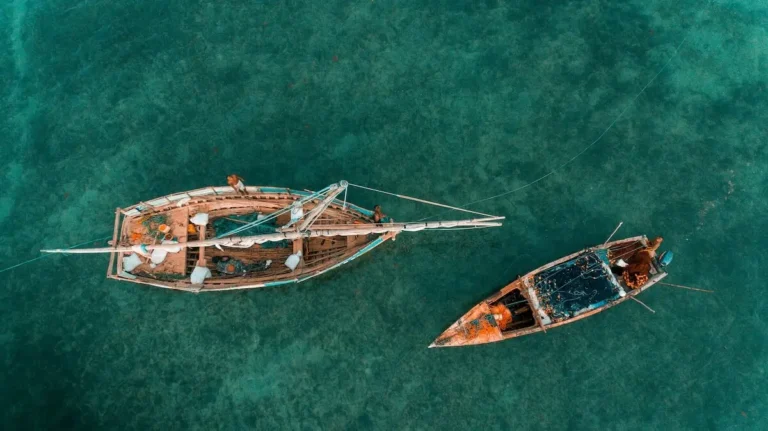
What I loved most was going out on a traditional dhow. It made the dive days feel so connected to Zanzibar — not just as a beach destination, but as an island shaped by boats, tides and the sea. The mornings had their own rhythm: equipment checks, briefings, sailing out toward the reef, and then that quiet shift when the noise of the boat disappeared and the dive began.
For anyone thinking about getting certified in Zanzibar, I would not treat it as a casual add-on squeezed between beach bars and airport transfers. Give yourself enough time, choose a dive center with patient instructors and small groups, and leave room for the ocean to decide the pace. For me, learning with Dive Point Zanzibar was not only about getting certified; it changed the way I experienced the island.
Responsible Diving in Zanzibar
Diving in Zanzibar should come with care. The reefs are beautiful, but many are under pressure from warming seas, coastal development, fishing and tourism. In some areas, coral has suffered visibly, which makes reef protection and restoration work especially important.
Around Mnemba Atoll, Dive Point Zanzibar has been involved in coral restoration together with the NGO Under The Wave. Between March and April, the team helped outplant 1,500 coral fragments over several volunteer dive sessions, and has since started a second phase focused on slower-growing coral species. They have also replenished the nursery with another 1,500 coral fragments of opportunity, allowing restoration work to continue throughout the year. Just as important, the team has supported marine conservation training for new rangers in Zanzibar’s protected marine area.
This matters because diving should not only be about what we see underwater, but how we behave there. Good operators brief divers properly, keep groups manageable, protect the reef, and teach guests why buoyancy, distance and awareness matter.
The same care applies to dolphins. Around Zanzibar, dolphins are often chased by boats, especially on tours selling “swimming with dolphins” as a guaranteed experience. A responsible operator should never speed toward dolphins, surround them, pressure guests to jump in, or disturb mothers and calves. Sometimes the most ethical encounter is watching from a distance — or accepting that you may not see them at all.
For divers and snorkelers, the rules are simple: do not touch coral, do not stand on the reef, do not chase turtles, rays or dolphins, and choose operators who treat the ocean as a living ecosystem, not a photo opportunity.
10 Day Dive Dream Itinerary
This itinerary is for travelers who want Zanzibar to feel deeper than a beach add-on: dive mornings, slow coastal days, Stone Town, food, history and enough breathing room to actually enjoy the island. This itinerary already builds in a no-dive buffer before your flight, but always follow your dive center’s specific no-fly guidance after your final dive.


Going to Sansibar?
Practical Travel Tips for Zanzibar

Places to visit in Tanzania
With its diverse cultures, beautiful nature and rich history Tanzania is a country not to be forgotten.
-
Two weeks Tanzania itinerary
A Complete Safari & Beach Itinerary Tanzania was my first African destination — and the one I keep returning to. It”s a country that lingers in your mind: the golden sweep of the Serengeti, the salty air of the Indian Ocean, the earthy scent after a burst of rain. If you have just two weeks,…
-
Tarangire National Park
Tanzania’s Quiet Elephant Kingdom Tarangire was the very first national park I ever set foot in Tanzania—and I only had one day. I still remember the dusty hush, the surreal baobab silhouettes, and an elephant herd so large the ground seemed to move. That single day trip from Arusha ignited a lifelong love of African…
-
Zanzibar | Discover the most beautiful beaches
Where Zanzibar Meets the Tide We loved mainland Tanzania, and the experiences surpassed our imagination. After our eventful time on the mainland, we were yearning for some lazy days in the sun. Zanzibar not only affords its visitors some of the best beaches in the Indian Ocean, but it’s also within comfortable and cheap reach…
-
Safari | A once in a lifetime wildlife experience
How to Choose the Right Parks Tanzania’s Northern Circuit is the safari route most travelers imagine before they ever set foot in East Africa: the Serengeti, Ngorongoro Crater, Tarangire, Lake Manyara, and the landscapes around Arusha. It is the country’s most famous safari circuit for a reason. The wildlife is extraordinary, the distances are manageable…
-
Arusha | City life & safari adventures
Tanzania’s safari capital Arusha, Tanzania, is a city in the middle of two worlds. On the one hand, you have the traditional cultures and lifestyles of the locals. On the other hand, you have the modern influences of globalization and tourism. This creates an exciting mix of people and cultures that make Arusha unique. Arusha…
-
Dar es Salaam | Karibu to a vibrant Tanzanian city
An African megacity between tradition and future Tanzania’s former capital, often referred to as “Dar,” is not only Tanzania’s second-largest city but one of the fastest-growing cities in the world. Located along the coast of the Indian Ocean, Dar es Salaam is brimming with activities for anyone. Dar is not only known for its beaches…