What to do in St. Lucia’s South
Vieux Fort & Soufriere
Exploring Costa Rica’s Capital City
While the north of St. Lucia buzzes with vibrant energy, it’s the peaceful south that truly captures the island’s essence. Imagine waking up to the sight of the Pitons right outside your window, or soaking in the natural hot springs at the Sulphur Springs.
You’ll find hidden gems like the colorful town of Soufrière, waterfalls tucked away in the rainforest, and quiet beaches where you can relax without the crowds. Join me as we dive into the slower, more soulful side of St. Lucia—where adventure and relaxation go hand in hand.
Why I Keep Coming Back to St. Lucia’s South
What draws me most to the southern coast of St. Lucia is its raw, untouched beauty. Here, secluded bays and volcanic beaches feel worlds away from the crowds. The lush, mountainous landscapes—anchored by the iconic Pitons—are nothing short of cinematic. And there’s a certain unhurried rhythm to life down here that invites you to slow down, breathe deeply, and truly connect with the island. Whether I’m chasing waterfalls, sipping local cocoa, or just watching the sunset from a quiet cove, the south always feels like the soul of Saint Lucia.

Best places to stay in Saint Lucia’s South
Saint Lucia’s south is where the island feels most dramatic to me. Around Soufrière, the landscape becomes greener, steeper, and more cinematic: the Pitons, rainforest, cocoa estates, volcanic springs, fishing villages, and those winding roads that make every short drive feel like part of the experience.
This is the part of Saint Lucia I would choose for a slower, more atmospheric stay — especially if you care more about nature, views, and character than being close to nightlife. It is less convenient than Rodney Bay, but much more memorable.
Polkerris Bed & Breakfast is one of the best smaller stays if you want Montego Bay to feel more personal without losing convenience. It is set across two villas with ten rooms in total, with pools, sea views, breakfast, and an easy walk to Doctor’s Cave Beach and the Hip Strip.
I would choose Polkerris if I wanted a comfortable base that feels more like a home than a hotel, but still keeps the practical side of Montego Bay easy.
Best for: couples, solo travelers, first-time visitors, and anyone who wants a smaller stay close to the beach.
Mynt Retreat is another good choice if you prefer a quieter, more tucked-away base. It describes itself as a boutique bed and breakfast set on two lush acres in a quiet cul-de-sac, with seven rooms, Jamaican breakfast, gardens, and sunset views from the upper decks.
I would look at Mynt Retreat if I wanted to be near Montego Bay without feeling like I was staying in the middle of the busiest tourist strip. It feels more relaxed, intimate, and retreat-like.
Best for: slow travelers, couples, wellness-minded visitors, and travelers who prefer quiet over nightlife.
For a stay in the far south, Castles in Paradise is a good option near Vieux Fort. The property offers villas and apartments overlooking Savannes Bay, so it gives you more space and independence than a standard hotel. It is also close to Hewanorra International Airport, which can be useful if you are arriving late, leaving early, or planning to explore the southern tip of Saint Lucia.
I would choose this if I wanted a quieter base away from Soufrière’s more famous hotel scene, but still with sea views, space, and easy access to the far south. It is not the most iconic Saint Lucia stay, but it is practical and different — especially if you want to see more than the usual Piton postcard.
Best for: families, longer stays, independent travelers, airport convenience, and exploring Vieux Fort or the far south.

Vieux Fort
As most travelers do, I touched down in Vieux Fort, St. Lucia’s second largest city. This town of 20,000 souls is where most travelers first meet the island, but few linger. I decided to stick around and dive into the local scene. Vieux Fort’s no-frills charm grew on me quickly. Its walkable streets led me through a slice of authentic St. Lucian life – from a bustling fish market to laid-back beaches where the Caribbean and Atlantic mingle.
Vieux Fort might not scream “tourist haven,” but that’s exactly why it captured my heart. It’s real, it’s raw, and it’s ready for those willing to look beyond the glossy brochures. To me, Vieux Fort is the perfect launchpad for southern adventures!
Practical Travel Tips for Dakar

Things to do in Vieux Fort, St. Lucia
Go Fine Dining in Vieux Fort
St. Lucia’s food scene is incredible, and while I usually stick to street food, I had to check out the fine dining in Vieux Fort. It turns out this town has some fantastic upscale spots with both local and international flavors. I was genuinely impressed by the dishes—beautifully presented and packed with flavor. It was definitely worth switching up my usual routine to try some of Vieux Fort’s more refined options.
Take in the View from Moule a Chique
I decided to drive up to Moule a Chique, but you can easily hike or jog up if you want. Masn St. Lucians use this road to excevise.
The road is paved and the climb is manageable, but the view at the top is what really makes it worth the trip. You get this insane panoramic view of both the Atlantic Ocean and the Caribbean Sea. I ended up just hanging out there for a while, taking it all in. Definitely one of the best viewpoints on the island.
Go Kitesurfing in Saint Lucia
Vieux Fort is known for kitesurfing, so I figured I’d give it a try. The winds are strong, the beach is wide, and the water’s perfect for it. Even as a beginner, I had an awesome time learning the ropes with an instructor. There’s something seriously cool about catching the wind and gliding over the water. Whether you’re a pro or trying it for the first time, kitesurfing here is definitely worth doing.
Visit Laborie & Choiseul
I took a quick trip to Laborie and Choiseul, just outside of Vieux Fort. Laborie has a super relaxed vibe, with a nice beach where you can just chill. Choiseul, on the other hand, is where you go if you’re into arts and crafts—the local markets are filled with handmade stuff that’s hard to resist. Both villages are a nice change of pace if you want to see a more local side of St. Lucia.
Walk Around Town and Explore the Fish Market
I spent some time just walking through Vieux Fort, and the fish market was one of the highlights. It’s busy with fishermen bringing in their fresh catch, and you can find all kinds of fish and seafood on display. It’s the perfect place to get a feel for the local culture and grab something fresh if you’re in the mood to cook, or just sample a bit of what the island’s waters have to offer.
Soufriere
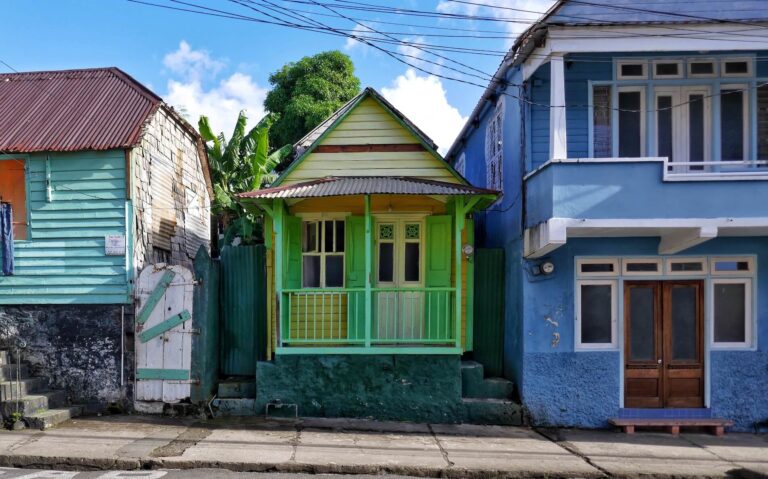
I came to Soufriere to recover from St. Lucia’s carnival, and I couldn’t have chosen a better spot. This town is one of the island’s most visited places, and it’s easy to see why. With the iconic Pitons towering in the background and a gorgeous beach right at the shoreline, the scenery is unbeatable. The town itself has a lot of charm, with its historic buildings and colorful Caribbean-style houses and shops. There’s a blend of natural beauty and local culture that makes Soufriere feel both relaxing and vibrant at the same time.
Practical Travel Tips for Soufrière

Things to do in Soufriere, St. Lucia
Dip in the Sulfur Springs “Drive-In Volcano”
Taking a dip in the sulfur springs at the “drive-in volcano” was a unique experience. The smell takes a minute to get used to, but the warm, mineral-rich water felt amazing. It’s supposed to be great for your skin, and after soaking in it, I did feel super refreshed. Plus, where else can you say you’ve bathed in a volcanic spring? Definitely something to check off the list when you’re in Soufriere.
Go Scuba Diving
I went scuba diving in Soufriere, and it was incredible. The reefs are teeming with life, and the underwater visibility is fantastic. I saw everything from sea turtles to barracuda. The dive sites around Soufriere, like Superman’s Flight, are well-known for their dramatic drop-offs and abundant marine species. Whether you’re a seasoned diver or a beginner, the diving here is top-notch.
Snorkeling at Anse Chastanet
Snorkeling at Anse Chastanet is like swimming in an aquarium. The water here is so clear, and the reef is full of vibrant marine life—everything from colorful fish to coral gardens. I didn’t even need to go far from the shore to see some amazing underwater sights. It’s definitely one of the best snorkeling spots I’ve been to, and it’s hard to beat the stunning views of the Pitons in the background.
Relax at Diamond Falls Botanical Gardens
After all the adventure, I took some time to unwind at the Diamond Falls Botanical Gardens. The gardens are so peaceful, filled with tropical flowers and towering trees. The highlight was definitely the Diamond Waterfall, which is colored by minerals from the nearby volcano. It’s a great spot to just stroll around and take in the natural beauty, especially if you need a break from the sun.
Climb the Pitons
Climbing the Pitons was hands down one of the most challenging but rewarding things I did in St. Lucia. It’s a steep hike, and you’ll need some stamina, but once you reach the top of Gros Piton, the views are absolutely breathtaking. Looking down at the Caribbean and the island below is worth every bit of effort. Just make sure you bring plenty of water and a guide to show you the way!
Learn About Chocolate
One of the coolest things I did was learn about how chocolate is made in St. Lucia. There are local cocoa plantations around Soufriere where you can take a tour and see the whole process, from bean to bar. I even got to make my own chocolate, which was a fun (and delicious) hands-on experience. Plus, St. Lucian chocolate is some of the best I’ve ever tasted.
Go Hiking
There are some amazing hiking trails around Soufriere, and I took on both the Tet Nature Trail and the Edmund Rainforest Trail. The Tet trail was relatively easy, with great views of the Pitons and the surrounding forest. The Edmund Rainforest Trail, on the other hand, took me deep into the heart of the island’s lush rainforest. It was a bit more challenging but totally worth it for the waterfalls and the chance to spot rare birds and other wildlife. Both trails gave me a real sense of the island’s natural beauty.
Practical Travel Tips for Saint Lucia


Traveling St Lucia?
Places to visit in The Caribbean
-
Visiting Kalinago Barana Auté
Voices of Dominica’s First People Dominica is often described through its landscapes first. Rainforest. Rivers. Waterfalls. Hot springs. Volcanic peaks. Roads that twist through the mountains before opening suddenly to the Atlantic. It is an island that feels physical from the moment you arrive — green, humid, steep, alive. And yet, if you only come…
-
Roseau, Dominica: What to See in the Island’s Colorful Capital
Roseau Beyond the Waterfront Roseau is small, colourful, busy and a little rough around the edges. It is not the kind of Caribbean capital that feels polished for visitors — except perhaps around the waterfront, where the city briefly becomes more arranged for cruise arrivals. Beyond that first layer, Roseau feels much more local. You…
-
How to play mas in Dominica
Costumes, Culture and Mas There is a moment when Carnival stops being something you watch and becomes something you feel in your body. For me, that moment came on the road with Hysteria Mas in Dominica. The music was already moving ahead of us, the streets of Roseau were filling with people, and suddenly I…
-
Bouyon Music in Dominica: The Soundtrack of Mas Domnik
The Soundtrack of Mas Domnik Bouyon does not politely stay in the background. It pushes forward. It repeats. It builds pressure. It gets into your body before you have fully understood what you are hearing. During Mas Domnik, Dominica’s Carnival, bouyon is everywhere: on the road, at parties, during J’ouvert, from trucks, passing cars, street…
-
Soufrière and Southern Dominica: A Guide to the Island’s Volcanic Coast
Where the Island Turns Volcanic After the intensity of Mas Domnik in Roseau, southern Dominica felt like a different island. The capital had been all music, movement and Carnival rhythm. Bouyon in the streets. Costumes on the road. People watching from balconies. The same corners appearing again and again as we circled Roseau during Carnival….
-
Beaches in Dominica
Dominica’s Beaches, Without the Caribbean Filter Dominica is not the island I would recommend if your idea of the Caribbean is a week of white sand, beach loungers and polished resort beaches. And that is not criticism. Dominica is the Nature Island of the Caribbean for a reason. Its strongest landscapes are rainforest, rivers, waterfalls,…