San José
COSTA RICA
Exploring Costa Rica’s Capital City
I’ve always felt that a capital city is the quickest way to take a country’s pulse, so whenever I land in Costa Rica I make sure to give San José—affectionately called “Chepe” by locals—at least a couple of days. Founded in 1737 and perched 1,170 m (3,840 ft) above sea level in the Central Valley, the city has blossomed into a metropolitan area of roughly 1.5 million people without losing its small-town friendliness.
San José may look like a “concrete jungle” at first glance, but look closer and you’ll spot pockets of vivid green, graceful neoclassical facades, and street art bright enough to rival the cloud-forest hues just beyond the valley. Culture lovers can catch a performance in the ornate National Theatre (1897) or dive into one-of-a-kind collections at the Pre-Columbian Gold Museum and the five-storey Jade Museum, home to the world’s largest trove of American jade.
Food is where Chepe really flexes its creative muscles. By day, weave through the maze-like aisles of the Mercado Central (est. 1880) for fresh fruit batidos, ceviche counters, and stalls piled high with locally roasted coffee. As the sun sets, head to Barrio Escalante, the city’s unofficial culinary district, where craft-beer gastropubs share the block with vegan diners and upscale “jungle-to-table” restaurants that champion Indigenous ingredients.
Between leafy public parks, late-night salsa bars, and a surprisingly efficient network of buses and bike lanes, San José offers an authentic, unscripted snapshot of modern Costa Rica—one that most travellers miss when they dash straight for the volcanoes and beaches. Give Chepe a chance, and you’ll leave with a richer understanding of the country and, quite possibly, a new favourite city.
Even though San José is my least favorite capital in all of Central America, you should still make an effort to spend some time and get to know the locals.
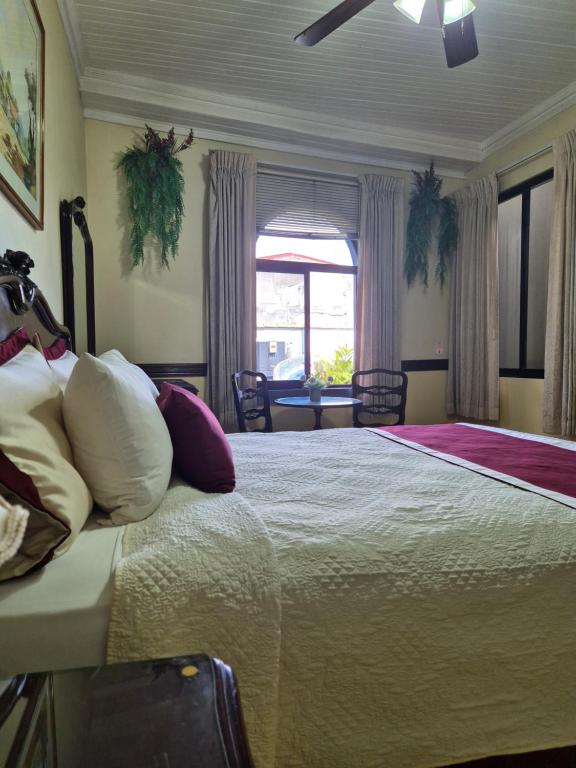
Best places to stay in San Jose
San José was never the place in Costa Rica that stayed with me most. Compared with the country’s cloud forests, beaches and wildlife-rich coastlines, the capital can feel busy, grey and more functional than charming. Still, most travelers pass through at some point, and where you stay can make the difference between a stressful stopover and a softer landing.
For this guide, I would choose smaller, more thoughtful stays — places with heritage, gardens, local character or a clearer sustainability story — rather than treating San José as just an airport night.
Hotel Grano de Oro is the one I would choose if I wanted San José to feel more atmospheric. Set in a converted Tropical Victorian mansion, it brings a little old-world character to a city that can otherwise feel hard to warm up to. I would recommend it for travelers who need to stay in the capital, but still want charm, history and a more personal setting than a standard business hotel.
Hotel Santo Tomás is the kind of place I would choose if I wanted San José to feel a little less anonymous. Set in Barrio Amón, one of the city’s older neighborhoods, it brings in historic character without trying to be overly polished. The appeal here is simple: a small heritage hotel, a central location, and a sense that you are staying in a part of the city with some memory. I would recommend it for travelers who need to be in San José, but still want a stay with more texture than a standard airport or business hotel.
Finca Escalante is the more casual, neighborhood-based choice. Barrio Escalante is one of the parts of San José I would actually choose to spend time in, especially for cafés, restaurants and a younger, more contemporary city feeling. This is not the place for luxury; it is better for travelers who want something simple, social and well placed, with the option to walk out for dinner or coffee rather than feel stuck in a hotel. I would choose it if San José is mainly a short stop, but you still want the city to feel a little more local and alive.
La Feria Verde de Aranjuez
La Feria Verde de Aranjuez is a fantastic farmer’s market every Saturday morning from nine until noon. It features locally and sustainably sourced products and ingredients. It’s a great place to have breakfast because there are many coffee and food vendors. You can find delicious omelets, arepas, French toast, and other tasty breakfast items here. Vendors also sell locally-made gifts, jewelry, coffee, and fresh produce. It’s a fun place to spend a Saturday morning and enjoy some tasty food.
Discover downtown San José
Street performers are a common sight on Central Avenue in downtown San José. They can be found on almost every block, and there is no set schedule for their performances. Most performers are amateur musicians or dancers, but there are also a few professional groups. The street performers add a lot of character to the area and are always worth a stop to watch for a while. My favorite spot to watch them is on the corner of Second Street and Central, where there is usually a breakdancing group putting on an impressive show. Even if you’re not into street performers, it’s worth taking a stroll down Central Avenue to check out all the different acts.
Avenida Central
The Avenida Central is a vibrant district within San José with live music and bustling shops that carry everything under the sun. It’s a great place to walk around and taste local life. One place on Avenida Central that many local Ticos (Costa Ricans) will tell you to visit is Mercado Central. This place is a giant grocery store with some tasty Costa Rican cuisine. Many restaurants here serve mouthwatering Costa Rican classics for a great price.
Parque Central
Parque Central is located in the middle of all the action in downtown San José. Many of the city’s architectural wonders, including the Metropolitan Cathedral of San Jose, surround the park. Within the park, there is plenty of public art and statues. Its center is the iconic “Vive San Jose” sign that makes for a good photo op. It’s a great place to relax that feels like an oasis within the city.
Parque Nacional Braulio Carrillo
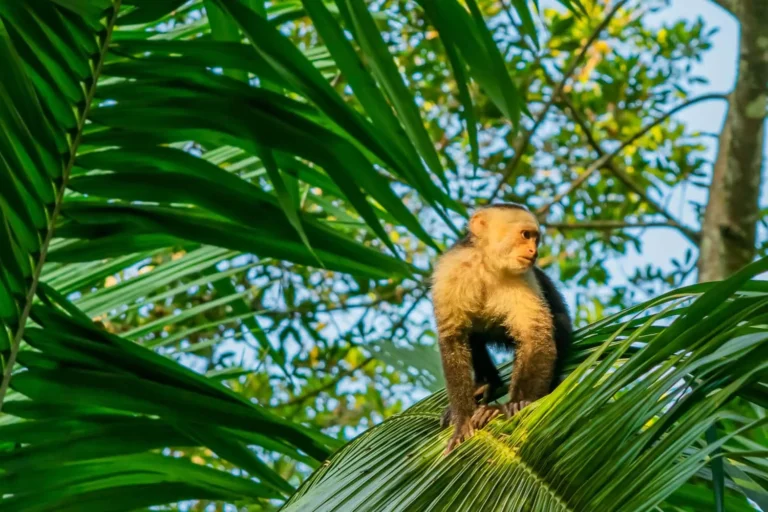
An easy day trip from San José is the Braulio Carrillo National Park. It’s hard to believe that so much biodiversity and pristine wildlife could be close to the capital. This 108,000-acre park has dense vegetation, breathtaking scenery, and a volcano. One of the world’s best field stations, the La Selva Biological Station, is here. If you’re lucky, you might encounter white-faced capuchin monkeys, howler monkeys, and slots while riding through the aerial tram or hiking.
Barrio Escalante – a foodie haven
Barrio Escalante has become San José’s go-to neighborhood for great food in the last ten years. The streets are lined with restaurants, bars, and cafes, and there’s something for everyone. So you can find it here if you’re looking for a delicious brunch, a burger, some ramen noodles, or even alcoholic ice cream. One of the highlights of Barrio Escalante is the variety of restaurants. You can find everything from Mexican food to Indian food to Italian food. There are also plenty of vegan and vegetarian options available. In addition to the great food, the atmosphere in Barrio Escalante is also really cool. Barrio Escalante is also my preferred neighborhood to stay in. It’s so lovely to be able to walk around and go home, even after dark.
Explore the National Museum of Costa Rica
San José has outstanding museums, and you should check out all of them if you have time. If you can only go to one, visit the National Museum of Costa Rica. It is easy to identify with its bright yellow façade and castle-like appearance. You can learn about Costa Rica’s long and fascinating history at this museum. It is a comprehensive museum that covers everything from prehistoric to modern times. There is so much to see here, so you should leave plenty of time to explore it all.
Ruta Naturbanas
How cool is that? The Ruta Naturbanas (Nature-Urban Route) is a new conservation project in San José, Costa Rica. The project’s goal is to create a single walkway that crosses the entire city and is entirely in nature. Only a small piece of the route has been completed so far, and the project depends on donations from individuals and organizations. The trail near the Central Bank of Costa Rica in Barrio Amon is open 24 hours a day. The Ruta Naturbanas is a great way to get outdoors and explore nature within the city. The route near the Central Bank of Costa Rica in Barrio Amon is well-maintained and easy to follow. There are several parks, gardens, and other green spaces along the route and plenty of wildlife to see. I saw several birds, including toucans and parrots, as well as lizards and frogs. The route is also a great way to exercise and enjoy the fresh air. I would definitely recommend checking out the Ruta Naturbanas if you’re visiting San José!
Street Art in Barrio California
Street art is one of the city’s most beautiful and exciting aspects, and Barrio California in San José is home to some impressive street art. The murals are incredibly well-done and add so much life and color to the area. Seeing how much effort and talent has gone into these street art pieces is wonderful. So many depict scenes from Costa Rican culture or nature, making them all the more special. I could spend hours just looking at them all!
Take a break at one of the many parks
San José has many parks, each with its distinct personality.
La Sabana is the largest and most popular park in the city. Located in the heart of San José, it offers plenty of space to run, play sports, and relax. The National Park is a beautiful green space located in downtown San José. It’s an excellent place for a picnic or a leisurely walk. Parque Bellavista is a smaller park, but it’s one of our favorites for its charming atmosphere and great views. Escazú is home to Iskatzu Park, a lovely green space with a playground and plenty of shade trees.
And finally, we can’t forget about Coffee Park, which is perfect for nature lovers looking for a quiet spot to relax. As mentioned before, it can get super hot in Granada. So it’s lovely to grab fresh fruit juice and relax in the shade at Parque Colón. The central plaza is seamed by the Catedral de Granada and numerous restaurants. Nicaraguans are said to be one of the happiest people in the world. So lean back and enjoy watching them as they go along with their day.
Practical Travel Tips for Costa Rica


Traveling Costa Rica?
Places to visit in Costa Rica
Follow us to our favorite places in Costa Rica
-
The Caribbean side of Costa Rica | A comprehensive guide to paradise
Exploring Costa Rica’s Capital City Up until today, Costa Rica’s Caribbean side is my favorite area to explore in Costa Rica. Why? As the Caribbean side is far less touristically developed than its counterpart in the Pacific, you can enjoy miles of the most beautiful Caribbean sea seamed by lush rainforest, stunning National Parks, and…
-
Costa Rica Off the Beaten Path: Osa Peninsula in Costa Rica
Discover Costa Rica off the beaten path Most people who visit Costa Rica end up at places like Arenal, Monteverde, and Manuel Antonio. Those places are stunning and absolutely should be visited! However, there’s an off-the-beaten-path that is one of Costa Rica’s best-kept secrets. This destination is the Osa Peninsula. It holds an astounding 2.5%…