Bouyon Music
Dominica
The Soundtrack of Mas Domnik
Bouyon does not politely stay in the background.
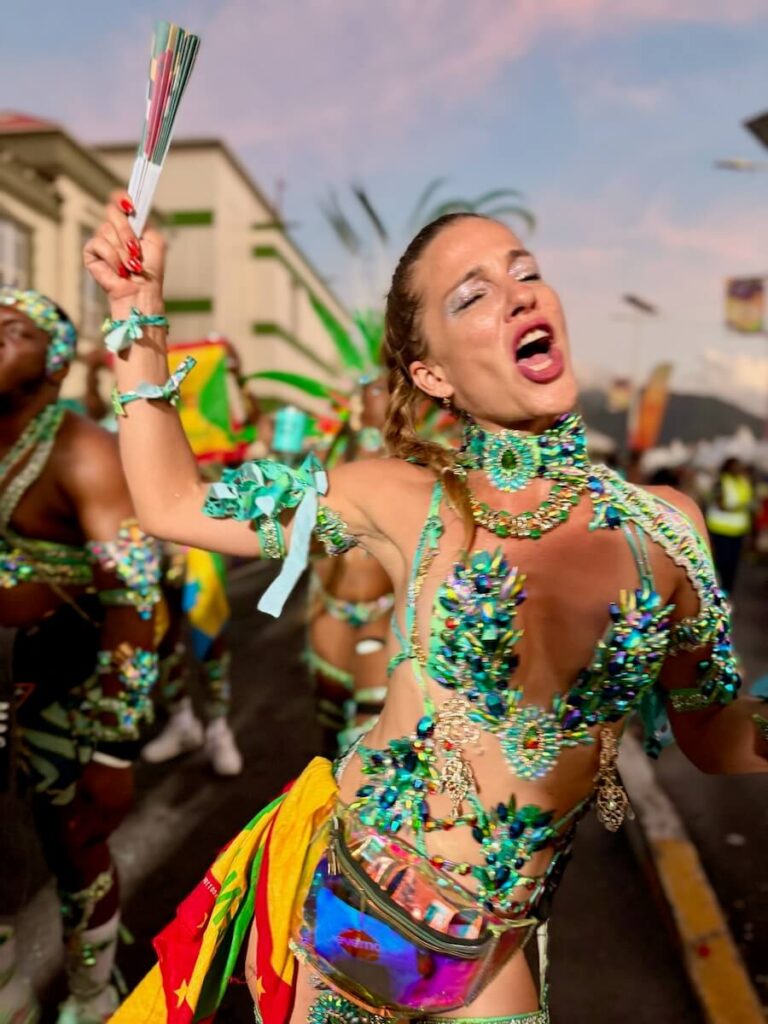
It pushes forward. It repeats. It builds pressure. It gets into your body before you have fully understood what you are hearing. During Mas Domnik, Dominica’s Carnival, bouyon is everywhere: on the road, at parties, during J’ouvert, from trucks, passing cars, street corners and speakers that seem to follow you through Roseau.
At first, I heard it as “the music of Carnival.” By the end of the week, I understood that it was much more specific than that.
Bouyon is Dominica’s sound.
Many Caribbean carnivals are dominated by soca, and of course soca is part of the wider Carnival world. But Mas Domnik feels different because bouyon gives the road its own pulse. It is faster, rougher, more repetitive, more direct — less polished in the best possible way. It does not float over the street. It drives through it.
And once you have circled Roseau a few times during Carnival, heard the same rhythm bouncing off the same corners, and watched the same faces light up when a song hits, bouyon becomes inseparable from the memory of Dominica.
What Is Bouyon Music?
Bouyon is a music genre from Dominica that developed in the late 1980s and early 1990s. It is closely associated with the band WCK, short for Windward Caribbean Kulture, who helped shape the modern bouyon sound.
The word “bouyon” itself suggests a mix — like a soup or a one-pot dish. That is a good way to understand the music. Bouyon pulls from different Dominican and Caribbean influences, including cadence-lypso, jing ping, bèlè, quadrille, chanté mas and lapo kabwit rhythms, then pushes them into a faster, more electronic, road-ready sound.
But if that sounds too technical, here is the easier version:
Bouyon is built for movement.
It is the kind of music that makes more sense in the street than in a definition. The repetition, the chants, the bass, the tempo — it all starts to click when you hear it during Carnival, surrounded by people who know exactly what to do when the rhythm changes.

Best places to stay in Roseau for carnival
Comfort matters during Carnival, of course. But in Roseau, access matters more.
You do not need a resort-style escape as much as you need to be close to the action: the parade routes, the waterfront, the old streets, the food spots and the places where the city naturally gathers during Carnival week.
I would choose somewhere in or near the capital that lets you move with the rhythm of the day — step out for the road, return for a shower or a quiet hour, then head back out when the music starts again. During Mas Domnik, Roseau becomes the centre of everything. Staying close means you do not just arrive for the spectacle; you feel the city shift around you.
Why Bouyon Matters in Dominica
Bouyon matters because it gives Dominica its own Carnival identity.
The Caribbean has many strong musical signatures. Jamaica has reggae and dancehall. Trinidad and Tobago is deeply connected to calypso and soca. The French Antilles have zouk. Dominica has bouyon.
That does not mean bouyon exists in isolation. Caribbean music has always travelled, mixed and influenced itself across islands. But during Mas Domnik, bouyon feels very clearly Dominican. It is not just another party sound added to the playlist. It belongs to the place.
You feel that on the road.
When bouyon comes through the speakers, people respond quickly. The energy changes. The crowd tightens. The movement becomes more instinctive. It is not background music for the parade; it is one of the things holding the parade together.
This is also what makes Mas Domnik feel different from bigger, more soca-heavy carnivals. Dominica is not trying to sound like somewhere else. Bouyon gives the Carnival its own accent.
Bouyon Is Not Soca
If you are new to Caribbean Carnival, it is easy to call everything soca.
But bouyon is not just Dominican soca.
Soca and bouyon can share the road, and there are fusion styles where the two sounds overlap. But bouyon has its own roots, its own rhythm and its own attitude. Soca often lifts. Bouyon drives. Soca can feel expansive and melodic. Bouyon often feels more urgent, compact and repetitive.
That repetition is part of the power.
A bouyon track may not always build in the way you expect from a pop song. Instead, it creates pressure. A chant repeats. The beat pushes. The crowd answers. The point is not always musical complexity in the traditional sense. The point is what happens to the street when the song takes over.
During Mas Domnik, that difference matters. Bouyon makes the road feel more raw and local. It gives Roseau a sound that is not imported from a bigger Carnival stage, but grown from Dominica’s own musical culture.
For a visitor, I would start by deciding which side of Carnival you want to enter. A contemporary costume band gives you the easiest way into the road if you want to jump in costume. A T-shirt band can be more relaxed and less costume-heavy. Traditional mas is culturally important, but it may not always be the right entry point unless you have a deeper connection to the group, understand the tradition, or are invited into that space appropriately.
That distinction matters. Not every form of mas is there for visitors to simply purchase and perform. Some experiences are better watched, respected and learned from before you decide how to participate.
Bouyon on the Road at Mas Domnik
During Mas Domnik, bouyon is not confined to one event.
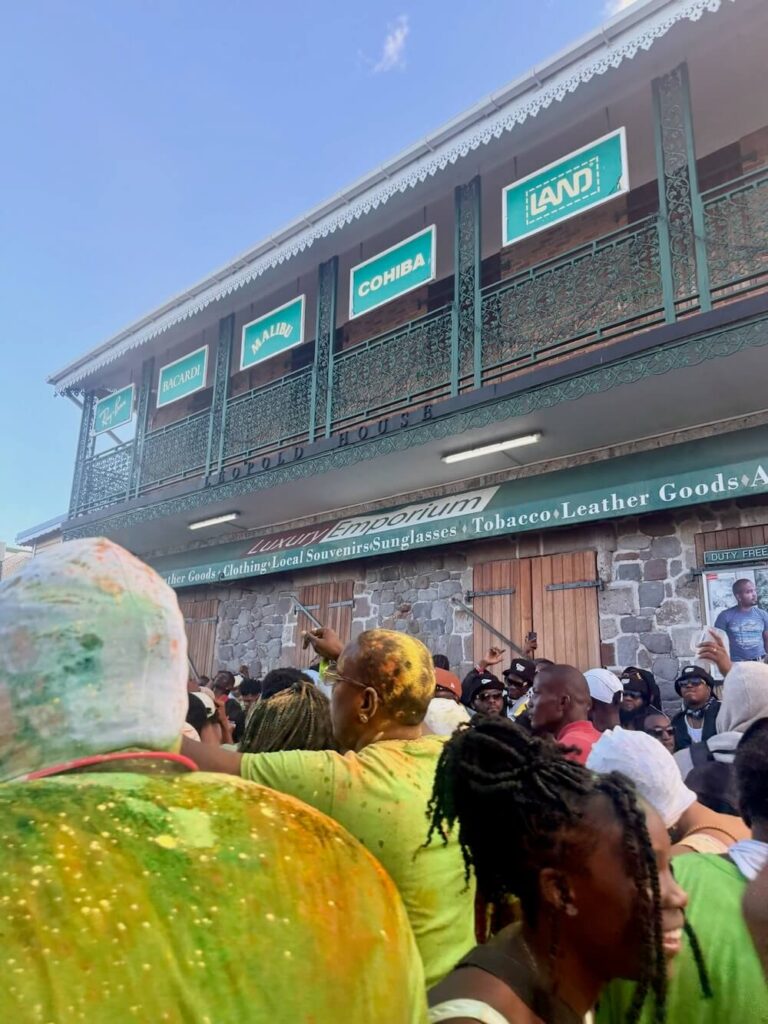
You hear it at J’ouvert, when Roseau wakes into Carnival in the early hours. You hear it with T-shirt bands, where the road feels more open and communal. You hear it during pretty mas, when costume bands move through the city. You hear it at night, long after you think you are done for the day.
And because Roseau is small, the music stays close.
That was one of the things I loved most. In a larger city, Carnival music can sometimes disappear into scale. In Roseau, bouyon feels contained and immediate. You circle the city. You pass the same corners again. You recognize the same people watching. A song comes back, and suddenly the crowd already knows what to do with it.
After a while, the music attaches itself to places.
A certain rhythm reminds you of a street corner. A chant takes you back to a moment on the road. A beat brings back the feeling of moving through Roseau with the band, hot, tired, happy, and completely carried by the music.
That is when bouyon stops being something you hear and becomes something you remember physically.
The Energy of Bouyon
Bouyon is not passive music.
It tells you to move.
Jump. Bend. Wave. Follow. Answer. Come closer. Let go a little.
There is something very physical about it. It can feel intense if you are not used to it, especially at first. The rhythm is fast, the energy high, and the repetition can feel almost overwhelming. But once you stop trying to analyse it and simply let it do what it is meant to do, it makes sense.
Bouyon is road music.
It works with heat, crowds, sweat, movement and call-and-response. It works when people know the song before the chorus arrives. It works when a truck turns a corner and everyone around you suddenly reacts before you even understand why.
That is the beauty of hearing bouyon in Dominica. You are not only listening to a genre. You are watching how people use it.
Bouyon, Calypso and the Wider Sound of Mas Domnik
Bouyon may dominate the road energy, but Mas Domnik is not only bouyon.
Calypso is also central to Dominica’s Carnival season, especially through competitions, social commentary and performance. Traditional drumming and masquerade forms also shape the feeling of Carnival. The sound of Mas Domnik is not one thing; it is layered.
Calypso brings wit, language and commentary. Traditional drums connect the streets to older forms of mas. Bouyon brings the drive.
Together, they make Dominica Carnival feel more rooted than a simple costume parade. The music tells you that Mas Domnik is not just about what you see. It is also about what you hear, what people know by heart, what makes t
Modern Bouyon and Its Global Moment
Bouyon is no longer only heard in Dominica.
The sound has travelled through the Caribbean, the diaspora, French Caribbean spaces, Carnival events abroad and social media. Younger artists, DJs and producers have pushed it into new directions, and more people outside Dominica are beginning to recognise the genre.
That is exciting, but it also comes with a risk.
When a local sound travels, it can easily become detached from its origin. People hear the beat but miss the place behind it. They use it as a party sound without understanding that it comes from a specific island, a specific Carnival culture and a specific musical history.
That is why hearing bouyon in Dominica matters.
In Roseau, during Mas Domnik, the music has context. You understand why it is fast, why it repeats, why it pushes so hard, why people react instantly. You see the relationship between the sound and the street.
Bouyon makes the most sense at home.
Artists and Bands to Start With
If you want to understand bouyon, start with WCK. They are essential to the development of the modern sound and a good entry point into the genre’s roots.
From there, look into names such as Triple Kay International, Asa Bantan, DJ Taffy, Shelly and other contemporary Dominican artists shaping the current road sound.
This is not meant to be a complete list. Bouyon moves quickly, especially around Carnival. Every season has its songs, its road favourites, its viral moments and its local hits. The best way to know what matters right now is to ask people in Dominica what they are listening to.
During Mas Domnik, the road will tell you very quickly which songs are working.
How to Experience Bouyon Respectfully
You do not need to be a music expert to enjoy bouyon. But it helps to listen with more curiosity than judgment.
Do not dismiss it as “crazy party music.” Do not assume it is just soca with a different beat. Listen to how people respond. Notice the repetition. Notice the chants. Notice how quickly the energy changes when a familiar song comes on.
If you are at Mas Domnik, watch before you perform for your camera. Let the crowd teach you. Pay attention to how people move, when they jump, when they laugh, when they answer the song, when the whole street seems to shift at once.
Also, be aware that some modern bouyon can be explicit, direct or rough around the edges. That is part of the contemporary Carnival landscape, but it is not the whole story. Bouyon has roots, humour, attitude, history, experimentation and many different expressions.
The best way to experience it is to give it time.
At first, it may sound intense. Then it starts to make sense. Then, if you are lucky, it stays with you.
Why Bouyon Made Mas Domnik Feel So Dominican
Bouyon became one of my strongest memories of Mas Domnik.
The costumes were beautiful. The road was fun. Roseau was colourful and compact. But bouyon gave the whole experience its pulse.
It made Dominica feel different from other Carnival destinations. It made the road feel less like a general Caribbean Carnival scene and more like a specific island speaking through music. Once you hear bouyon in Roseau, during Mas Domnik, surrounded by people who know the rhythm instinctively, you understand why it matters.
This is not just the soundtrack of Dominica Carnival.
It is one of the ways Dominica tells you who it is.
Practical Travel Tips for Roseau

Things to do in Dominica
Waterfalls, rainforest, hot springs and volcanic coastlines — Dominica is wild by nature.
-
Visiting Kalinago Barana Auté
Voices of Dominica’s First People Dominica is often described through its landscapes first. Rainforest. Rivers. Waterfalls. Hot springs. Volcanic peaks. Roads that twist through the mountains before opening suddenly to the Atlantic. It is an island that feels physical from the moment you arrive — green, humid, steep, alive. And yet, if you only come…
-
Roseau, Dominica: What to See in the Island’s Colorful Capital
Roseau Beyond the Waterfront Roseau is small, colourful, busy and a little rough around the edges. It is not the kind of Caribbean capital that feels polished for visitors — except perhaps around the waterfront, where the city briefly becomes more arranged for cruise arrivals. Beyond that first layer, Roseau feels much more local. You…
-
How to play mas in Dominica
Costumes, Culture and Mas There is a moment when Carnival stops being something you watch and becomes something you feel in your body. For me, that moment came on the road with Hysteria Mas in Dominica. The music was already moving ahead of us, the streets of Roseau were filling with people, and suddenly I…
-
Soufrière and Southern Dominica: A Guide to the Island’s Volcanic Coast
Where the Island Turns Volcanic After the intensity of Mas Domnik in Roseau, southern Dominica felt like a different island. The capital had been all music, movement and Carnival rhythm. Bouyon in the streets. Costumes on the road. People watching from balconies. The same corners appearing again and again as we circled Roseau during Carnival….
-
Beaches in Dominica
Dominica’s Beaches, Without the Caribbean Filter Dominica is not the island I would recommend if your idea of the Caribbean is a week of white sand, beach loungers and polished resort beaches. And that is not criticism. Dominica is the Nature Island of the Caribbean for a reason. Its strongest landscapes are rainforest, rivers, waterfalls,…
-
Dominica Beyond Carnival: Best Things to Do Before or After Mas Domnik
Waterfalls, Rainforest and Culture Beyond Mas Domnik You may come to Dominica for Mas Domnik, but you should not leave having only seen Carnival. That was one of the biggest lessons of my trip. Mas Domnik gives you Dominica at full volume: bouyon on the road, J’ouvert in the early hours, T-shirt bands, pretty mas,…